
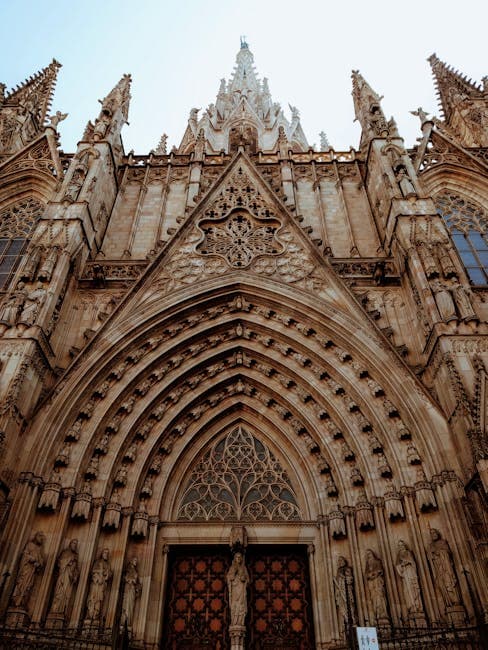
Barcelona Gothic Quarter: Cathedrals, Squares & Jewish Heritage
Barcelona, España
What You'll Experience
On this Barcelona Gothic Quarter: Cathedrals, Squares & Jewish Heritage audio tour in Barcelona, you'll discover 10 carefully selected points of interest, each with its own story. The tour is designed to be completed at your own pace, with GPS navigation guiding you from one location to the next. As you approach each stop, the audio narration automatically begins, bringing history, culture, and local insights to life.
About This Tour
This tour explores Barcelona’s Gothic Quarter, including the Cathedral, Plaça del Rei, Plaça de Sant Jaume, and the Pont del Bisbe. It includes the medieval Jewish Quarter, hidden Roman remains at the Temple of Augustus, and quiet plazas such as Sant Felip Neri and Plaça Reial, focusing on history, architecture, and urban life.
Points of Interest
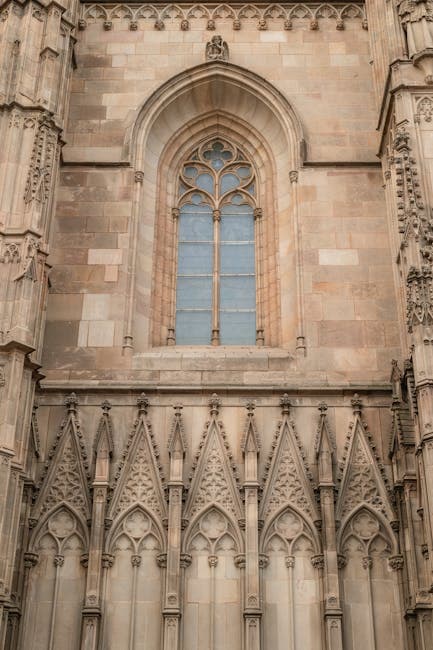
Catedral de Barcelona
Gothic heart of Barcelona’s old city
This stop orients visitors at the main Gothic cathedral, formal seat of the archbishop and a key landmark in the Barri Gòtic. Scripts should describe the neo‑Gothic façade, older Gothic core, towers, and cloister with its geese, contrasting exterior and interior atmospheres. Historically, it anchors stories of Saint Eulàlia, medieval piety, and the power of the church in Catalan society. The guide can also mention later urban reforms that opened up the square and turned the Cathedral into a central postcard view, setting up the tour’s recurring theme of authentic medieval fabric versus modern reconstruction.
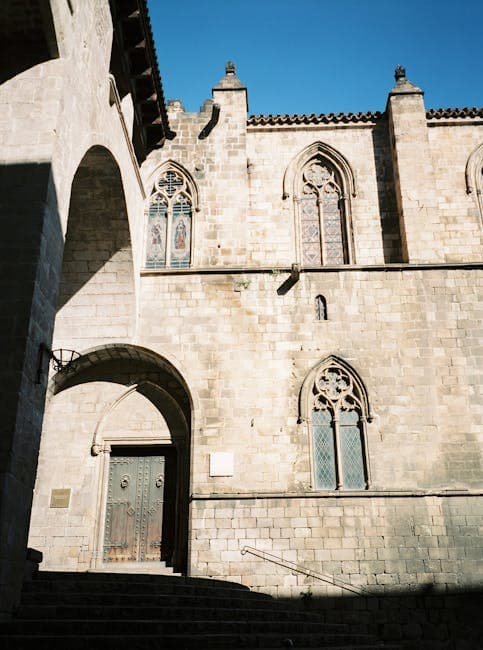
Plaça del Rei
Medieval royal square and city power center
This enclosed medieval square showcases the secular power of the Crown of Aragon and Barcelona’s municipal elites. Narration should highlight the main buildings: the Palau Reial Major with its watchtower, the Saló del Tinell hall, and the adjacent structures now housing the city history museum. Guides can evoke ceremonies, royal receptions, and the connection to the counts‑kings who ruled a Mediterranean empire from here. It is useful to contrast the solemn, enclosed character of the square with the more open Cathedral square and later civic spaces, emphasizing the sense of being in a preserved medieval stage set built over Roman remains.
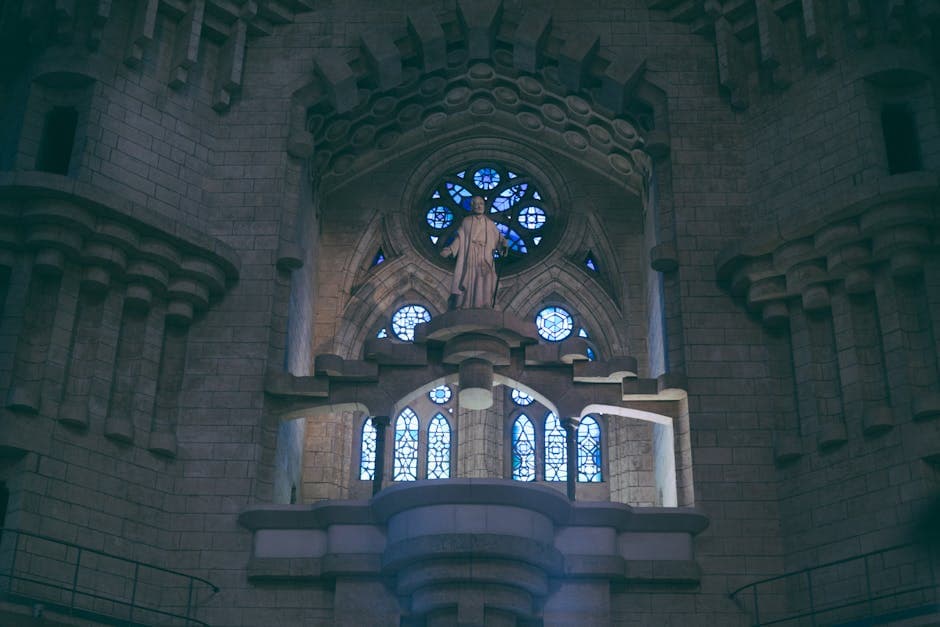
Temple d'August (MUHBA)
Hidden Roman columns of ancient Barcino
Here the audience encounters some of the most tangible remains of Roman Barcino, tucked inside a medieval courtyard. Scripts should explain that these towering columns once formed part of a temple dedicated to the Emperor Augustus, near the highest point of the Roman city and its forum. Emphasis should be on the surprise of finding Roman architecture hidden inside later buildings, showing how the medieval and modern city reused and built over ancient structures. Guides may touch on the rediscovery and preservation of the columns and relate them to the broader Roman grid that still shapes the Gothic Quarter’s street pattern.
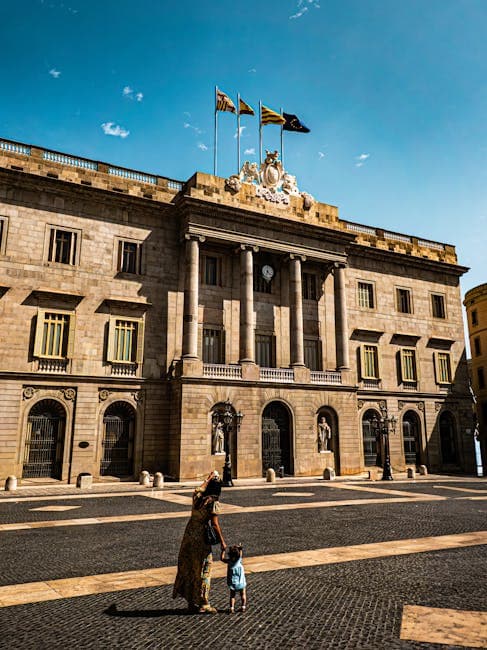
Plaça de Sant Jaume
From Roman forum to political center
This square is Barcelona’s civic and political heart, home to both the City Hall and the Palau de la Generalitat de Catalunya. Scripts should trace the continuity from the Roman forum, believed to have occupied this area, through medieval self‑government to today’s municipal and regional institutions. Architectural description can focus on the contrasting façades, neoclassical and Gothic‑Renaissance, and the square’s role as a stage for demonstrations, celebrations, and official events. It is helpful to underscore how power gradually shifted from royal and episcopal spaces like Plaça del Rei and the Cathedral to representative civic bodies symbolized here.
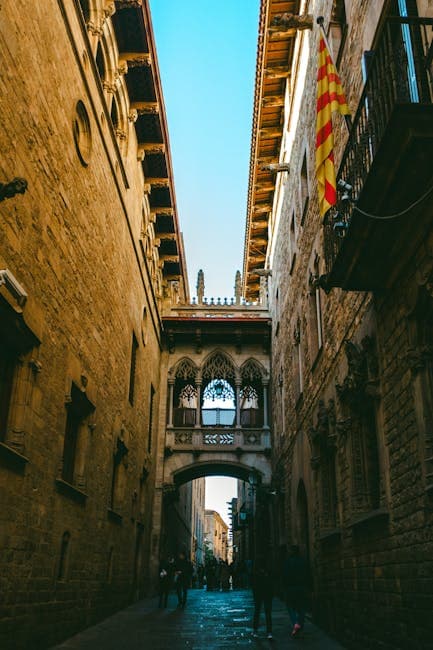
Pont del Bisbe
Neo-Gothic bridge over medieval street
This stop examines the striking stone bridge spanning Carrer del Bisbe, often mistaken for a genuine medieval structure. Scripts should clarify that it is a 20th‑century neo‑Gothic addition, part of a broader project to “medievalize” the area around the Cathedral and government buildings. The narration can point out Gothic‑style tracery, sculpted details, and the famous skull motif, using them to discuss how cities construct romantic historic images. It should link back to earlier mentions of authentic Gothic architecture and forward to subtler, less theatrical corners of the quarter, raising questions about authenticity and nostalgia.
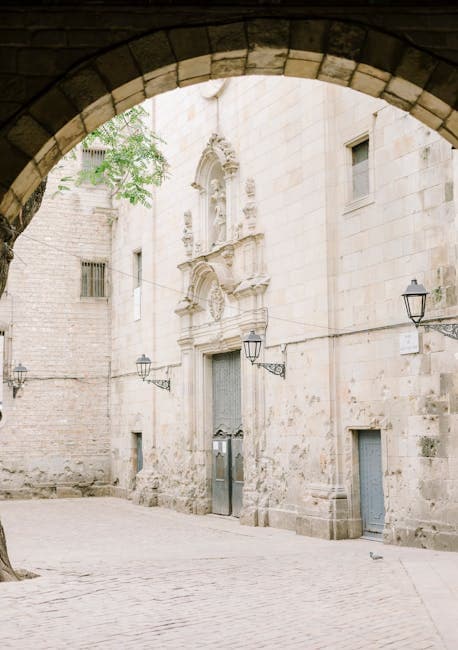
Plaça de Sant Felip Neri
Quiet square marked by Civil War scars
This small, secluded square offers a sharp contrast to the busier Gothic Quarter streets and squares. Narration should focus on the baroque church of Sant Felip Neri, the school, central fountain, and especially the pockmarked walls bearing traces of a deadly bombing during the Spanish Civil War. The script can evoke children playing, daily life, and how trauma and memory coexist in a calm, picturesque setting. It is also an opportunity to discuss post‑war reconstruction and the movement of historic façades, while reinforcing the theme of hidden layers and less visible histories.
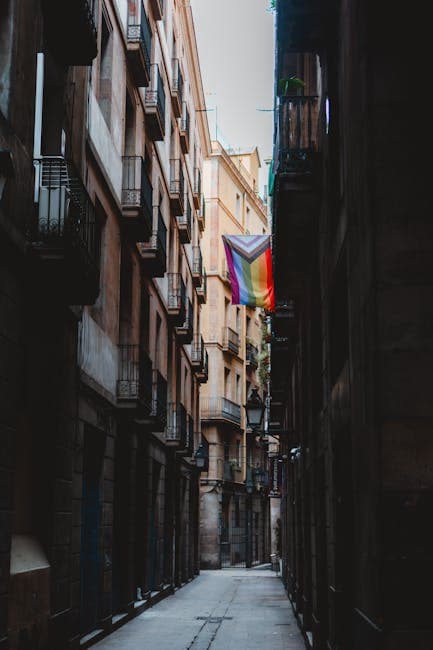
El Call (Jewish Quarter)
Traces of medieval Jewish life in Barcelona
This segment leads listeners through the narrow lanes of El Call, the historic Jewish quarter of medieval Barcelona. Scripts should explain the meaning of “call,” the existence of synagogues, ritual baths, and communal institutions, and the economic and intellectual roles Jews played in the city. The narration needs to address restrictions, segregation, and episodes of violence such as the late medieval pogroms that decimated the community. Since physical remains are subtle, the guide should emphasize street patterns, house sizes, later reuse of buildings, and ongoing research, making clear where information is certain and where historians are still debating details.
Basílica de Santa Maria del Pi
Merchant parish church with massive Gothic nave
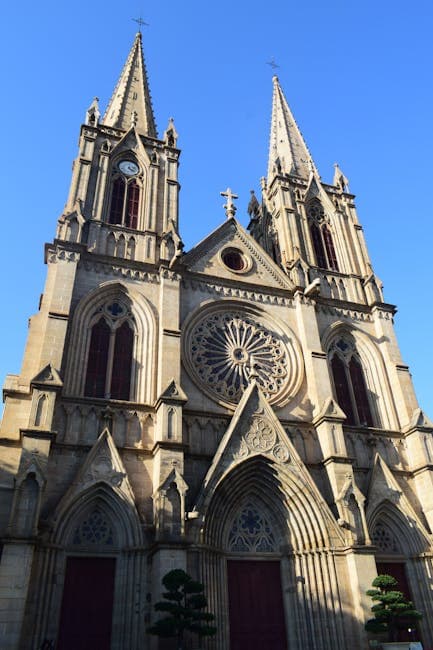
This stop presents another major Gothic church, closely linked to the merchants and artisans of the surrounding quarter. Scripts should describe the broad single‑nave interior, the large rose window, and the solid bell tower, contrasting its design and social role with that of the Cathedral. The name’s connection to a pine tree and the church’s relationship to nearby markets and guilds can be highlighted. This is an ideal moment to discuss parish life, processions, and how different churches in the Gothic Quarter served distinct communities within the medieval city.
Plaça del Pi
Intimate square beside Santa Maria del Pi
Here, the focus shifts to a smaller, more intimate urban space wrapped around the church of Santa Maria del Pi. Narration should cover the presence of the characteristic pine tree, arcades, and traditional small‑scale commerce, including markets and artisan stalls historically associated with this area. The square can be used to illustrate how church façades, trees, and wells or fountains structure neighborhood life. Guides may evoke everyday scenes, periodic fairs, and the way such plazas serve as social living rooms for residents, contrasting with the more formal political and royal squares seen earlier.
Plaça Reial
19th-century arcaded square off La Rambla
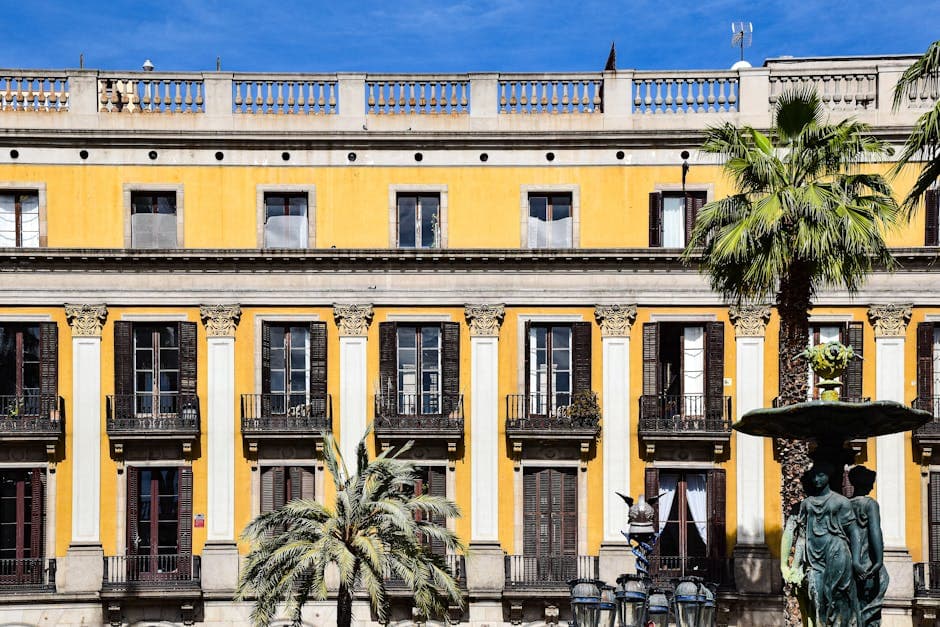
As the final stop, this grand 19th‑century plaza showcases a different layer of Barcelona’s urban history, just off La Rambla at the edge of the Gothic Quarter. Scripts should describe the uniform arcaded façades, palm trees, central fountain, and cast‑iron lampposts often associated with early works by Gaudí, noting attribution cautiously if needed. Historically, the square reflects bourgeois urban planning, nightlife, and the city’s expansion beyond its medieval walls. This is a natural place to reflect on how Barcelona repurposed former convent land, how the perception of the Gothic Quarter evolved over time, and how past and present mix in today’s social and tourist life.
Start This Tour
Download Roamway to experience this audio tour
Tour Details
Access
Free
Stops
10 points of interest
Languages
GermanEnglishSpanishFrench
More tours in Barcelona
View all tours in BarcelonaFrequently Asked Questions
How do I start this audio tour?
Download the Roamway app, search for this tour, and tap 'Start Tour'. The app will guide you to the starting point using GPS. Once you're there, the audio narration begins automatically.
Do I need an internet connection?
No! Once you've downloaded the tour in the Roamway app, it works completely offline. The GPS navigation and audio narration function without an internet connection.
Can I pause and resume the tour?
Yes! You can pause the tour at any time and resume later. Your progress is automatically saved, so you can complete the tour over multiple sessions if needed.