
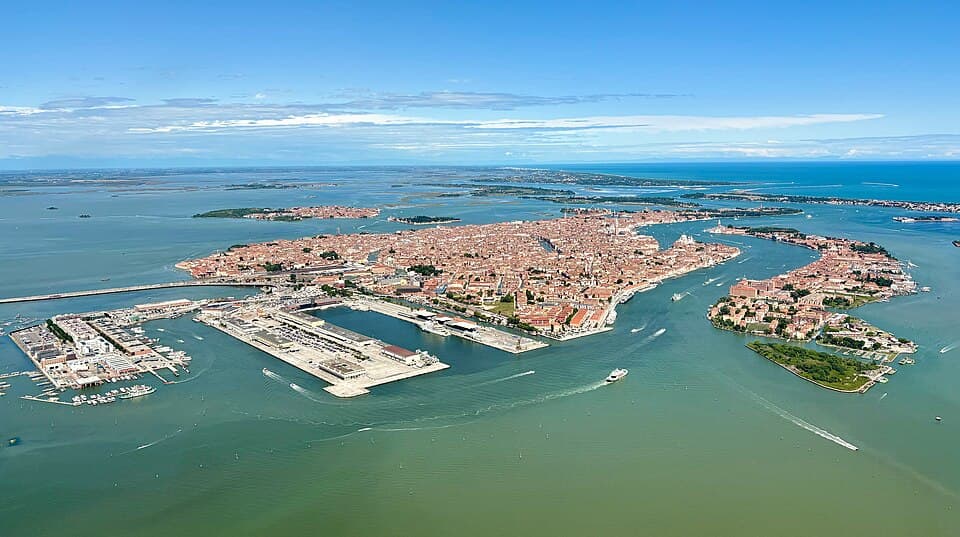
Venice: Rialto Markets and Cannaregio Food Culture
Venezia, Italia
Audio Preview
Listen to a sample of this audio tour to get a feel for the experience.
What You'll Experience
On this Venice: Rialto Markets and Cannaregio Food Culture audio tour in Venezia, you'll discover 11 carefully selected points of interest, each with its own story. The tour is designed to be completed at your own pace, with GPS navigation guiding you from one location to the next. As you approach each stop, the audio narration automatically begins, bringing history, culture, and local insights to life.
About This Tour
This tour follows a route from the historic Rialto Market area through central Venice to the quieter Cannaregio district. It focuses on traditional food markets, bàcari wine bars, and everyday squares along the Grand Canal and neighborhood canals. Topics include local food culture, social life, urban history, and characteristic Venetian architecture.
Points of Interest
Rialto Fish Market
Venice’s lagoon catch at the Grand Canal
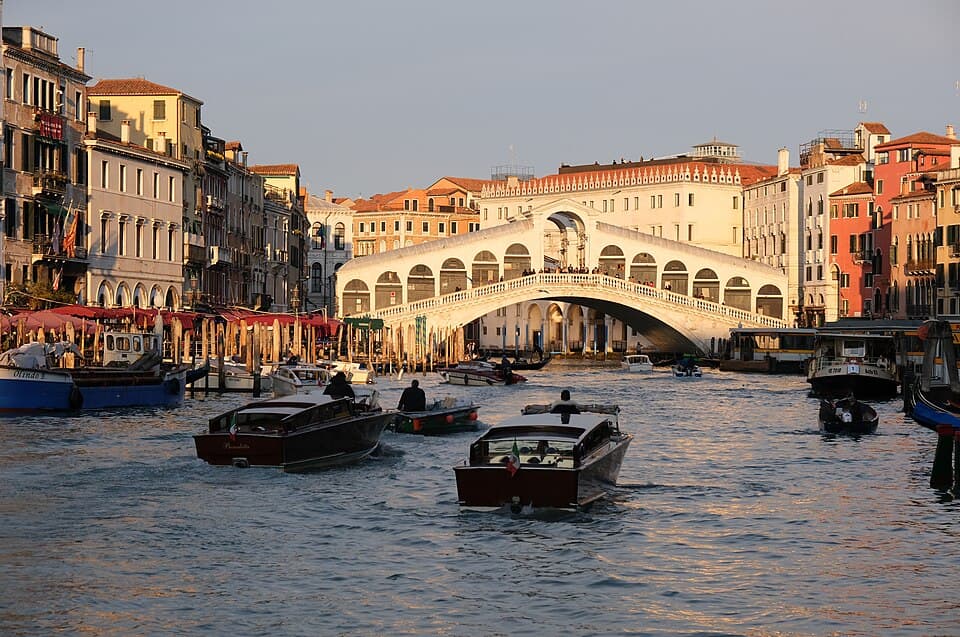
This stop introduces the Pescheria as the symbolic start of the tour and Venice’s historic food supply chain. The script should describe the neo-Gothic arcaded hall, the stone fish-carving measurements, and the daily rhythm of boats unloading lagoon and Adriatic catch. It should explain Venice’s reliance on the sea, traditional species sold here, and how early morning auctions once worked. One unique anecdote could mention a longstanding local superstition or joking insult about smelling of fish, linked to early-morning fishmongers. Another anecdote might evoke the sudden silence when the market closes at midday, transforming the hall into an almost empty stage set.
Erbaria Terrace
Produce stalls and outdoor bars by canal
Here the focus shifts to the Erbaria, historically the vegetable and herb market, and today a mix of produce stalls and outdoor bar terraces. The script should describe the open space along the Grand Canal, the low steps, and views of palazzi across the water. It should explore how goods from the mainland arrived by boat, the importance of spices and herbs in Venetian cuisine, and the evolution of this space into a social drinking area at sunset. One anecdote can recall how, in the past, farmers from the mainland dozed in their boats between market days. Another could note the custom of finishing market shopping with a small glass of wine here, using crates as impromptu tables.
Campo San Giacomo di Rialto
Ancient marketplace beside Venice’s oldest church
This stop situates listeners in the historic core of commercial Venice around San Giacomo di Rialto, often called San Giacometto. The script should describe the small church with its large clock, the portico, and surrounding arcades with engraved stones recalling old guilds and regulations. It should cover how this campo functioned as a medieval financial and trading hub, with moneylenders, notaries, and specialized markets. One anecdote may tell of strict rules once posted here about bread weights or food prices to prevent fraud. Another could recount a story about merchants gathering under the portico to hear the latest news from arriving ships, using nearby taverns as informal exchange floors.
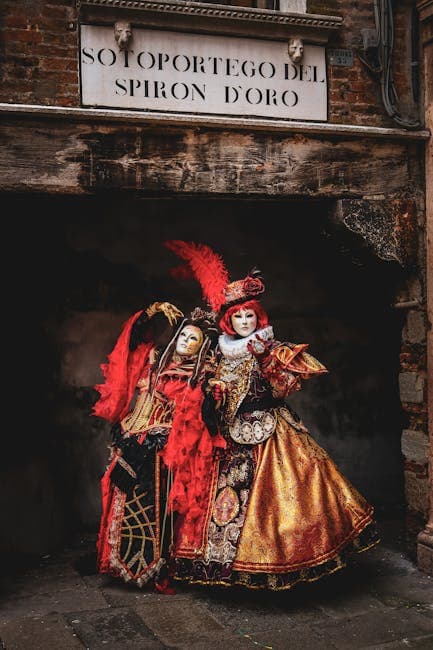
Sotoportego de l’Erbaria
Covered passage and traditional bàcari cluster
At this stop, the focus is on the sotoportego (covered passageway) leading from the market area and the cluster of nearby bàcari. The script should paint the experience of moving from bright canal light into low, vaulted shade, past small bars with hanging wine glasses and cicchetti displays. It should explain the social role of the bàcaro as a workers’ meeting place, where porters and traders grabbed quick bites and glasses of house wine. One anecdote could describe a long-running tab kept here for a particular porter or guild, settled only at the end of the season. Another might mention a nickname given to a tiny, always-crowded bàcaro, known among locals for a particular snack or gruff host.
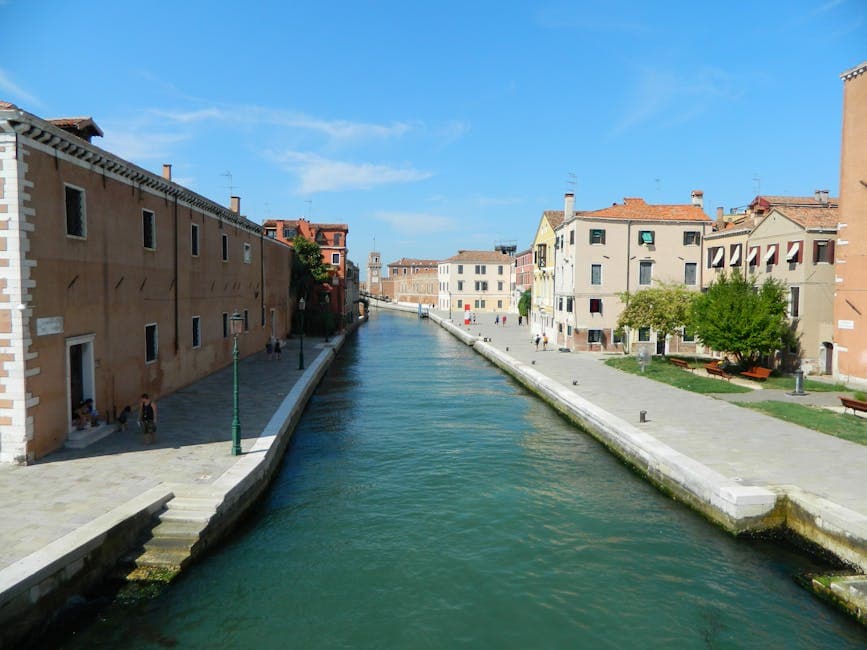
Calle dei Botteri
Workaday wine bars off the market crowds
This segment explores Calle dei Botteri and nearby lanes as a more everyday extension of Rialto’s drinking and eating culture. The script should evoke narrower, less polished streets lined with small wine bars and simple eateries that historically served artisans, porters, and shop workers. It can mention the street’s association with craftsmen or specific trades that once gave it character. One anecdote might recall a tiny wine bar known for serving wine directly from large demijohns, encouraging patrons to bring their own containers. Another could describe a regular lunchtime crowd of delivery boatmen who timed their routes to coincide with a particular bar’s daily hot dish.
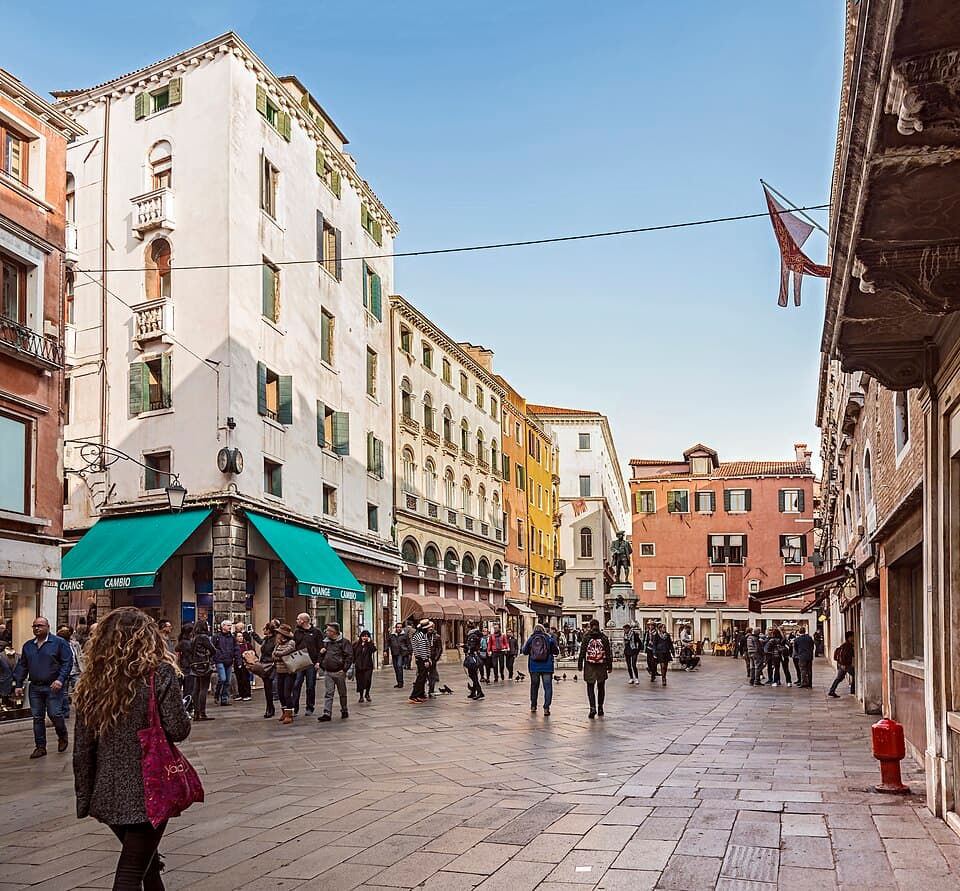
Campo San Bartolomeo
Busy crossroads between Rialto and San Marco
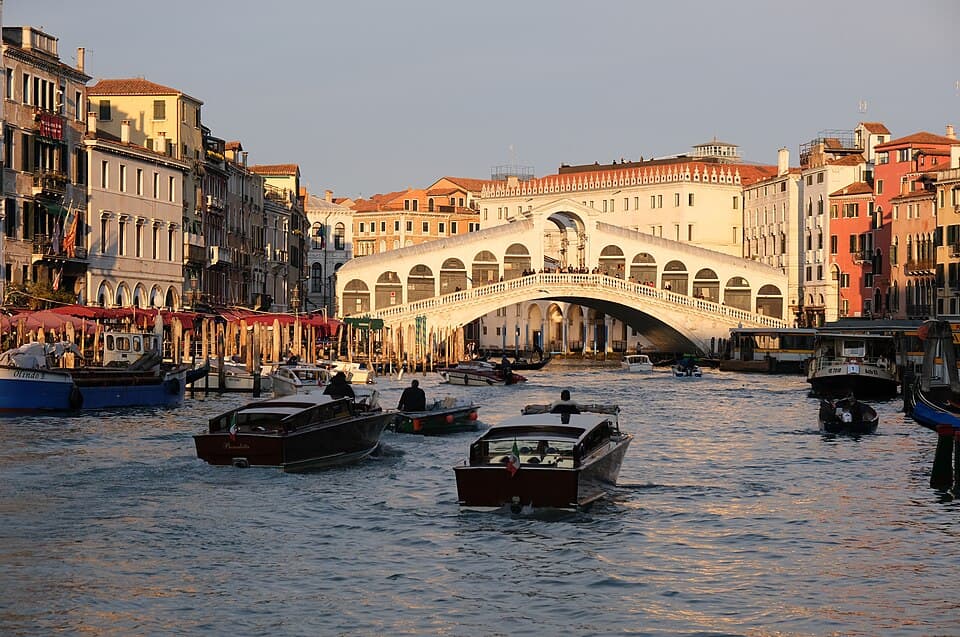
Here the narrative pauses in Campo San Bartolomeo, a compact but hectic square at the foot of the Rialto Bridge. The script should highlight the statue of Carlo Goldoni, the surrounding shops, and the way people stream through toward Rialto or San Marco. It should discuss how this area shifted from older craft and trade activities to modern retail and tourism, yet still channels daily commuter flows. One anecdote can recount Goldoni’s association with Venetian everyday life and how many of his characters might have frequented such campi and taverns. Another might recall the campo as a rendezvous point for local workers grabbing a quick coffee and pastry before crossing the bridge.
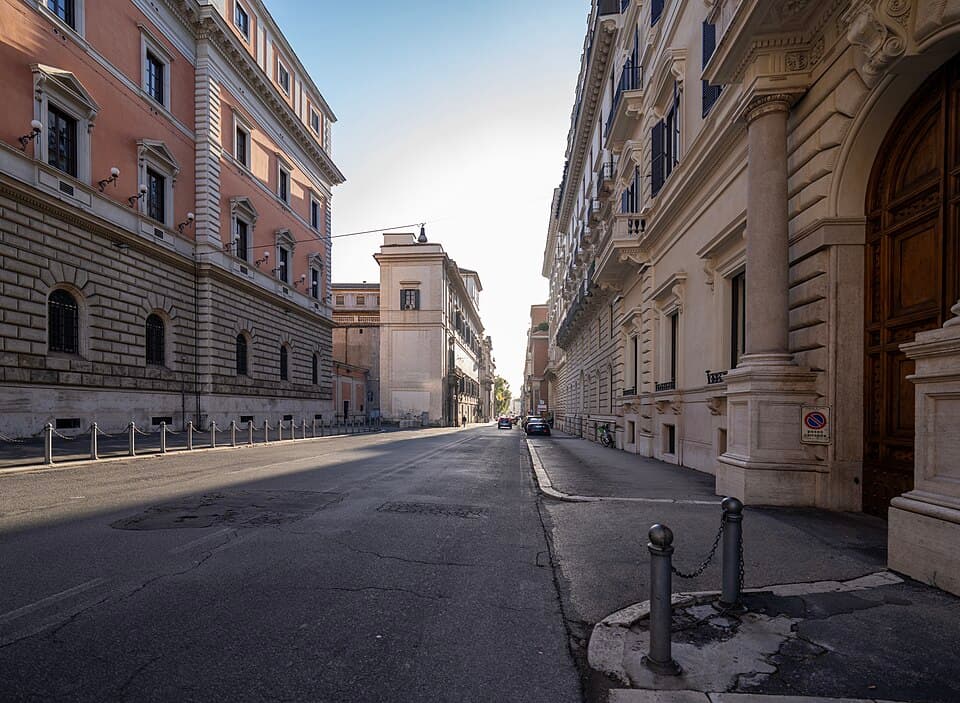
Strada Nova Food Stretch
Modern shopping axis with bakeries and food shops
This stop covers a segment of the Strada Nova as it leads toward Cannaregio, focusing on contemporary food shops, bakeries, and cafés. The script should explain that this broad street is relatively modern by Venetian standards, created to ease movement between Rialto and the railway area, and now lined with everyday services as well as tourist‑oriented businesses. It should highlight changing patterns of food retail, from small specialized botteghe to larger, more standardized outlets. One anecdote could describe a long‑established bakery known among locals for a particular sweet sold only during Carnival or certain holidays. Another might mention how, late at night, the smell of bread from back rooms once guided residents home along this route.
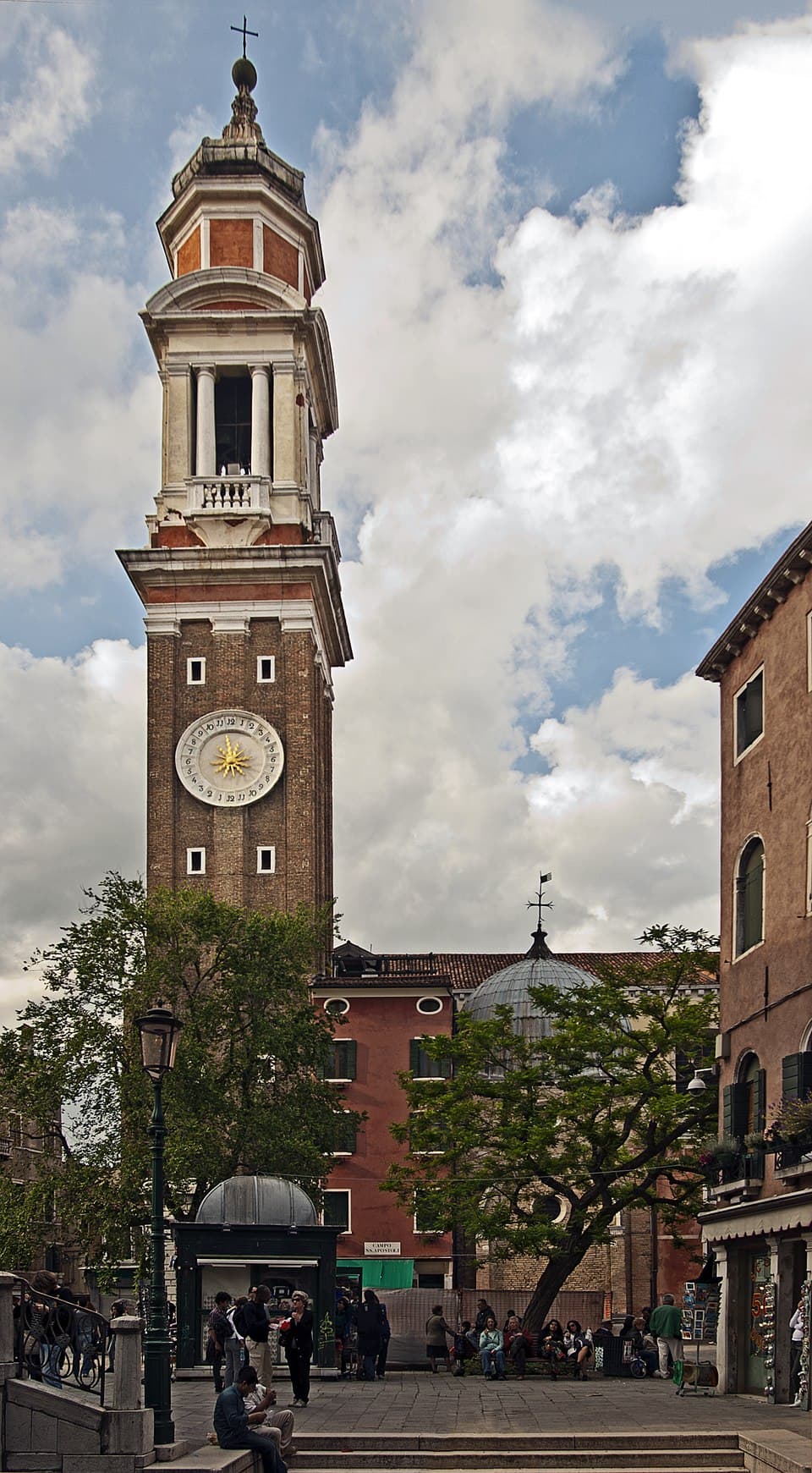
Campo Santi Apostoli
Small campo gateway into Cannaregio
At Campo Santi Apostoli, the tour enters Cannaregio proper via a modest but lively square. The script should describe the church exterior, surrounding buildings with shops at ground level, and the way several streets and canals converge nearby. It should note the campo’s role as both a local meeting place and a passage for people moving between the station, Rialto, and residential quarters. One anecdote may recall children playing ball games here under the watchful eyes of shopkeepers, using the campo as a safe ‘courtyard’. Another could involve a family‑run café that kept a handwritten notebook of regulars’ usual orders, reflecting close neighborhood ties.
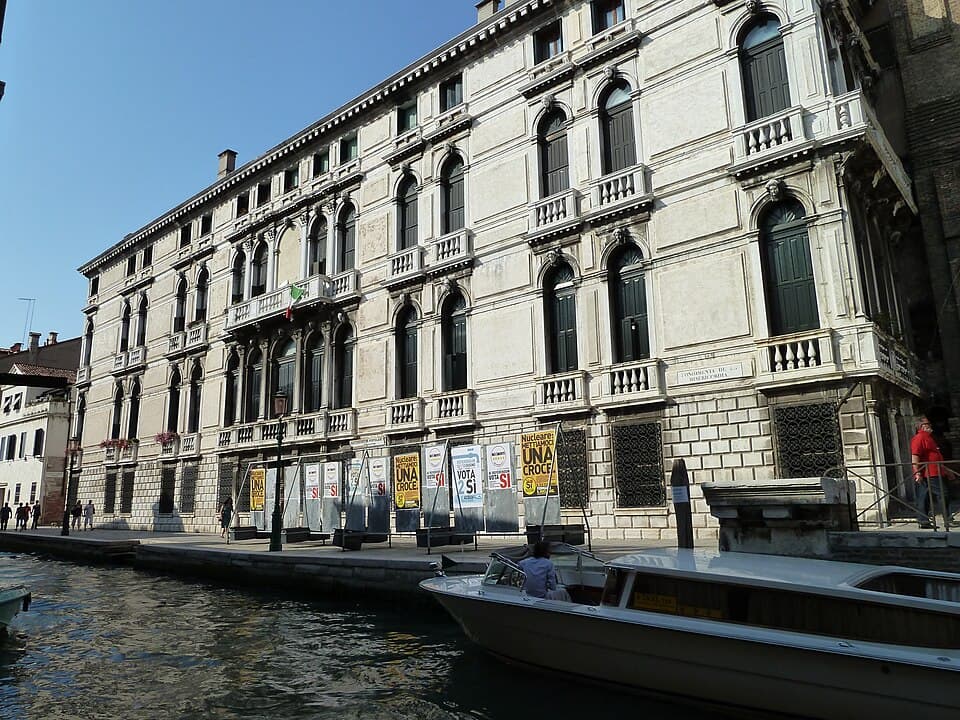
Fondamenta della Misericordia
Canal promenade lined with relaxed bàcari
This stop focuses on the Fondamenta della Misericordia, a long canal-side promenade known for its sequence of bàcari and restaurants. The script should describe the broad fondamenta, the gentle curve of the canal, moored boats, and the mix of older façades and lively terraces. It should explain how this became a favored evening destination for both residents and visitors, with people spilling out to drink and eat along the water. One anecdote could recall neighborhood musicians informally setting up here on warm nights, turning the canal into a casual concert venue. Another might mention how certain bàcari along this stretch became associated with specific cicchetti, creating a local ‘tasting route’ among friends.
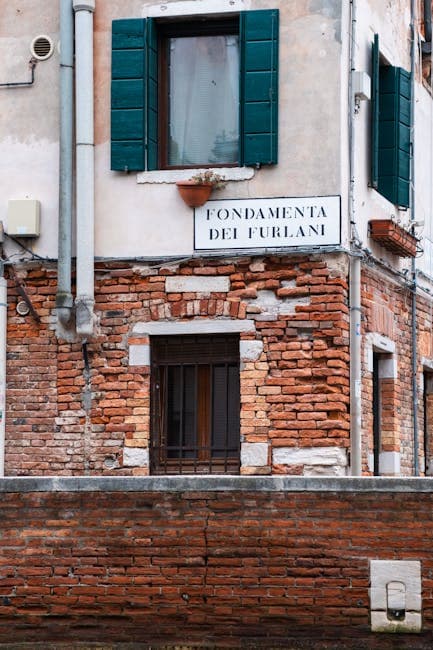
Fondamenta dei Ormesini
Evening hub for food, drinks, and canalside life
Here attention turns to Fondamenta dei Ormesini, the continuation of the same canal but with a slightly different, often younger evening crowd. The script should capture closely spaced bars and eateries, outdoor tables, and people sitting on the canal edge, especially at aperitivo time. It should explore how this area illustrates current Venetian nightlife and the balance between residents’ needs and visitor pressure. One anecdote might describe a tradition among local students of celebrating exams here with shared spritzes and simple snacks. Another could recall how, during occasional acqua alta, regulars adapt by perching on inverted crates or higher steps rather than abandoning their usual meeting place.
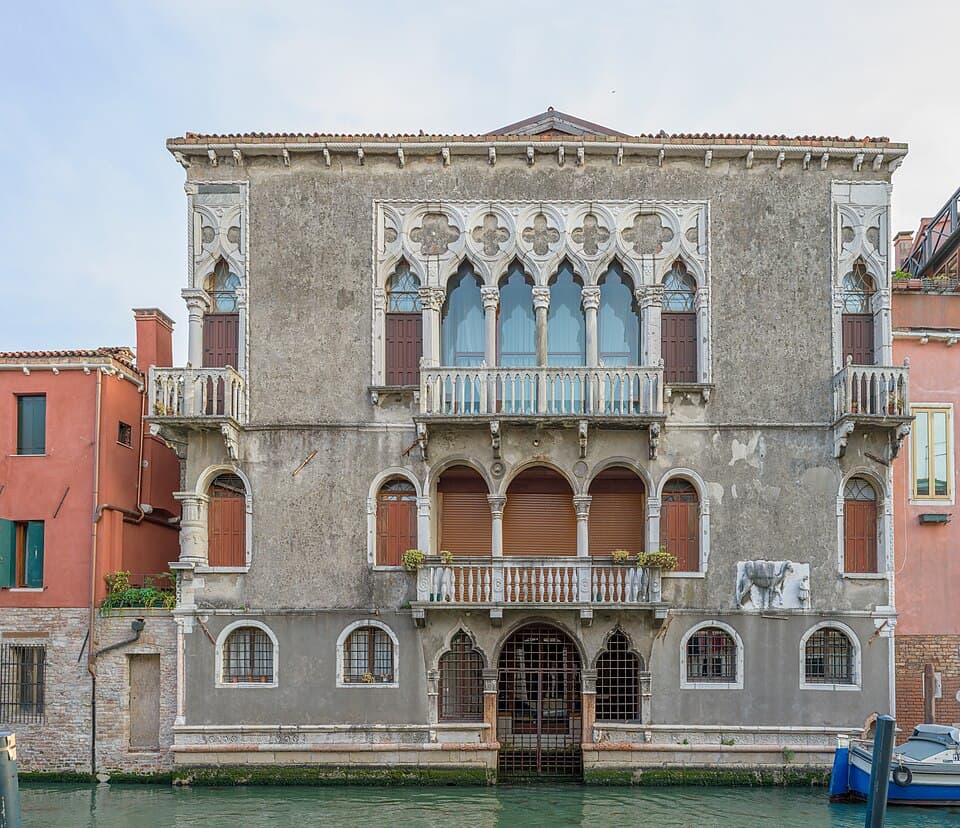
Campo Madonna dell’Orto
Quiet neighborhood square by a lagoon-side church
The final stop is Campo Madonna dell’Orto, a tranquil residential square anchored by a brick Gothic church. The script should describe the church façade, trees, surrounding modest houses and palazzi, and the relative quiet compared to previous stops. It should touch on the area’s historical ties to lagoon-facing trades and its reputation today as a peaceful corner of Cannaregio. One anecdote could recall local residents using the campo for community festivals or small processions linked to the church. Another might reflect on artists or writers who chose this quieter area as a home, appreciating its distance from the main tourist flows. The narration should conclude the tour by tying together themes of food, social spaces, and neighborhood life in Venice.
Start This Tour
Download Roamway to experience this audio tour
Tour Details
Access
Free
Stops
11 points of interest
Languages
GermanEnglishSpanishFrench
More tours in Venezia
View all tours in VeneziaOther tours you might enjoy:
Venice: St. Mark’s to Rialto History & Canals
This tour explores central Venice from Piazza San Marco to the Rialto area, focusing on major civic and religious landmarks. It covers the exteriors of St. Mark’s Basilica, the Doge’s Palace, and the Bridge of Sighs, then continues along the Riva degli Schiavoni to historic campos, markets, and viewpoints, highlighting Venetian politics, trade, and architecture.
Venice: Quiet Sestieri, Canalside Life & Hidden Campi
This tour explores lesser-known areas of Venice across the Santa Croce, Dorsoduro, and Cannaregio districts, focusing on everyday urban spaces and canalside life. It includes historic campi, traditional gondola craftsmanship at Squero di San Trovaso, and neighborhood landmarks such as Campo San Polo and Madonna dell’Orto. Topics include local history, urban layout, and social life away from major monuments.
Venice: Great Churches, Relics and Renaissance Art
This tour explores major churches in Venice, including St Mark’s Basilica, Santa Maria della Salute, San Zaccaria, Zanipolo, and the Frari, along with selected smaller churches and confraternity spaces. It focuses on religious relics, Byzantine and Renaissance mosaics, architectural styles, and key artworks such as Tintoretto’s cycles at the Scuola Grande di San Rocco.
Frequently Asked Questions
How do I start this audio tour?
Download the Roamway app, search for this tour, and tap 'Start Tour'. The app will guide you to the starting point using GPS. Once you're there, the audio narration begins automatically.
Do I need an internet connection?
No! Once you've downloaded the tour in the Roamway app, it works completely offline. The GPS navigation and audio narration function without an internet connection.
Can I pause and resume the tour?
Yes! You can pause the tour at any time and resume later. Your progress is automatically saved, so you can complete the tour over multiple sessions if needed.