
Audiotours in München — Explore at your own pace
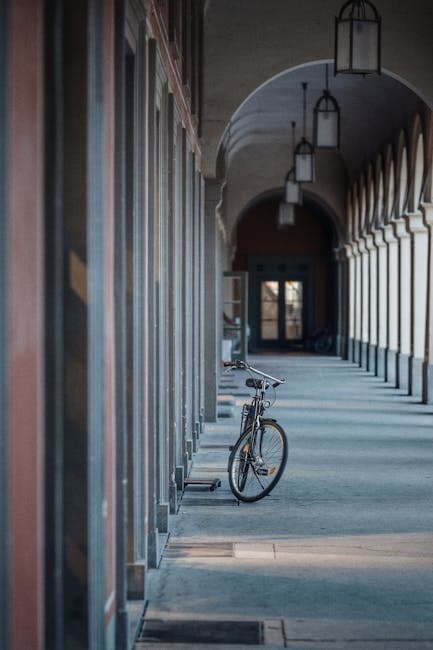
Munich, Germany is a city where medieval lanes, royal boulevards, and riverside neighborhoods all tell different chapters of the same story. With our audio-guided tours, you can explore historic squares, beer halls, museums, and Isar-side districts exactly when and how you like. Enjoy self-guided walks with immersive narration that fits seamlessly around your own schedule.
Free Tours
4 tours available
Munich Old Town: Squares, Churches, Residenz & Nazi Era
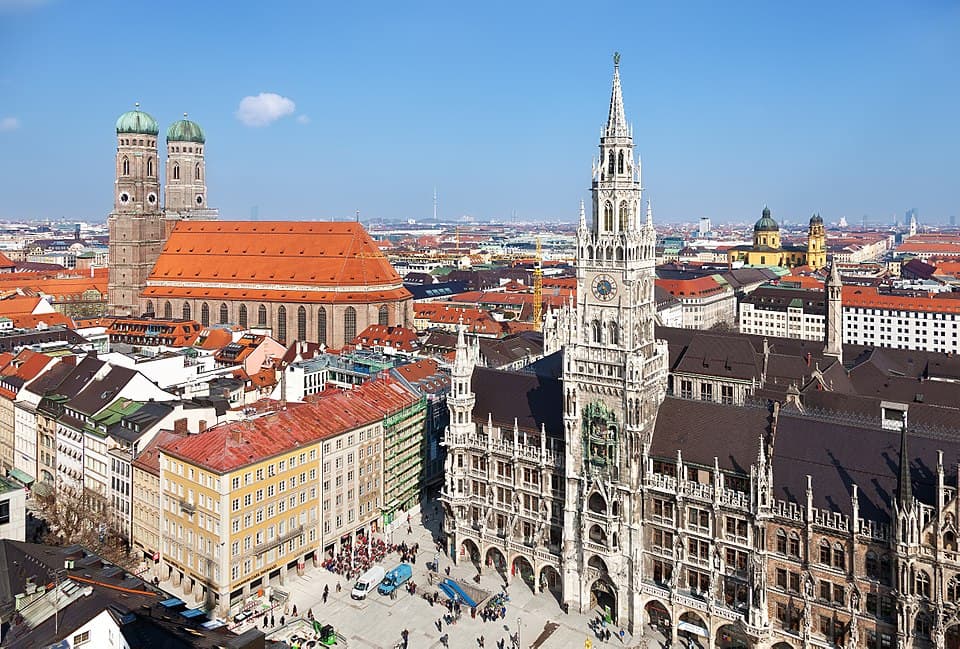
This tour covers Munich’s historic center from Marienplatz to Odeonsplatz, passing major squares, churches, courtyards, and remnants of the medieval city wall. It examines Gothic and Baroque architecture, royal Bavarian residences, and sites linked to 20th‑century politics, including locations connected to the Nazi era and local resistance gestures.
Munich: Beer Culture, Old Town Markets and Isar Districts
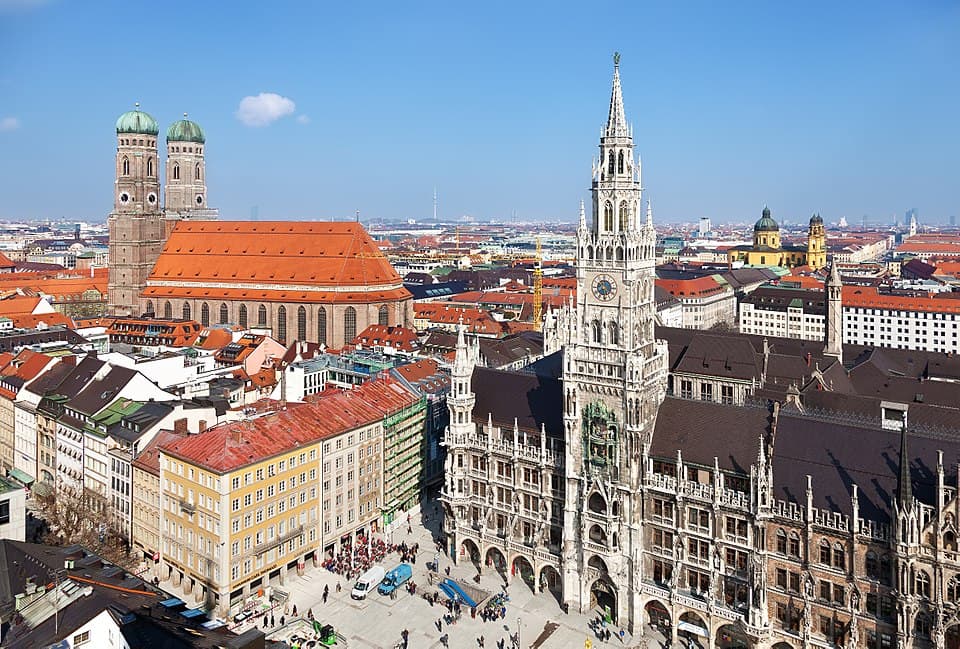
This tour explores Munich’s historic beer culture from Viktualienmarkt and the Hofbräuhaus area through Tal and the Isartor to the Isar riverbank and Haidhausen. It covers traditional beer halls, beer gardens, and former brewing sites, while also touching on market life, local architecture, bathing traditions, and brewing technology around the Deutsches Museum and Gasteig cultural quarter.
Munich: From Odeonsplatz to Haidhausen Architecture
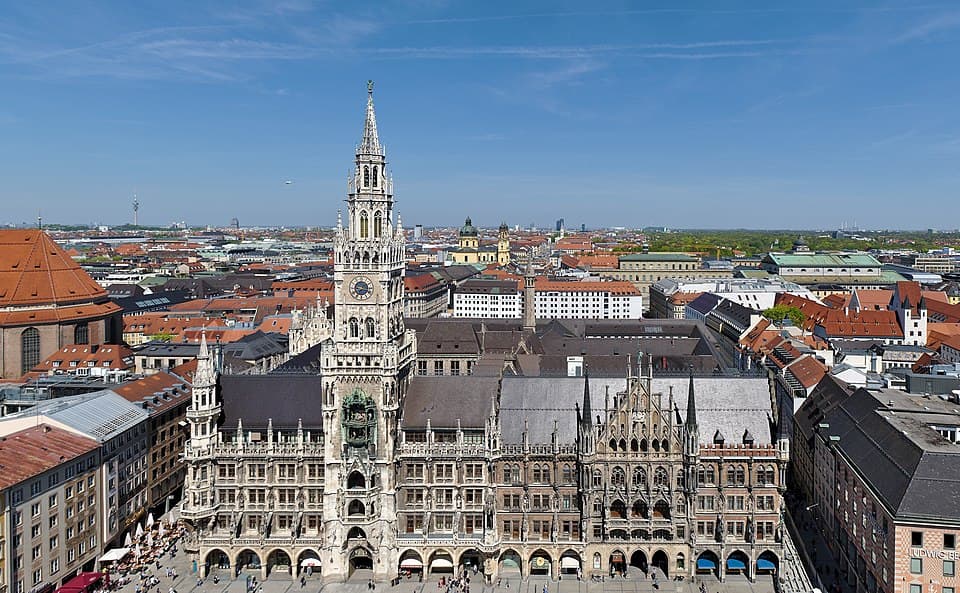
This tour traces Munich’s development from Baroque court city to 19th‑century boulevard planning and late 19th‑century residential districts. It covers central landmarks such as Odeonsplatz, the Residenz, Nationaltheater, and Maximilianstrasse, then crosses the Isar to Haidhausen’s Jugendstil streets, churches, and village-like squares, focusing on architecture, urban design, and political history.
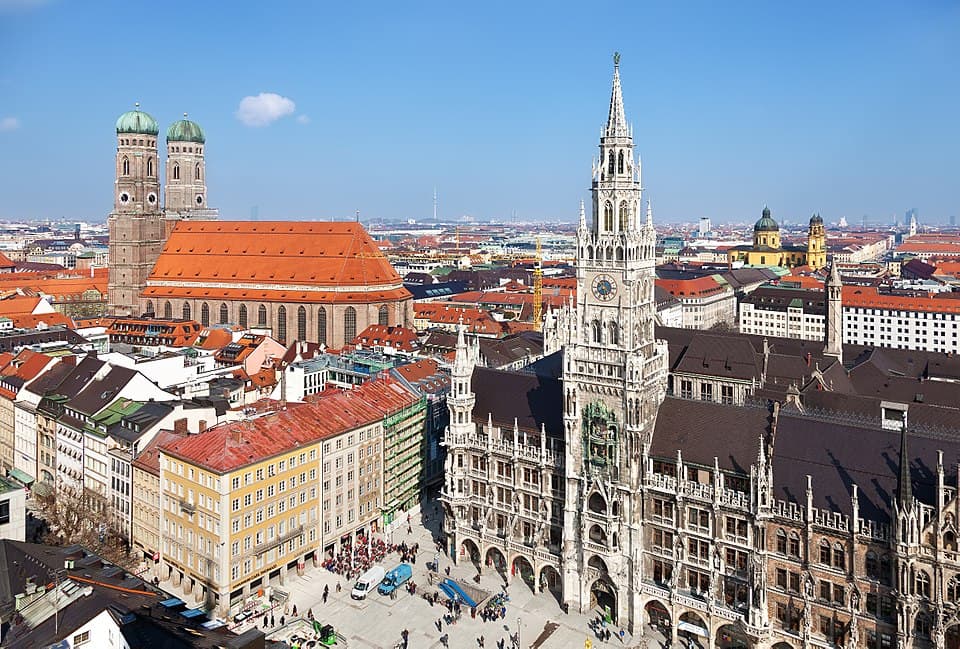
Munich: Art, Memory, and Modern Architecture Walk
This tour explores Munich’s Kunstareal and nearby districts through key sites such as Königsplatz, the Pinakotheken museums, Museum Brandhorst, and Lenbachhaus. It examines classical and modern architecture, public art, and museum collections. Themes include ancient art, Expressionism, Nazi-era propaganda, postwar reconstruction, and contemporary design in public space.
About München
Top Attractions
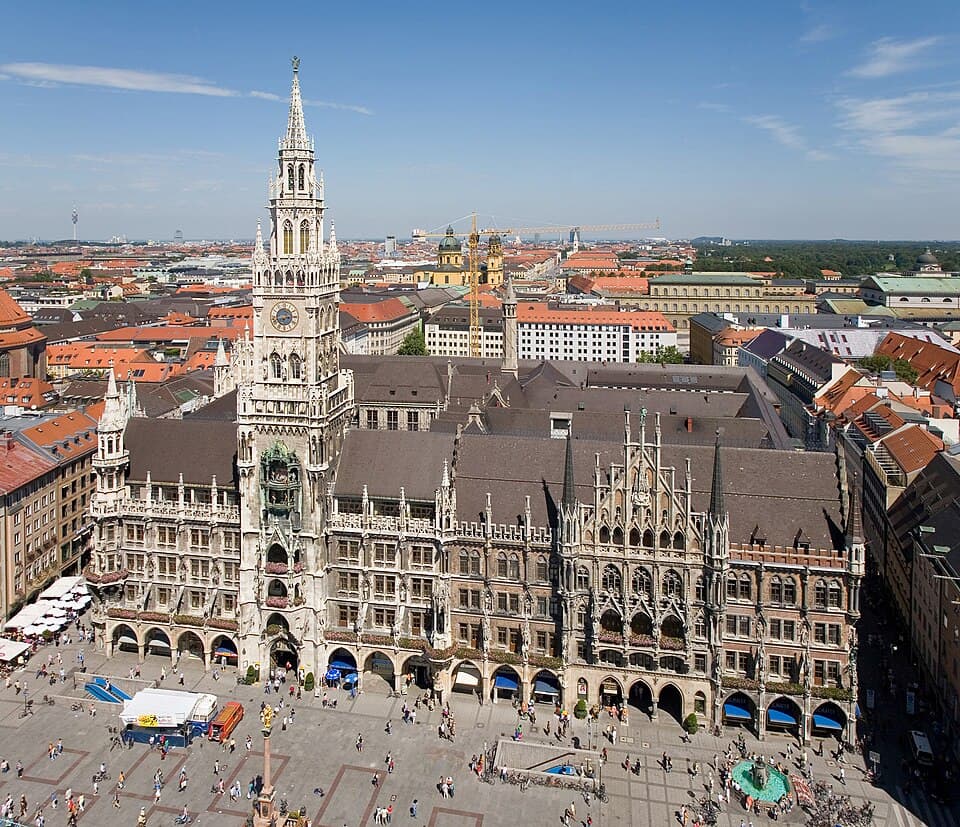
Marienplatz
Medieval market square with twin town halls
This stop introduces Munich’s historic heart at Marienplatz, framed by the New Town Hall and the Old Town Hall. The script should cover the square’s origins as a medieval market, the Marian column as a baroque centerpiece, and how the New Town Hall reflects 19th‑century neo‑Gothic ambitions. It should note the Old Town Hall’s earlier role in city governance and public life. One anecdote can explain the popularity of the Rathaus‑Glockenspiel and how its animated scenes recall local historical events like tournaments or civic celebrations, illustrating how Munich stages its own history in public space.
View Tour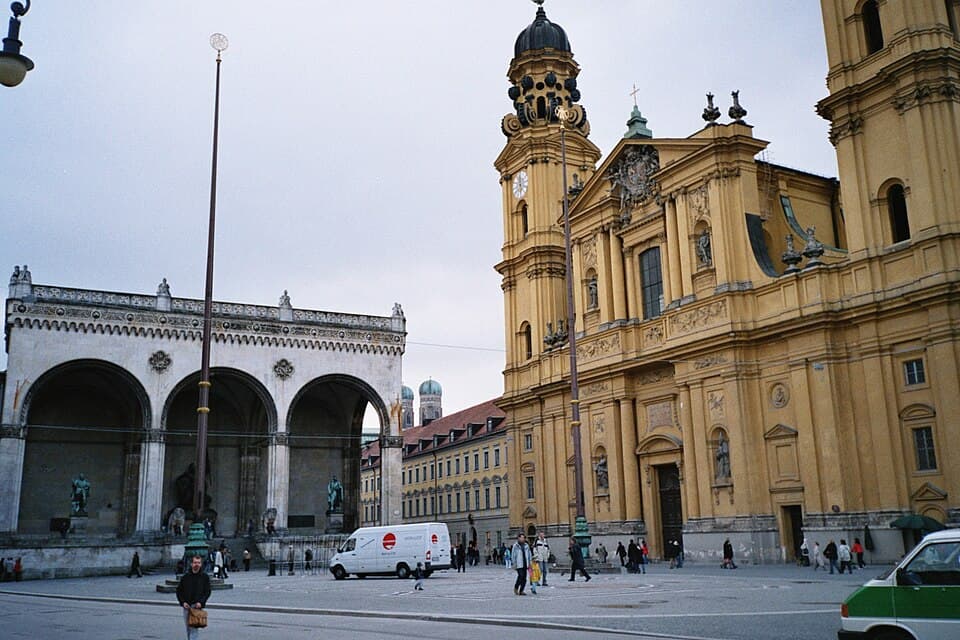
Odeonsplatz
Monumental gateway to Munich’s court city
This stop introduces Odeonsplatz as a key ceremonial square and starting point for the tour’s themes of power, planning, and style. The guide should explain how the square was laid out as a northern entrance to the old town, framed by the Residenz, Theatinerkirche, Feldherrnhalle, and 19th‑century façades. They should highlight its role in royal processions and public gatherings across different regimes. An anecdote can cover how Ludwig I used such spaces to reshape Munich’s image as an arts capital, or how the square often appears in paintings and photographs as the “face” of the royal city. The tone sets expectations: from this square, listeners will move through courts, boulevards, and finally to residential Haidhausen.
View Tour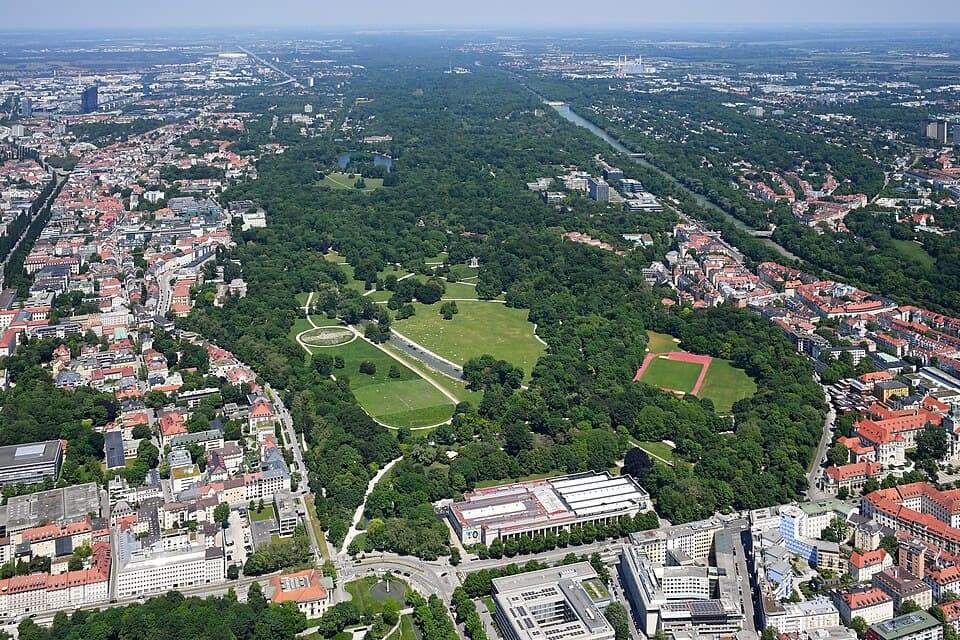
Viktualienmarkt Beer Garden
Munich’s pantry and central beer garden hub
This stop introduces Viktualienmarkt as Munich’s historic food market and a key node in its beer culture, including the central beer garden where different breweries take turns operating. The script should describe the market’s evolution from a simple farmers’ square to a gourmet hub, highlighting its fountains, maypole, and open‑air stalls. It should explain how the beer garden became a social extension of the market, where workers, traders, and modern office staff all mix. A unique anecdote could involve the tradition of locals bringing their own food to the beer garden while only ordering drinks, reflecting long‑standing Bavarian beer garden customs tied to food vendors around the market.
View Tour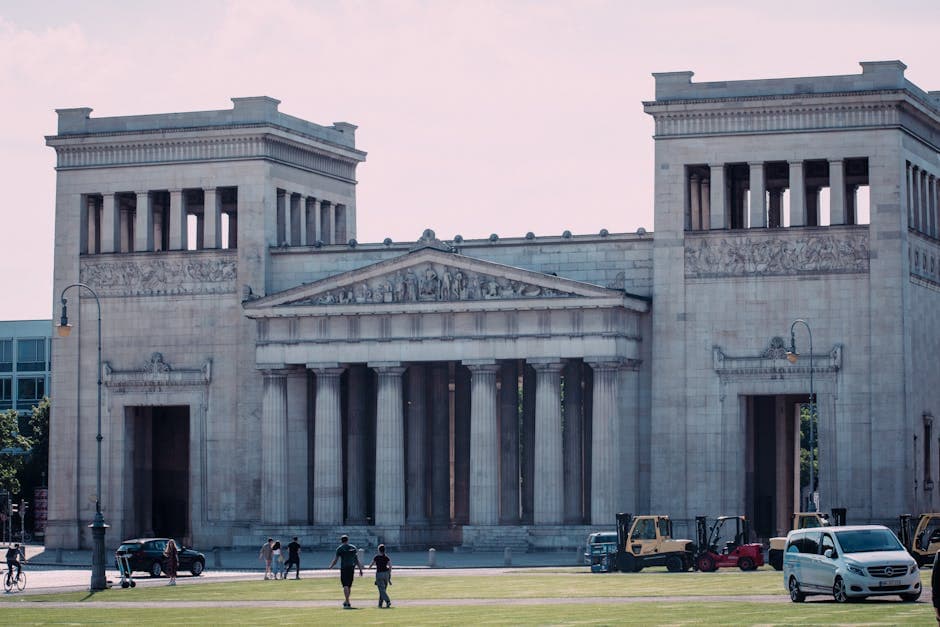
Königsplatz
Neoclassical square turned stage for power
This stop introduces Königsplatz as the ceremonial heart of Munich’s Kunstareal, framed by the Glyptothek, the Propyläen gate, and other neoclassical buildings. The narration should explain the 19th‑century vision of Munich as an “Athens on the Isar”, describing how Greek Revival architecture was used to project cultural prestige. It should also address how the square was drastically re‑staged under the Nazi regime for mass rallies and parades, including the leveling of greenery to create an austere parade ground. One anecdote could describe how postwar planners debated whether to preserve, alter, or completely redesign the square’s Nazi‑era alterations before arriving at today’s compromise between historical layers.
View Tour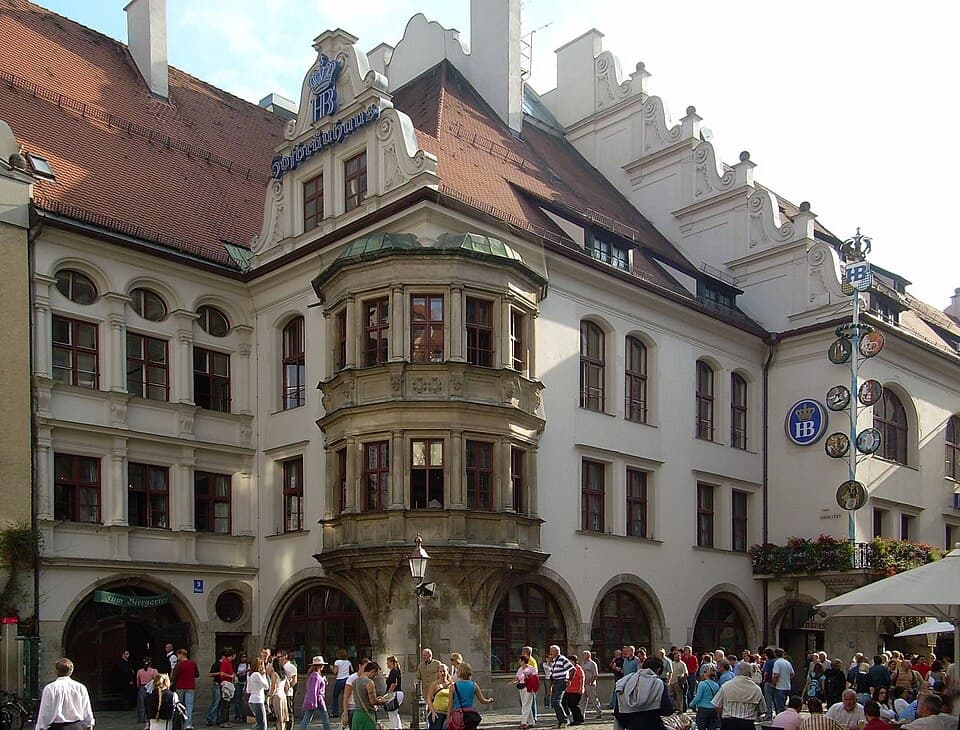
Hofbräuhaus am Platzl
Former royal brewery and iconic beer hall
This stop focuses on Hofbräuhaus as Munich’s best‑known beer hall, originally tied to the court brewery. The script should cover its origins serving the Wittelsbach rulers, the shift from brown beer to other styles, and its role as a civic gathering place. It should briefly address its darker 20th‑century political history, alongside stories of music, brass bands, and song traditions that made it famous with locals and visitors. A unique anecdote might relate to the legend of regulars keeping their own personalized beer steins locked in wall cupboards, symbolizing long‑term loyalty to their Stammtisch and the house beer.
View Tour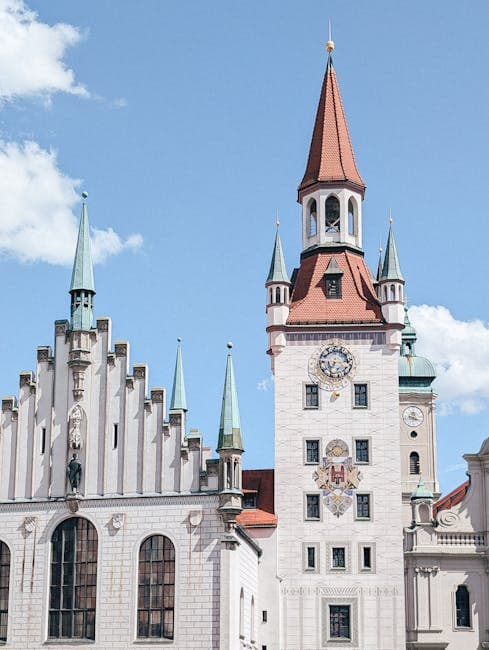
Altes Rathaus
Gothic town hall above the old city gate
Here the focus shifts to the Old Town Hall at the eastern edge of Marienplatz, with its pointed tower and reconstructed Gothic façade. The script should explain its function as the medieval council hall and city gate, its later modifications, and damage in the Second World War. Architectural details like stepped gables, arcades, and the tower’s silhouette should be described. A unique anecdote could mention the historical use of the assembly hall for public festivities or speeches in earlier centuries, highlighting how civic authority was expressed indoors and at street level before larger 19th‑century structures took over.
View Tour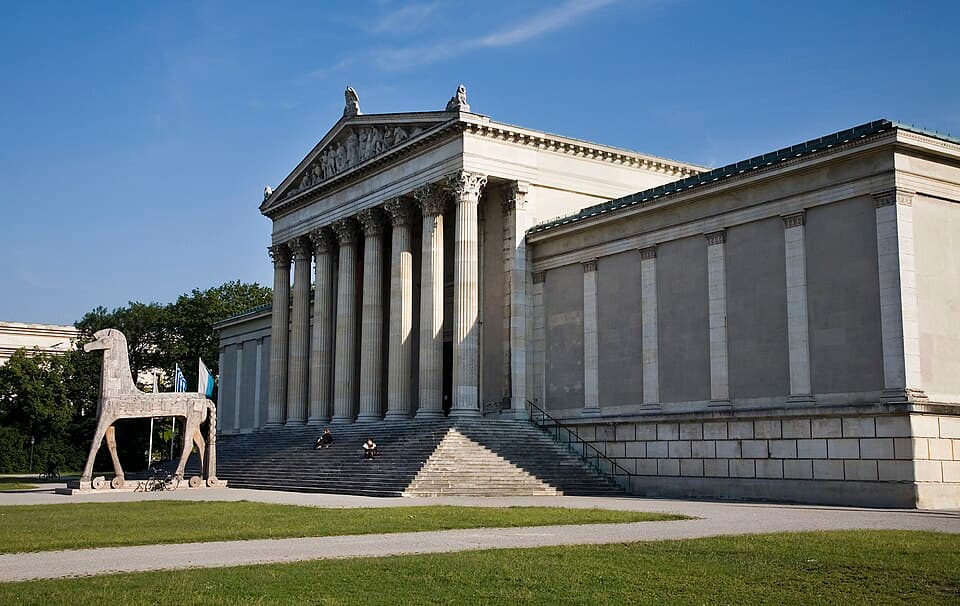
Staatliche Antikensammlungen
Classical treasures in a neoclassical shell
This point focuses on the exterior of the Staatliche Antikensammlungen, the State Collections of Antiquities, on the north side of Königsplatz. The narration should describe its temple‑like façade, Corinthian columns, and alignment with the Glyptothek, linking architecture to the 19th‑century passion for Greek and Roman archaeology. It should explain that the museum houses Greek vases, Etruscan finds, and Roman objects, gathered over generations by Bavarian rulers and scholars. An anecdote might discuss how one famous set of Greek vases became emblematic of Munich’s collection, sparking both scholarly excitement and public curiosity when first displayed in the city.
View Tour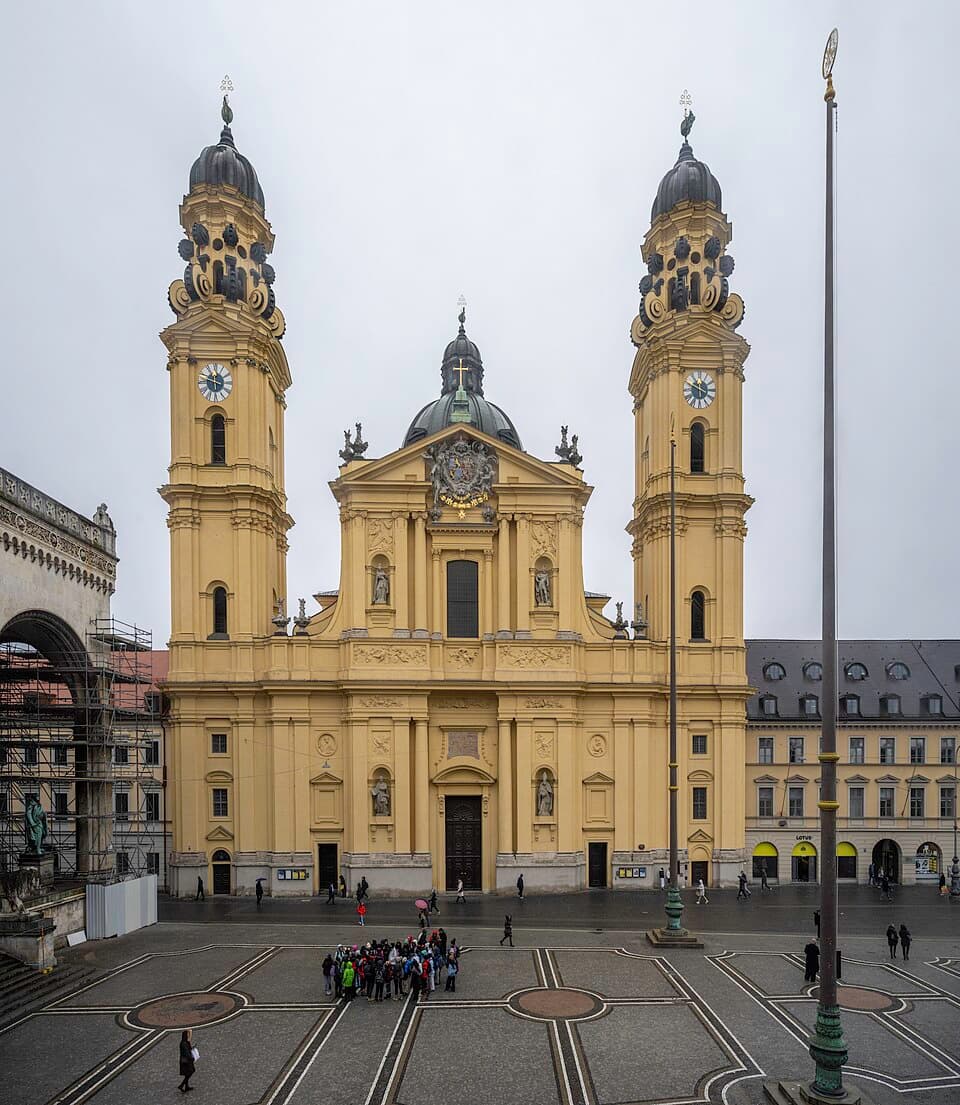
Theatinerkirche
Baroque court church of the Wittelsbach dynasty
This stop focuses on the Theatinerkirche’s striking yellow Baroque façade and its luminous, white stucco interior. The narration should explain its origins as a dynastic church commissioned by the ruling Wittelsbachs and tied to a long‑desired heir, linking Italian Baroque influences to Munich’s identity. Inside, the guide can describe the high nave, sculpted decoration, and function as a burial place for members of the royal family. One anecdote might recount how its unusual color and silhouette initially divided opinion in a more medieval cityscape, while another can mention a notable royal ceremony, such as a wedding or funeral, that drew crowds to this space. This stop deepens the theme of religion as a stage for power.
View Tour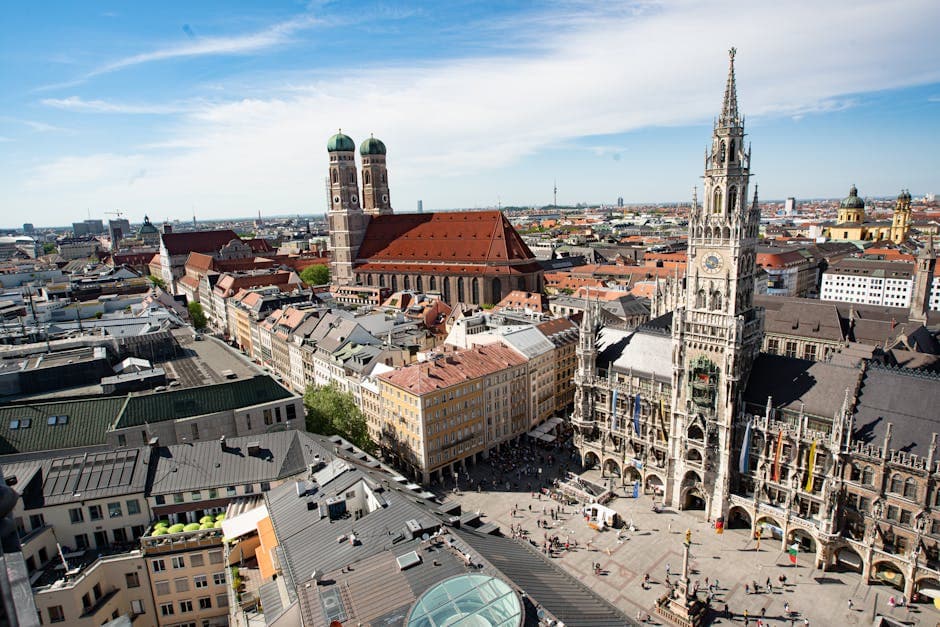
Frauenkirche
Brick Gothic cathedral dominating Munich’s skyline
This stop centers on the Frauenkirche, Munich’s large late Gothic brick cathedral with its iconic twin towers and domed caps. The script should trace its construction as a symbol of the city’s growing importance and its role as the seat of the archbishop. Features like the broad nave, buttresses, and interior light should be evoked, along with bomb damage and subsequent restoration. One anecdote may introduce the well‑known “devil’s footprint” legend near the entrance, using it to illustrate how folklore becomes attached to monumental architecture without repeating at any other stop.
View Tour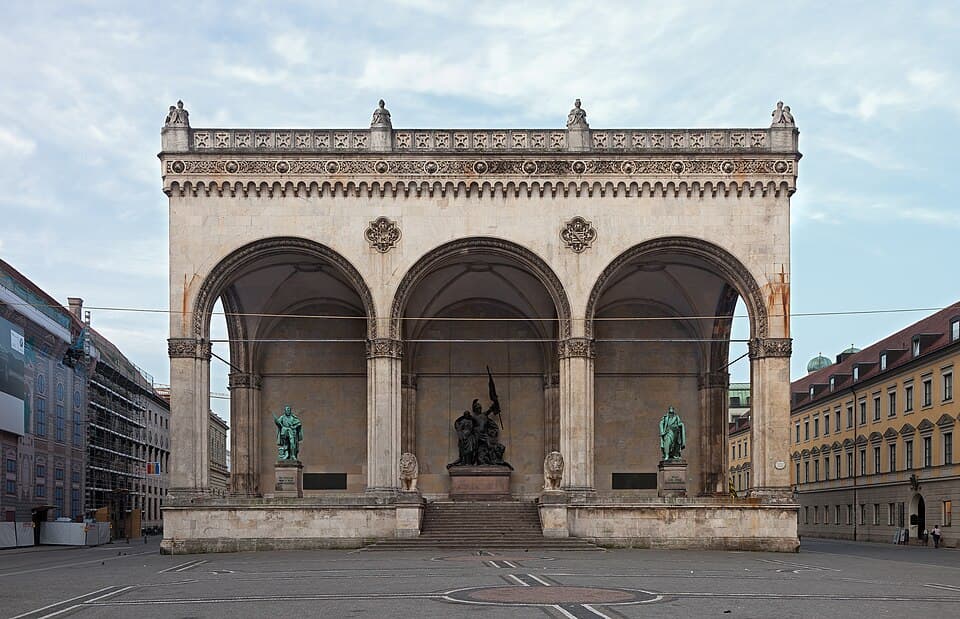
Feldherrnhalle
Military monument and charged political stage
At the Feldherrnhalle, the focus is on its design as a 19th‑century loggia honoring Bavarian military leaders, modeled after Florence’s Loggia dei Lanzi. The script should detail its sculptures, arches, and relation to Odeonsplatz as a theatrical backdrop for royal ceremonies and parades. Political history plays a stronger role here: listeners should learn how the site later became associated with a failed putsch and subsequent regime propaganda in the 20th century, without sensationalism. An anecdote might describe how post‑war Munich responded to this problematic legacy, for example by adding memorial elements or changing uses of the space. This stop illustrates how architecture can be reinterpreted across regimes.
View Tour
Orlandohaus And Platzl
Historic square of trade, taverns, and theatre
This stop explores Orlandohaus and the small Platzl square as a dense crossroads of long‑standing taverns, trade, and entertainment near Hofbräuhaus. The script should describe Orlandohaus’s façade and architectural details, and explain how the square functioned as a compact stage for street life, inns, and later theatres. It should highlight how beer halls and restaurants clustered here to profit from traffic between the court, marketplace, and river. A unique anecdote could mention a past cabaret or theatre venue in the area whose satirical shows poked fun at Munich society, illustrating how beer, performance, and politics have long intertwined at Platzl.
View Tour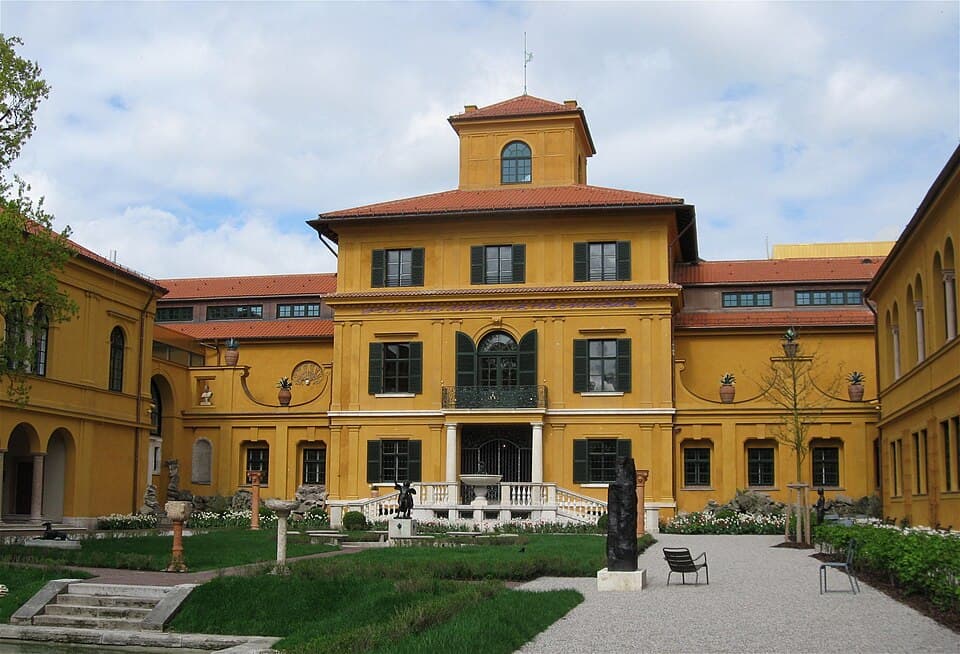
Lenbachhaus
From painter’s villa to Expressionist landmark
This stop presents Lenbachhaus as a transformation from a 19th‑century artist’s villa into a major museum, best known for its Blue Rider (Der Blaue Reiter) collection. The narration should evoke the original villa’s Tuscan‑inspired architecture and gardens, contrasting them with the later contemporary extension and new entrance. It should introduce key Blue Rider figures such as Wassily Kandinsky and Gabriele Münter, and explain how their revolutionary experiments in color and form reshaped modern art. An anecdote could recount how Münter safeguarded many of these works through turbulent decades and later donated them to Munich, ensuring the museum’s international importance.
View TourFrequently Asked Questions
How do audio walking tours work in München?
Our audio walking tours in München are self-guided experiences that you can start anytime. Simply download the Roamway app, select a tour, and follow the GPS-guided route. The audio narration automatically plays as you approach each point of interest, allowing you to explore at your own pace.
Are self-guided tours better than guided tours?
Self-guided audio tours offer flexibility that traditional guided tours can't match. You can pause, rewind, or skip sections, explore at your own pace, and start whenever you're ready. Plus, our tours are available in multiple languages and work offline once downloaded.
Do I need an internet connection during the tour?
No! Once you've downloaded a tour in the Roamway app, it works completely offline. The GPS navigation and audio narration function without an internet connection, making it perfect for international travelers who want to avoid data charges.
How long do the audio tours take?
Tour durations vary, but most of our audio tours in München range from 1 to 3 hours, depending on your pace and how much time you spend at each point of interest. You can complete them in one go or split them across multiple visits.
Ready to explore München?
Download Roamway and start your audio-guided adventure today.