
Munich Old Town: Squares, Churches, Residenz & Nazi Era
München, Deutschland
Audio Preview
Listen to a sample of this audio tour to get a feel for the experience.
What You'll Experience
On this Munich Old Town: Squares, Churches, Residenz & Nazi Era audio tour in München, you'll discover 12 carefully selected points of interest, each with its own story. The tour is designed to be completed at your own pace, with GPS navigation guiding you from one location to the next. As you approach each stop, the audio narration automatically begins, bringing history, culture, and local insights to life.
About This Tour
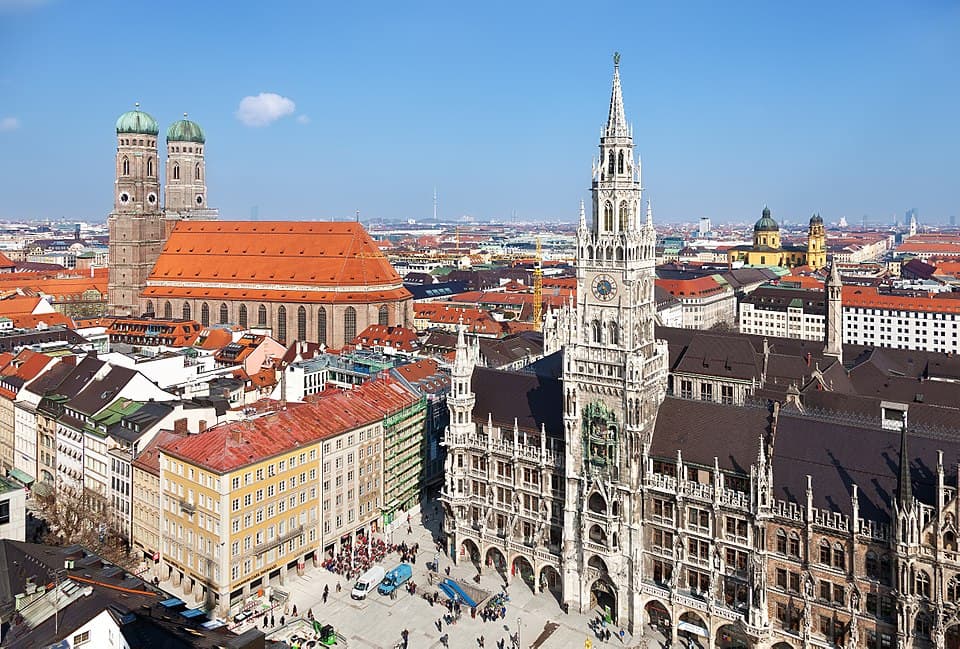
This tour covers Munich’s historic center from Marienplatz to Odeonsplatz, passing major squares, churches, courtyards, and remnants of the medieval city wall. It examines Gothic and Baroque architecture, royal Bavarian residences, and sites linked to 20th‑century politics, including locations connected to the Nazi era and local resistance gestures.
Points of Interest
Marienplatz
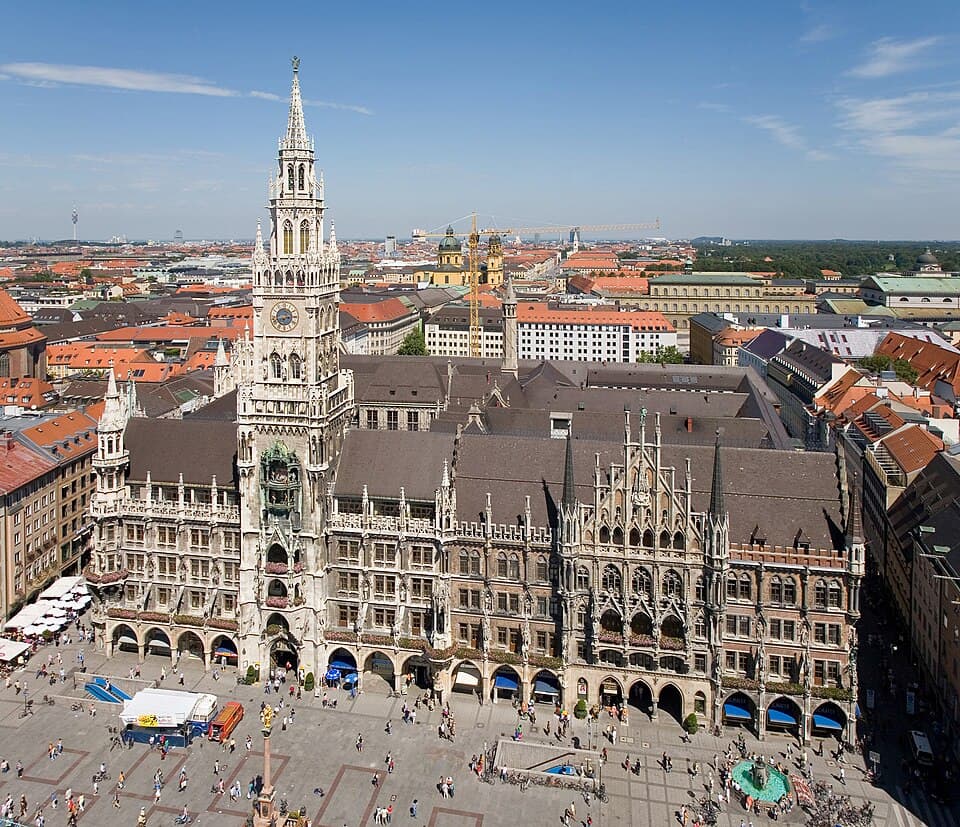
Medieval market square with twin town halls
This stop introduces Munich’s historic heart at Marienplatz, framed by the New Town Hall and the Old Town Hall. The script should cover the square’s origins as a medieval market, the Marian column as a baroque centerpiece, and how the New Town Hall reflects 19th‑century neo‑Gothic ambitions. It should note the Old Town Hall’s earlier role in city governance and public life. One anecdote can explain the popularity of the Rathaus‑Glockenspiel and how its animated scenes recall local historical events like tournaments or civic celebrations, illustrating how Munich stages its own history in public space.
Altes Rathaus
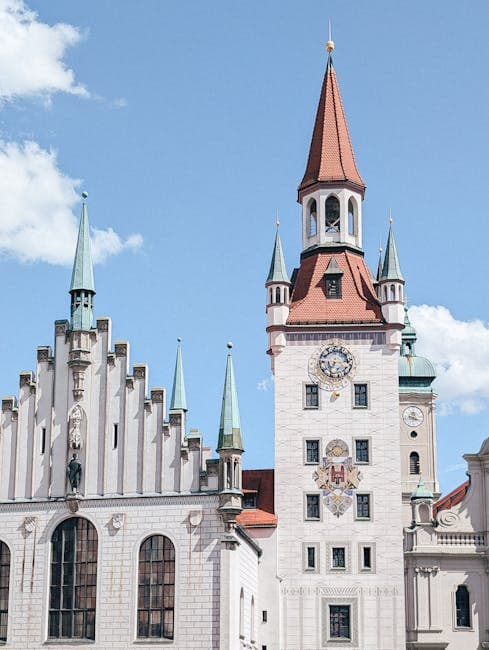
Gothic town hall above the old city gate
Here the focus shifts to the Old Town Hall at the eastern edge of Marienplatz, with its pointed tower and reconstructed Gothic façade. The script should explain its function as the medieval council hall and city gate, its later modifications, and damage in the Second World War. Architectural details like stepped gables, arcades, and the tower’s silhouette should be described. A unique anecdote could mention the historical use of the assembly hall for public festivities or speeches in earlier centuries, highlighting how civic authority was expressed indoors and at street level before larger 19th‑century structures took over.
Frauenkirche
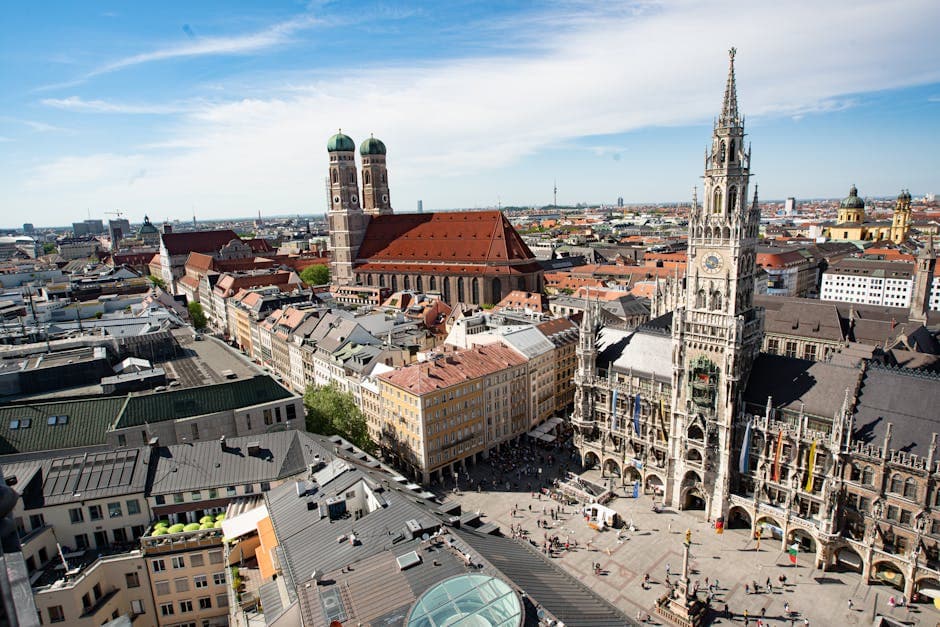
Brick Gothic cathedral dominating Munich’s skyline
This stop centers on the Frauenkirche, Munich’s large late Gothic brick cathedral with its iconic twin towers and domed caps. The script should trace its construction as a symbol of the city’s growing importance and its role as the seat of the archbishop. Features like the broad nave, buttresses, and interior light should be evoked, along with bomb damage and subsequent restoration. One anecdote may introduce the well‑known “devil’s footprint” legend near the entrance, using it to illustrate how folklore becomes attached to monumental architecture without repeating at any other stop.
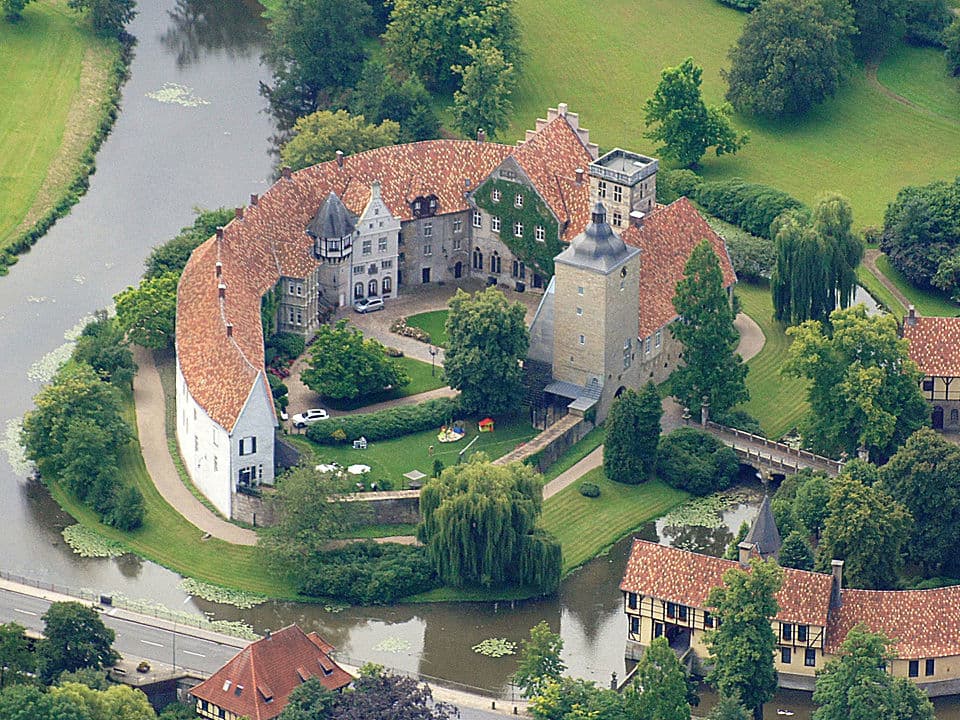
Burgstrasse City Wall
Narrow lane tracing Munich’s medieval defenses
This stop explores Burgstrasse and the remnants or traces of Munich’s old city wall, shifting focus from grand squares to tighter medieval streets. The script should explain how the original town was fortified, how walls and towers once lined this route, and how later development absorbed or erased many structures. It should describe the scale and purpose of the defenses, and how trade and growth eventually pushed the city beyond them. A unique anecdote might highlight how some cellars or foundations along the street are believed to preserve parts of old towers or wall segments, even when they are no longer fully visible at street level.
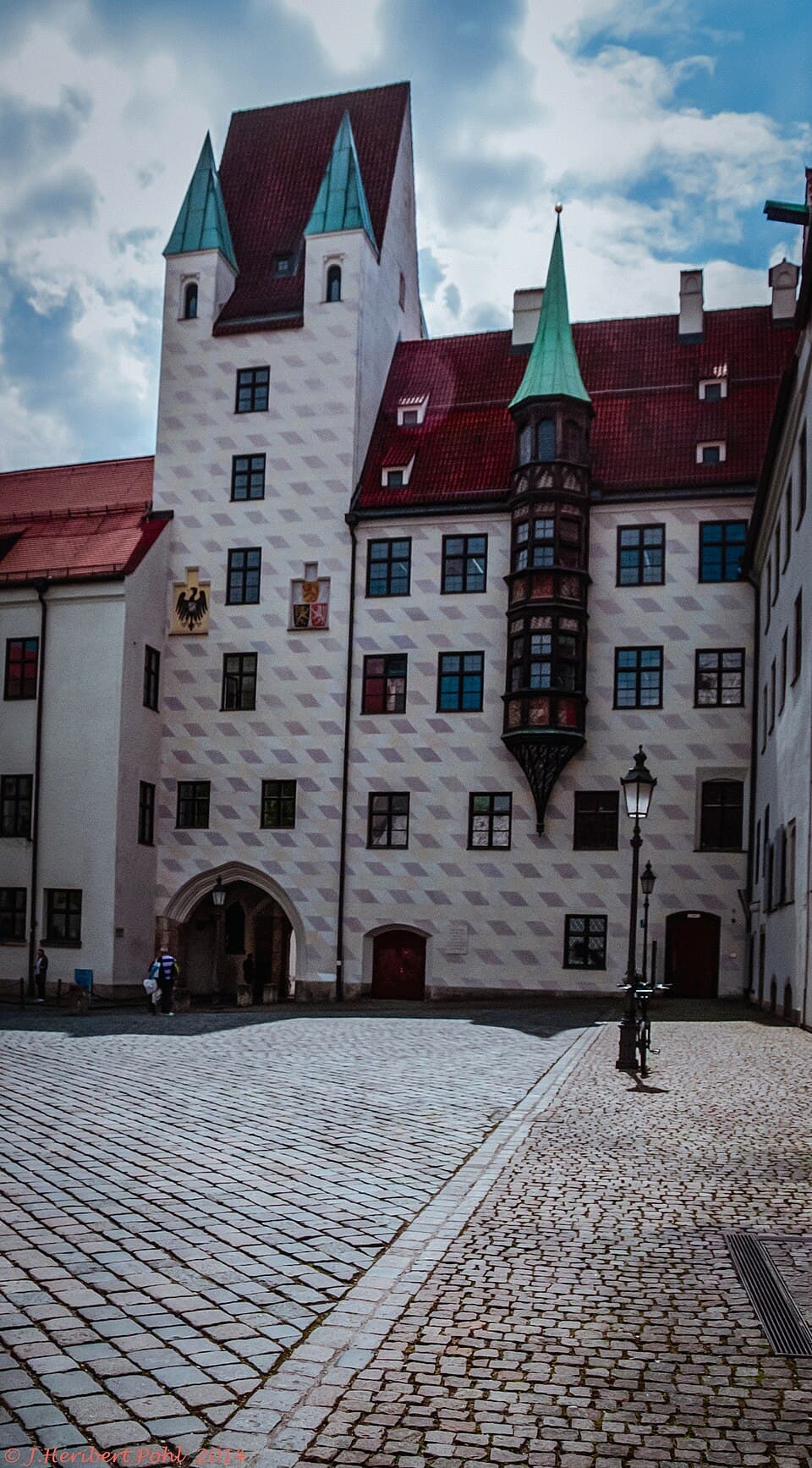
Alter Hof
First Wittelsbach residence in the old town
At Alter Hof, the tour enters one of Munich’s earliest ducal residences, a complex of courtyards and wings known as the Old Court. The script should outline its role as a seat of the Wittelsbach rulers before the Residenz expanded to the north, noting changes over centuries and war damage. Architectural elements like arcades, oriels, and painted façades can be described to convey its mix of medieval and later styles. A unique anecdote might mention the local legend of the "monkey tower" connected with a duke’s child and a runaway pet, showing how royal life and folklore intertwine at this early court.
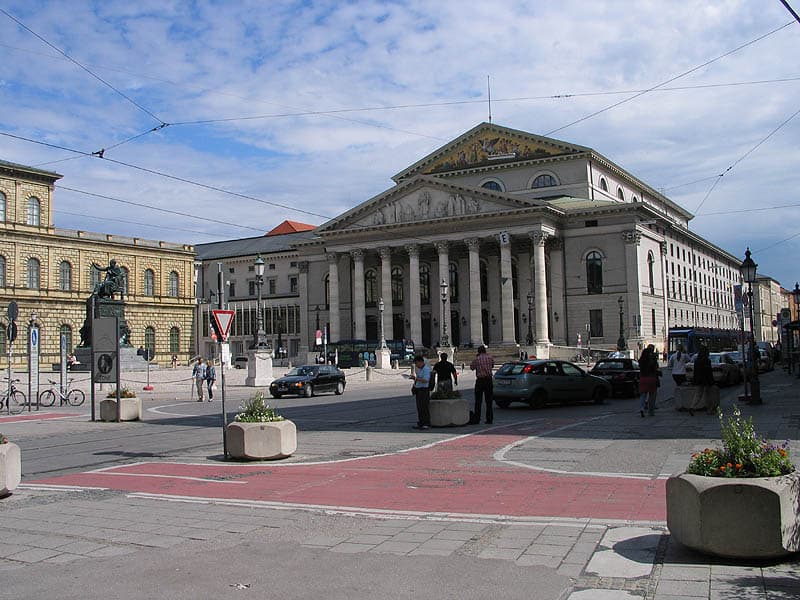
Max-Joseph-Platz
Royal square framed by opera and palace
This stop looks at Max‑Joseph‑Platz as a grand 19th‑century urban stage bordered by the National Theatre and the Residenz. The script should explain how the square reflects Munich’s transformation into a cultured royal capital, with references to Bavarian kings who promoted opera and architecture. It should describe the statue of King Maximilian Joseph and the neoclassical lines of the theatre. A unique anecdote could recall a notable premiere or royal performance at the National Theatre, illustrating how the arts were used to project prestige and modern identity in contrast to the medieval Marienplatz.
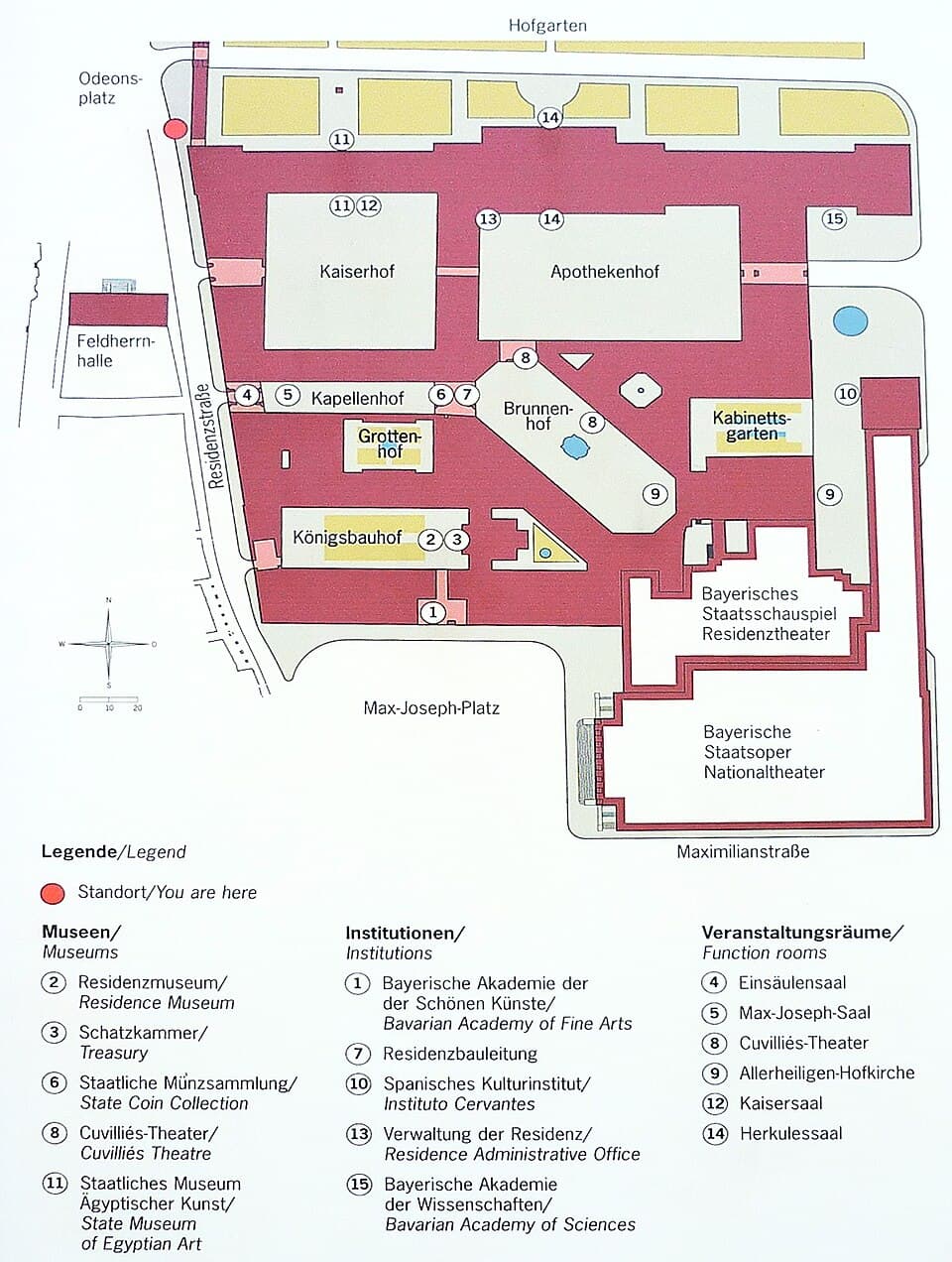
Munich Residenz
Expansive palace with evolving courtyards and wings
At the Munich Residenz, the focus turns to the main palace complex of the Wittelsbach dynasty, including its series of courtyards. The script should trace the Residenz’s growth from a fortified seat into a sprawling residence that absorbed Renaissance, Baroque, and classical elements. It should describe the feel of the different courtyards, façades, and decorative programs as expressions of dynastic power. A unique anecdote might highlight the creation of one particular courtyard or façade to impress foreign visitors or host ceremonial entries, showing how architecture served diplomacy and image-making here in ways distinct from the city halls.
Hofgarten
Formal court garden linking palace and city
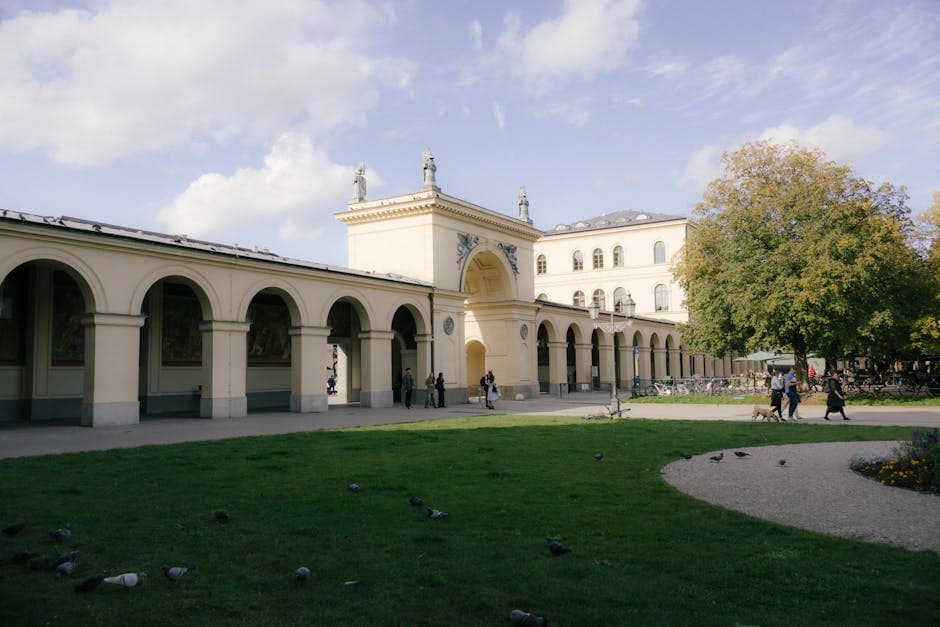
This stop examines the Hofgarten, the formal garden north of the Residenz, as a transition from palace to public space. The script should discuss its origins as a ducal or royal garden, later opening to the public, and its geometric layout with paths and the central pavilion. It should highlight the arcades along the Residenz side and views toward surrounding buildings. A unique anecdote could mention how the garden served as a promenade and social space for court society or later bourgeois residents, illustrating the gradual democratization of formerly exclusive spaces.
Odeonsplatz
Monumental square mixing royal and political history
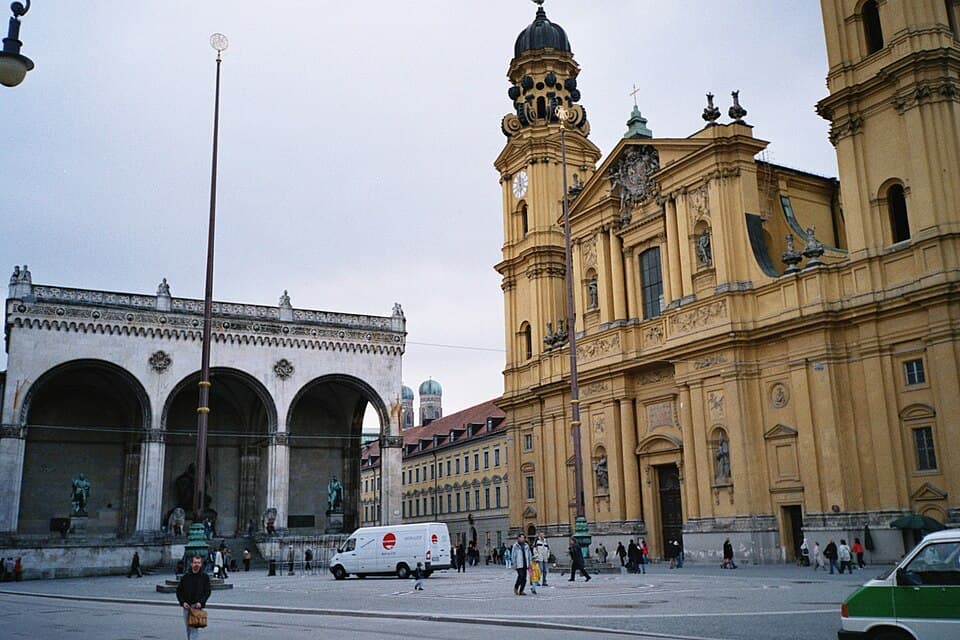
Odeonsplatz introduces a large 19th‑century square framed by the Theatinerkirche, the Residenz, and the Feldherrnhalle. The script should explain its creation as a representative northern gateway to the city and its blend of Italianate and neoclassical architecture. It should also address how the space became a stage for mass events and political gatherings in the 20th century, including its use by the Nazi movement. A unique anecdote might describe a specific early 20th‑century rally or ceremony here, emphasizing how the square’s design lent itself to spectacle without repeating details of later events covered at Feldherrnhalle.
Theatinerkirche
Yellow Baroque church inspired by Italian models
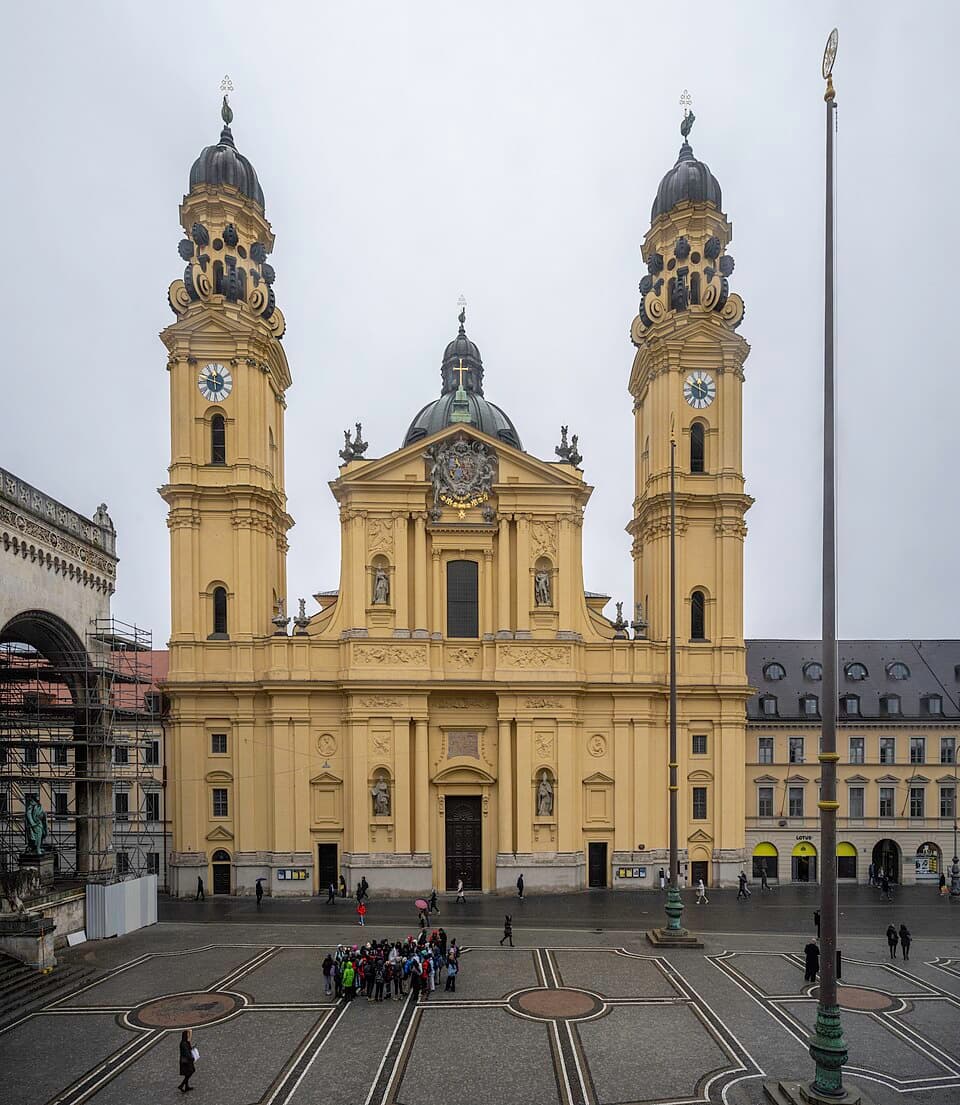
This stop focuses on the Theatinerkirche, the Theatine Church of St. Cajetan, with its distinctive yellow façade and dome bordering Odeonsplatz. The script should trace its founding as a dynastic church connected to the Wittelsbach family and its strong Italian Baroque influences. Architectural details such as the twin towers, sculpted façade, and richly decorated interior should be described. A unique anecdote might highlight the church’s role as a burial site for Bavarian royals or mention a significant event like a princely birth or thanksgiving that inspired its construction, linking piety and political legitimacy in a way not repeated elsewhere on the route.
Feldherrnhalle
Field marshals’ loggia and later Nazi symbol
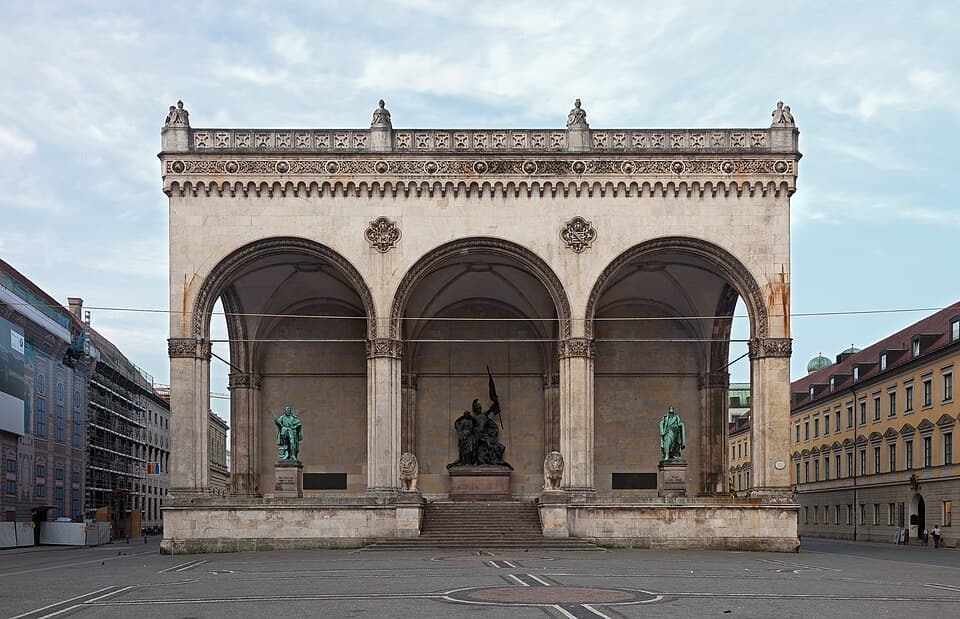
At the Feldherrnhalle, the tour examines a 19th‑century loggia honoring Bavarian military leaders that later took on heavy symbolic weight in the Nazi era. The script should describe its design, modeled on Italian examples, and its initial commemorative function. It must then address the site’s appropriation by the Nazi regime, including the memorialization of those killed in the failed Beer Hall Putsch and the rituals imposed around it. A unique anecdote can relate how passersby were once required to salute Nazi guards stationed here, turning a historic monument into a daily instrument of ideological control, which sets up the contrasting story of quiet resistance in the nearby alley.
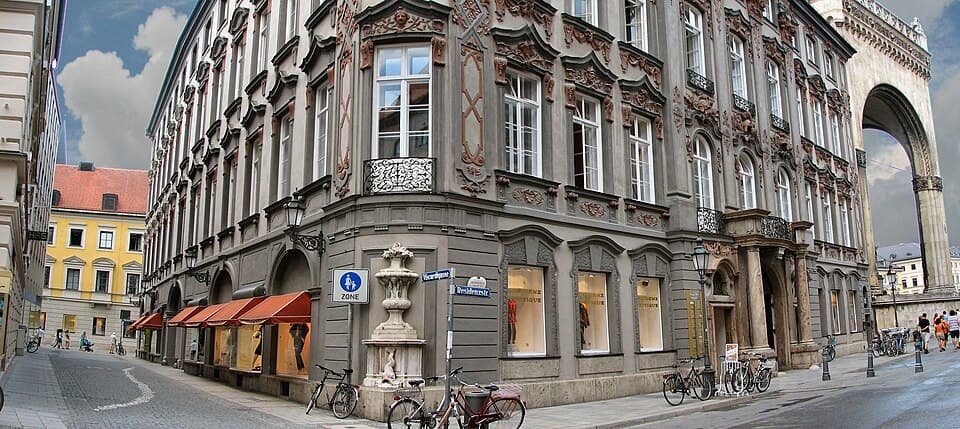
Viscardigasse
Narrow alley remembered for quiet resistance
The final stop, Viscardigasse, known as "Drückebergergasse", shifts into a small back alley behind the Feldherrnhalle where some locals avoided passing the Nazi memorial. The script should explain how this detour became associated with discreet dissent against mandatory salutes nearby. It should describe the alley’s intimate scale, its paving, and how recent memorial art marks the route. A unique anecdote will recount how residents and workers used this passage to bypass the Feldherrnhalle area, highlighting everyday forms of resistance and encouraging reflection on how memory is inscribed into seemingly ordinary streets today.
Start This Tour
Download Roamway to experience this audio tour
Tour Details
Access
Free
Stops
12 points of interest
Languages
GermanEnglishSpanishFrench
More tours in München
View all tours in MünchenOther tours you might enjoy:
Munich: Beer Culture, Old Town Markets and Isar Districts
This tour explores Munich’s historic beer culture from Viktualienmarkt and the Hofbräuhaus area through Tal and the Isartor to the Isar riverbank and Haidhausen. It covers traditional beer halls, beer gardens, and former brewing sites, while also touching on market life, local architecture, bathing traditions, and brewing technology around the Deutsches Museum and Gasteig cultural quarter.
Munich: From Odeonsplatz to Haidhausen Architecture
This tour traces Munich’s development from Baroque court city to 19th‑century boulevard planning and late 19th‑century residential districts. It covers central landmarks such as Odeonsplatz, the Residenz, Nationaltheater, and Maximilianstrasse, then crosses the Isar to Haidhausen’s Jugendstil streets, churches, and village-like squares, focusing on architecture, urban design, and political history.
Munich: Art, Memory, and Modern Architecture Walk
This tour explores Munich’s Kunstareal and nearby districts through key sites such as Königsplatz, the Pinakotheken museums, Museum Brandhorst, and Lenbachhaus. It examines classical and modern architecture, public art, and museum collections. Themes include ancient art, Expressionism, Nazi-era propaganda, postwar reconstruction, and contemporary design in public space.
Frequently Asked Questions
How do I start this audio tour?
Download the Roamway app, search for this tour, and tap 'Start Tour'. The app will guide you to the starting point using GPS. Once you're there, the audio narration begins automatically.
Do I need an internet connection?
No! Once you've downloaded the tour in the Roamway app, it works completely offline. The GPS navigation and audio narration function without an internet connection.
Can I pause and resume the tour?
Yes! You can pause the tour at any time and resume later. Your progress is automatically saved, so you can complete the tour over multiple sessions if needed.