
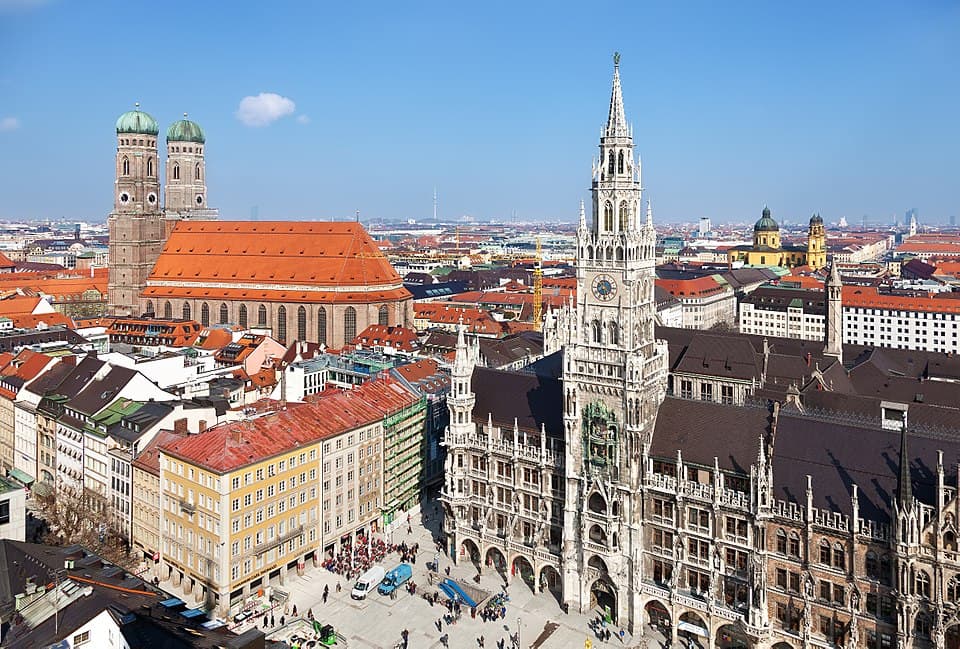
Munich: Art, Memory, and Modern Architecture Walk
München, Deutschland
Audio Preview
Listen to a sample of this audio tour to get a feel for the experience.
What You'll Experience
On this Munich: Art, Memory, and Modern Architecture Walk audio tour in München, you'll discover 11 carefully selected points of interest, each with its own story. The tour is designed to be completed at your own pace, with GPS navigation guiding you from one location to the next. As you approach each stop, the audio narration automatically begins, bringing history, culture, and local insights to life.
About This Tour
This tour explores Munich’s Kunstareal and nearby districts through key sites such as Königsplatz, the Pinakotheken museums, Museum Brandhorst, and Lenbachhaus. It examines classical and modern architecture, public art, and museum collections. Themes include ancient art, Expressionism, Nazi-era propaganda, postwar reconstruction, and contemporary design in public space.
Points of Interest
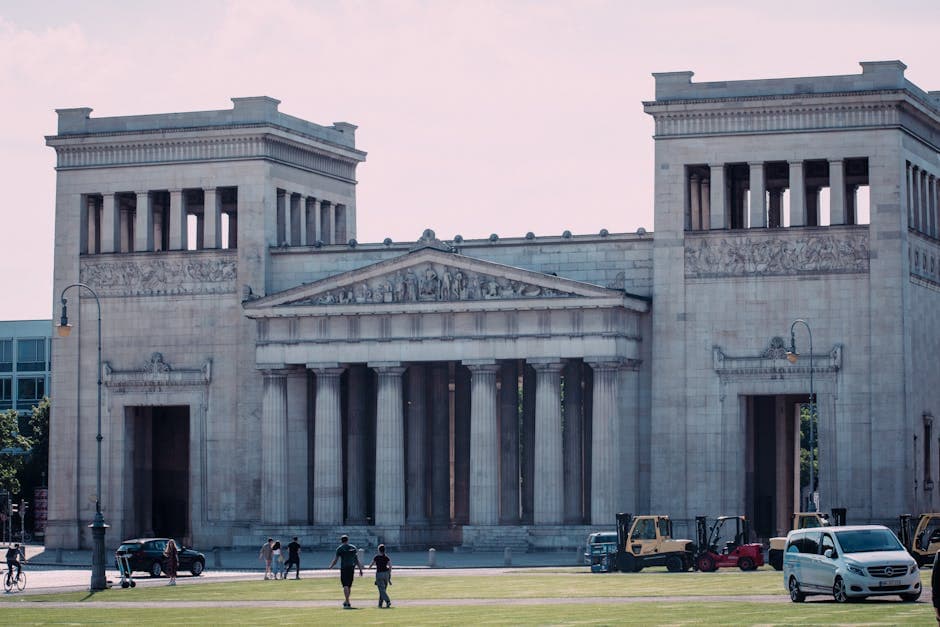
Königsplatz
Neoclassical square turned stage for power
This stop introduces Königsplatz as the ceremonial heart of Munich’s Kunstareal, framed by the Glyptothek, the Propyläen gate, and other neoclassical buildings. The narration should explain the 19th‑century vision of Munich as an “Athens on the Isar”, describing how Greek Revival architecture was used to project cultural prestige. It should also address how the square was drastically re‑staged under the Nazi regime for mass rallies and parades, including the leveling of greenery to create an austere parade ground. One anecdote could describe how postwar planners debated whether to preserve, alter, or completely redesign the square’s Nazi‑era alterations before arriving at today’s compromise between historical layers.
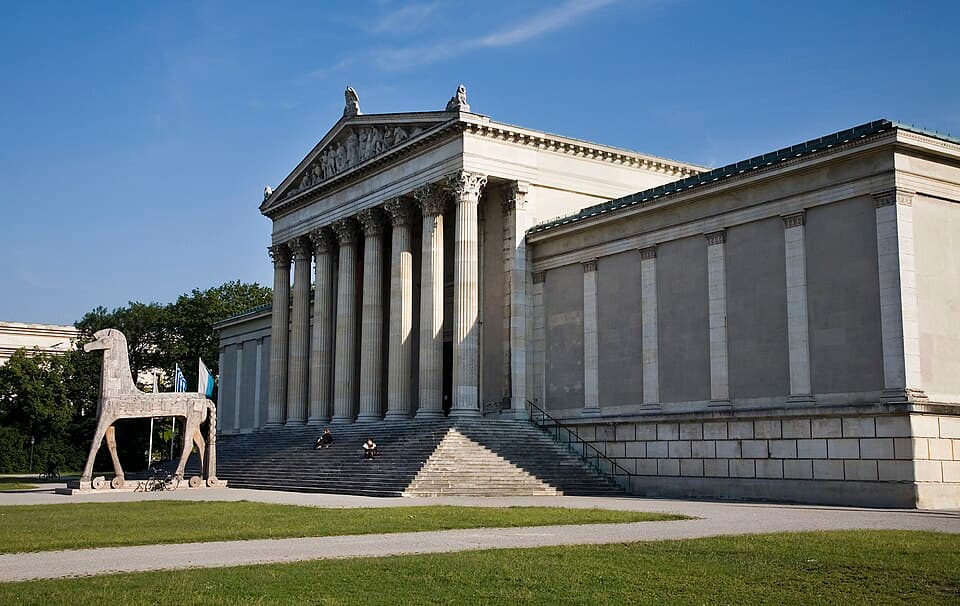
Staatliche Antikensammlungen
Classical treasures in a neoclassical shell
This point focuses on the exterior of the Staatliche Antikensammlungen, the State Collections of Antiquities, on the north side of Königsplatz. The narration should describe its temple‑like façade, Corinthian columns, and alignment with the Glyptothek, linking architecture to the 19th‑century passion for Greek and Roman archaeology. It should explain that the museum houses Greek vases, Etruscan finds, and Roman objects, gathered over generations by Bavarian rulers and scholars. An anecdote might discuss how one famous set of Greek vases became emblematic of Munich’s collection, sparking both scholarly excitement and public curiosity when first displayed in the city.
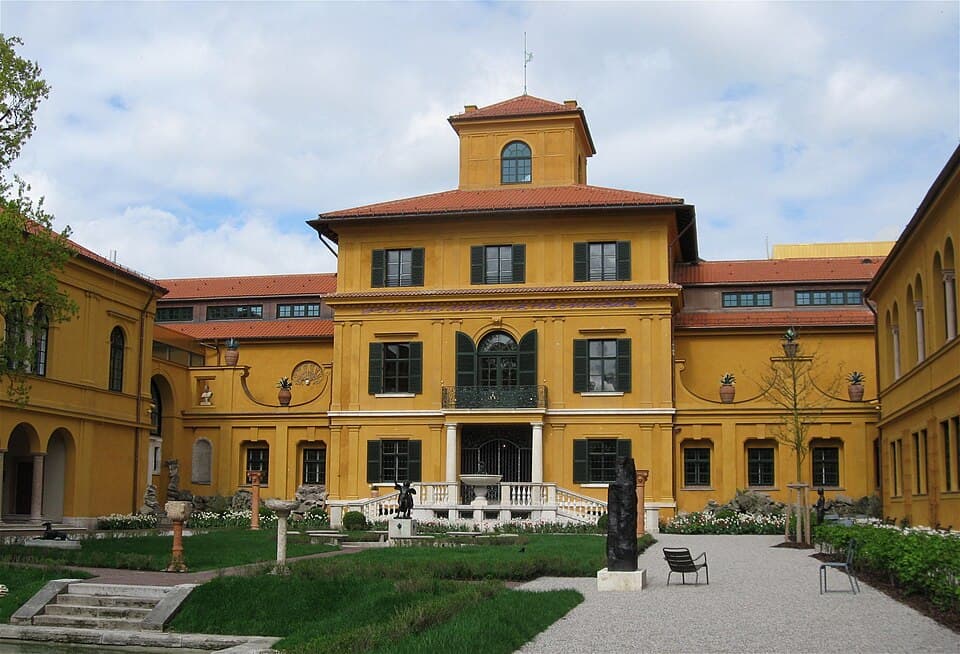
Lenbachhaus
From painter’s villa to Expressionist landmark
This stop presents Lenbachhaus as a transformation from a 19th‑century artist’s villa into a major museum, best known for its Blue Rider (Der Blaue Reiter) collection. The narration should evoke the original villa’s Tuscan‑inspired architecture and gardens, contrasting them with the later contemporary extension and new entrance. It should introduce key Blue Rider figures such as Wassily Kandinsky and Gabriele Münter, and explain how their revolutionary experiments in color and form reshaped modern art. An anecdote could recount how Münter safeguarded many of these works through turbulent decades and later donated them to Munich, ensuring the museum’s international importance.
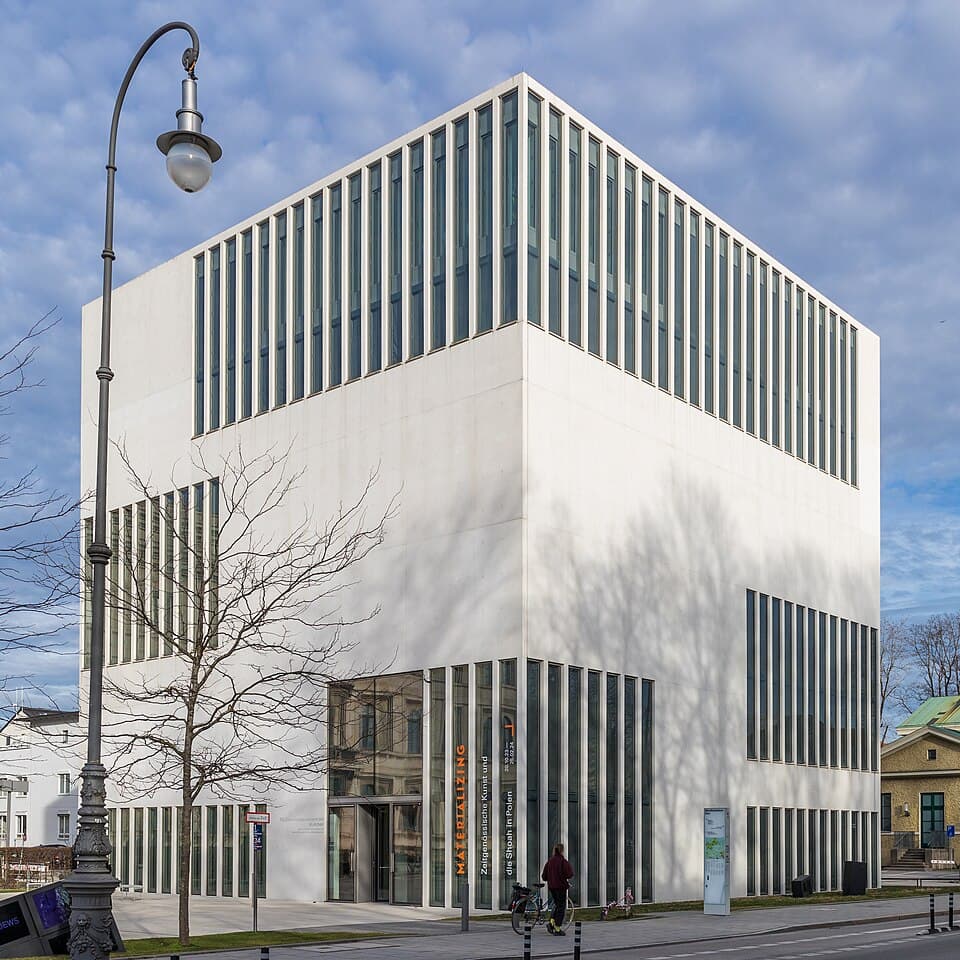
NS-Dokumentationszentrum München
On the ruins of a party headquarters
This stop explores the NS‑Dokumentationszentrum München, a minimalist, light‑filled building erected on the former site of the Nazi Party’s “Brown House” headquarters near Königsplatz. The narration should focus on how the stark contemporary architecture intentionally contrasts with the grandiose Nazi buildings that once surrounded it, emphasizing transparency and critical reflection. It should outline the center’s role in documenting Munich’s function as a “capital of the movement” and examining propaganda, persecution, and resistance. One anecdote might mention how, for decades after the war, the bombed‑out Brown House foundations remained largely unused, symbolizing an unresolved past until the city finally chose to build a documentation center here.
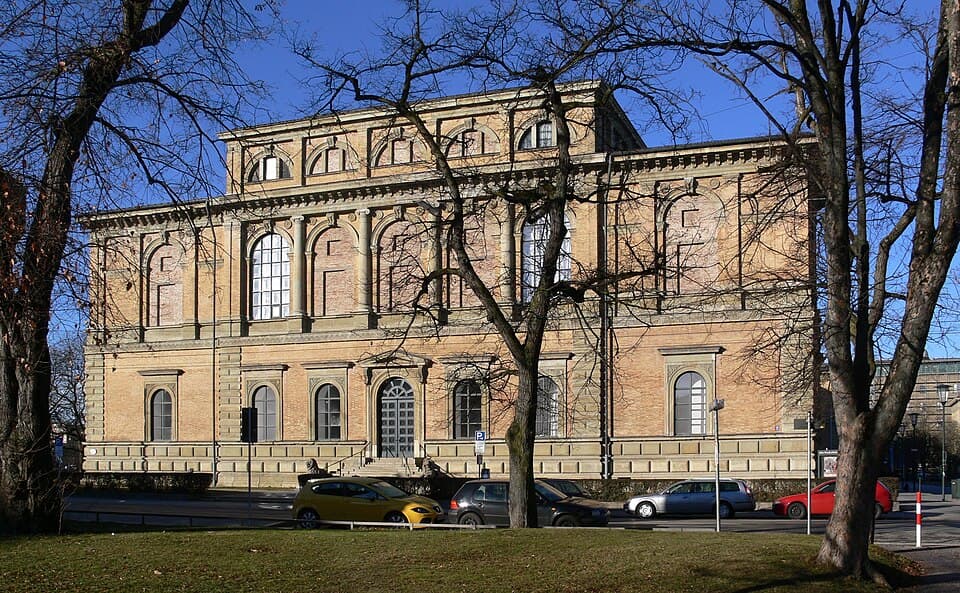
Alte Pinakothek
Old Masters in a pioneering museum
This point introduces the Alte Pinakothek as one of Europe’s earliest purpose‑built art museums, housing Old Master paintings from many European schools. The narration should describe the long, arcaded façade, its 19th‑century design as a “painting gallery”, and the war damage that led to a simpler postwar reconstruction. Inside, the collection spans from late medieval religious works to masterpieces of the Baroque and beyond, reflecting centuries of Wittelsbach collecting. An anecdote could cover how certain masterpieces were evacuated to protect them during wartime, and how their careful return and rehanging after the conflict became a symbolic step in Munich’s cultural recovery.
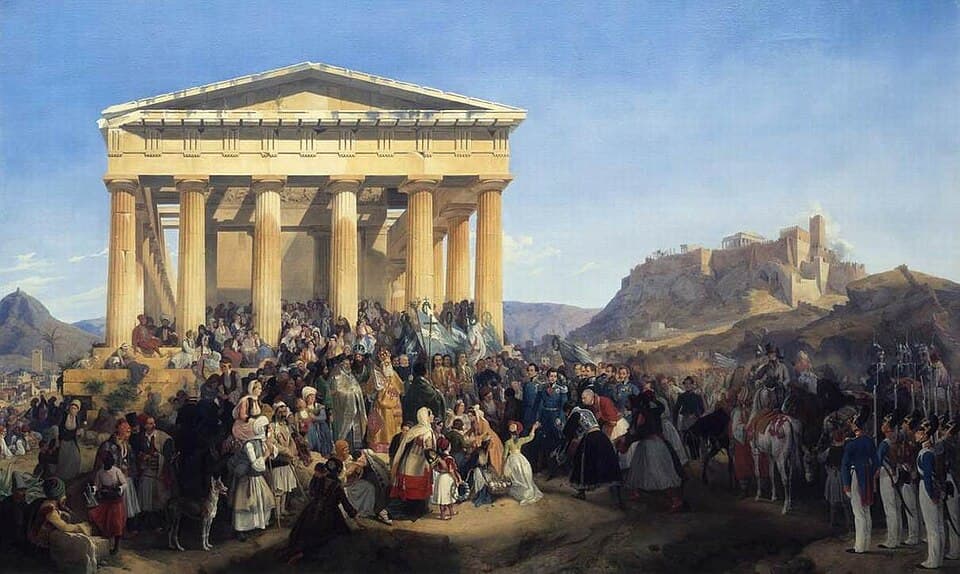
Neue Pinakothek Site
Nineteenth-century art between past and renovation
This stop explains the role of the Neue Pinakothek, dedicated to 19th‑ and early 20th‑century art, and addresses its current status if the building is closed for renovation. The narration should sketch the museum’s historical mission as a bridge between Old Masters and modern art, highlighting its focus on Romanticism, Impressionism, and early modern movements. It should describe the former building’s postwar architectural language and why structural or technical issues eventually required a major overhaul. An anecdote could note how, during renovation, signature works by artists such as Caspar David Friedrich or Vincent van Gogh are temporarily rehoused in neighboring museums, leading to unusual and sometimes thought‑provoking juxtapositions with other collections.
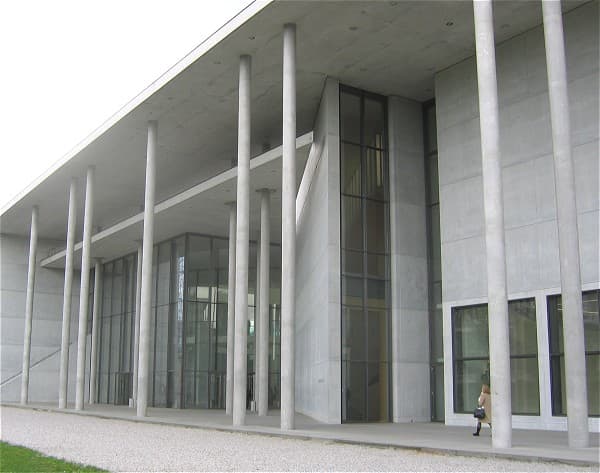
Pinakothek der Moderne
Four museums under one modern roof
This point presents the Pinakothek der Moderne as a vast contemporary complex bringing together modern and contemporary art, design, graphics, and architecture collections. The narration should highlight the building’s clean lines, generous entrance hall, and central rotunda, designed to encourage movement and cross‑pollination between disciplines. It should explain how the museum showcases everything from 20th‑century painting and sculpture to industrial design icons and architectural models, reflecting changing ideas of everyday life and built form. An anecdote might describe a particularly striking installation or design object that once sparked debate about what belongs in an art museum versus a design or technology collection.
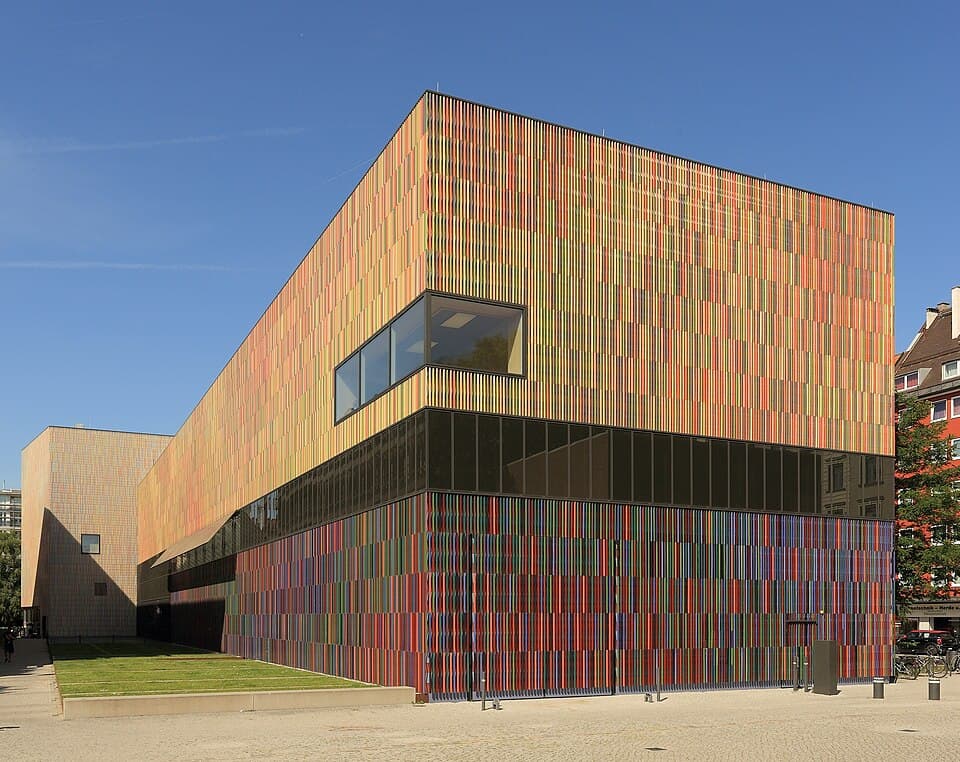
Museum Brandhorst
Colorful façade and contemporary collections
This stop focuses on Museum Brandhorst, known for its vivid, tiled façade and concentration on contemporary and late 20th‑century art. The narration should describe the building’s colored ceramic rods and elongated, angular form, as well as its relationship to the surrounding museum quarter. It should explain that the museum is rooted in a private collection later opened to the public, with major holdings of artists such as Cy Twombly and Andy Warhol. An anecdote could recount how the façade’s subtle color gradations change with the light and weather, becoming a kind of ever‑shifting artwork in its own right that initially divided public opinion when first unveiled.

TU München Main Campus
University quarter shaped by art and design
This point introduces the main campus area of Technische Universität München as a hub where engineering, architecture, and design education meet public space. The narration should outline how university buildings from different eras form an urban ensemble, with courtyards, plazas, and scattered public artworks. It should connect the presence of architecture and design faculties to the wider evolution of Munich’s built environment, including the Kunstareal. An anecdote might mention a particular campus sculpture or experimental façade that has become a local landmark among students, illustrating how academic ideas spill out into everyday city life.
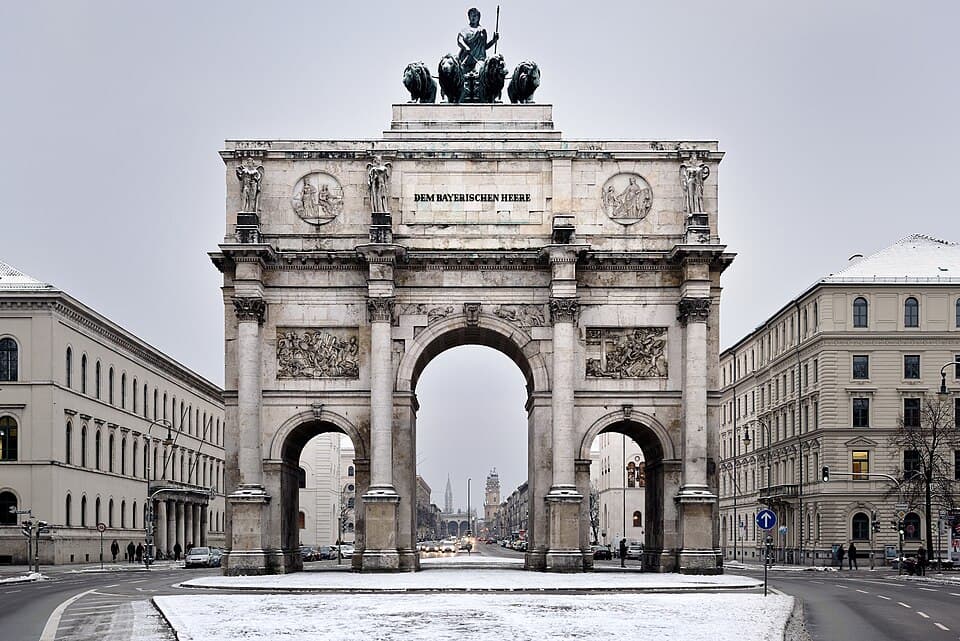
Siegestor
From triumphal arch to anti-war symbol
This stop centers on the Siegestor, a 19th‑century triumphal arch at the border between Maxvorstadt and Schwabing. The narration should describe its sculpted reliefs, crowned figure group, and original dedication to military victory, linking it to similar European monuments. It should then explain how the arch was heavily damaged in the Second World War and partially reconstructed, with an added inscription stressing peace and the consequences of war. An anecdote could recount how the decision to leave parts of the arch visibly scarred was controversial at the time but gradually turned the structure into a powerful visual reminder of destruction and restraint rather than pure triumphalism.
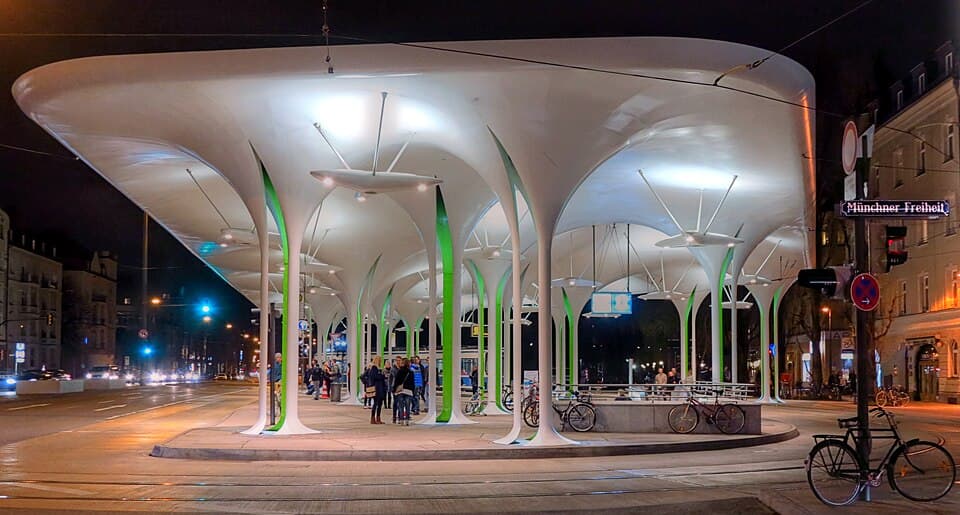
Münchner Freiheit
Modern square, transit hub, and public art
This final stop presents Münchner Freiheit as a lively square and transport interchange in Schwabing, marked by postwar modern architecture and public art. The narration should describe the open space, surrounding buildings, and distinctive design of the U‑Bahn station and its surface structures. It should connect the area’s modernist forms and sculptures with Schwabing’s longer history as a bohemian and student district, contrasting with the more formal museum quarter visited earlier. An anecdote might highlight how a particular sculpture, light installation, or metro entrance design became a meeting point and informal landmark, symbolizing how contemporary design shapes everyday urban experience.
Start This Tour
Download Roamway to experience this audio tour
Tour Details
Access
Free
Stops
11 points of interest
Languages
English
More tours in München
View all tours in MünchenOther tours you might enjoy:
Munich Old Town: Squares, Churches, Residenz & Nazi Era
This tour covers Munich’s historic center from Marienplatz to Odeonsplatz, passing major squares, churches, courtyards, and remnants of the medieval city wall. It examines Gothic and Baroque architecture, royal Bavarian residences, and sites linked to 20th‑century politics, including locations connected to the Nazi era and local resistance gestures.
Munich: Beer Culture, Old Town Markets and Isar Districts
This tour explores Munich’s historic beer culture from Viktualienmarkt and the Hofbräuhaus area through Tal and the Isartor to the Isar riverbank and Haidhausen. It covers traditional beer halls, beer gardens, and former brewing sites, while also touching on market life, local architecture, bathing traditions, and brewing technology around the Deutsches Museum and Gasteig cultural quarter.
Munich: From Odeonsplatz to Haidhausen Architecture
This tour traces Munich’s development from Baroque court city to 19th‑century boulevard planning and late 19th‑century residential districts. It covers central landmarks such as Odeonsplatz, the Residenz, Nationaltheater, and Maximilianstrasse, then crosses the Isar to Haidhausen’s Jugendstil streets, churches, and village-like squares, focusing on architecture, urban design, and political history.
Frequently Asked Questions
How do I start this audio tour?
Download the Roamway app, search for this tour, and tap 'Start Tour'. The app will guide you to the starting point using GPS. Once you're there, the audio narration begins automatically.
Do I need an internet connection?
No! Once you've downloaded the tour in the Roamway app, it works completely offline. The GPS navigation and audio narration function without an internet connection.
Can I pause and resume the tour?
Yes! You can pause the tour at any time and resume later. Your progress is automatically saved, so you can complete the tour over multiple sessions if needed.