
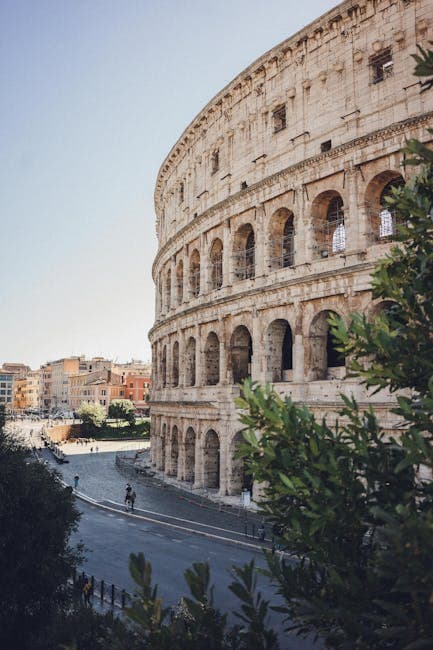
Audiotours in Roma — Explore at your own pace
Roma, Italia is a city where ancient stones, Baroque splendor, and everyday Roman life share the same streets. With our audio-guided, self-paced tours, you can wander from gladiatorial arenas to theatrical fountains and churches filled with masterpieces whenever it suits your schedule. Discover Roma’s layers of history and hidden corners with immersive stories right in your ear.
Free Tours
2 tours available
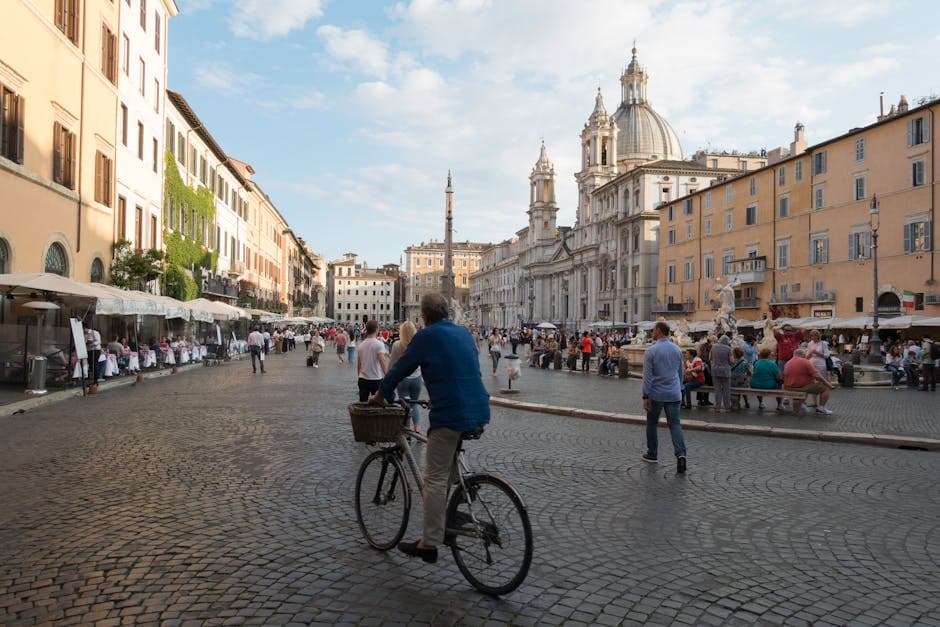
Rome: Baroque Squares, Fountains and Church Masterpieces
This tour explores central Rome from Piazza Navona to Piazza di Spagna, focusing on Baroque and late Renaissance art and architecture. It includes major fountains, grand piazzas, and churches with works by Bernini, Borromini, and Caravaggio. Themes include urban planning, religious history, artistic rivalry, and public life from the 16th to 18th centuries.
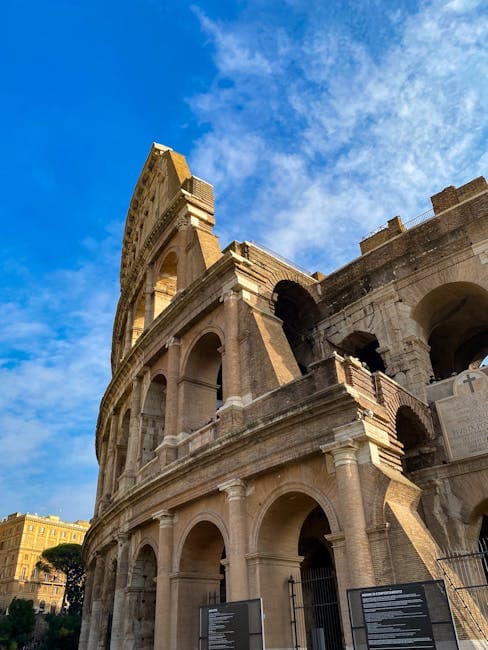
Rome: Colosseum to Forum and Imperial Rome
This tour explores ancient Rome’s central archaeological area, from the exterior of the Colosseum and nearby arches to the Roman Forum, Palatine Hill entrances, and the Temple of Venus and Roma. It includes viewpoints over the Imperial Fora, Trajan’s Column and Markets, and Piazza Venezia with the Vittoriano, focusing on history, urban development, and monumental architecture.
About Roma
Top Attractions
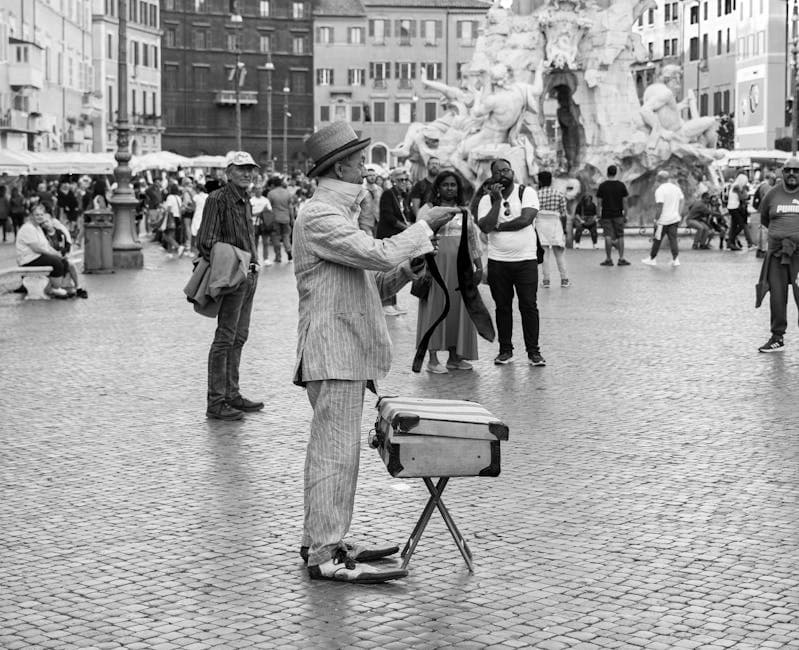
Piazza Navona (with Bernini’s Fountain of the Four Rivers)
Ancient stadium reborn as Baroque city stage
This stop introduces Piazza Navona as Rome’s great Baroque outdoor theatre, built over the footprint of the ancient Stadium of Domitian. The narration should explain how the elongated shape survives from the Roman racetrack, then describe the Baroque transformation under Pope Innocent X and the Pamphilj family. Bernini’s Fountain of the Four Rivers becomes the main focus: its personifications of major rivers, its obelisk, and its technical feats with water and stone. An anecdote can cover the temporary flooding of the piazza for summer “lake” festivals or the popular stories about Bernini’s supposed visual jabs at Borromini, presented cautiously as later legends rather than firm fact. Emphasize sound, movement, and how the piazza functions as a social space across centuries.
View Tour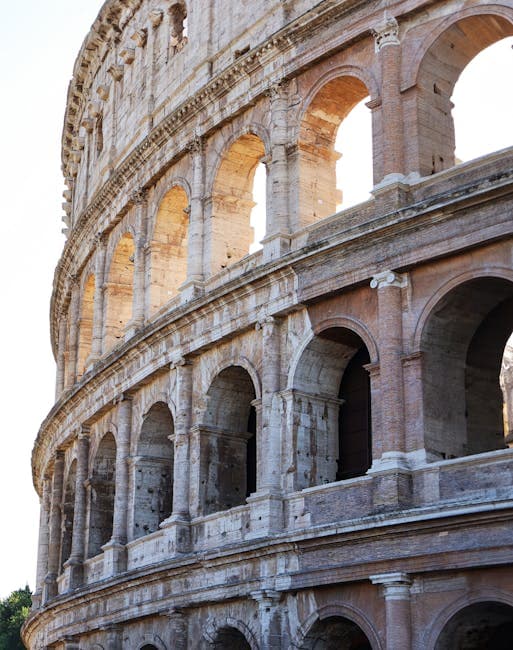
Colosseum (exterior viewpoint on Via dei Fori Imperiali)
Iconic arena and gateway to ancient imperial Rome
This stop uses the exterior view of the Colosseum from Via dei Fori Imperiali to introduce the whole archaeological zone and the tour’s main themes: spectacle, power, and urban transformation. The narration should cover its Flavian origins, basic structure, capacity, and the range of events staged here, stressing the political role of entertainment. It should also highlight later reuse, from housing and workshops to religious associations, and the modern conservation story. One unique anecdote to include is how the massive statue of Nero, the “Colossus,” gave the building its later nickname, even though the two were originally separate.
View Tour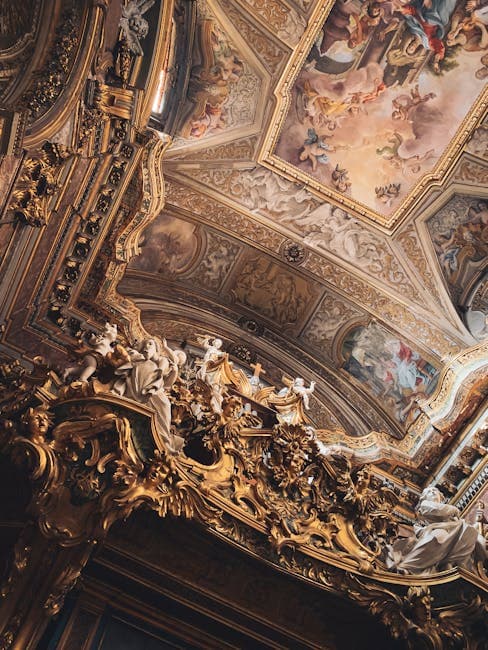
Sant’Agnese in Agone (facade and interior if open)
Pamphilj family church facing Bernini’s fountain
This stop focuses on Sant’Agnese in Agone as the Pamphilj family’s Baroque showpiece church, directly confronting Bernini’s Fountain of the Four Rivers. Narration should cover the concave façade, twin towers, and the way the church’s architecture frames Piazza Navona. Inside, if accessible, highlight the centralized plan, the dome, and key artworks tied to the martyrdom of Saint Agnes. Historically, link the church to Pope Innocent X and the Pamphilj palace complex. An anecdote may mention the traditional story of Saint Agnes’ miraculous protection of her modesty, or the old belief that this site marked the place of her public humiliation in the stadium, noting that details are based on later Christian tradition. Distinguish Borromini’s architectural language here from Bernini’s sculptural drama outside without repeating Navona’s specific legends.
View Tour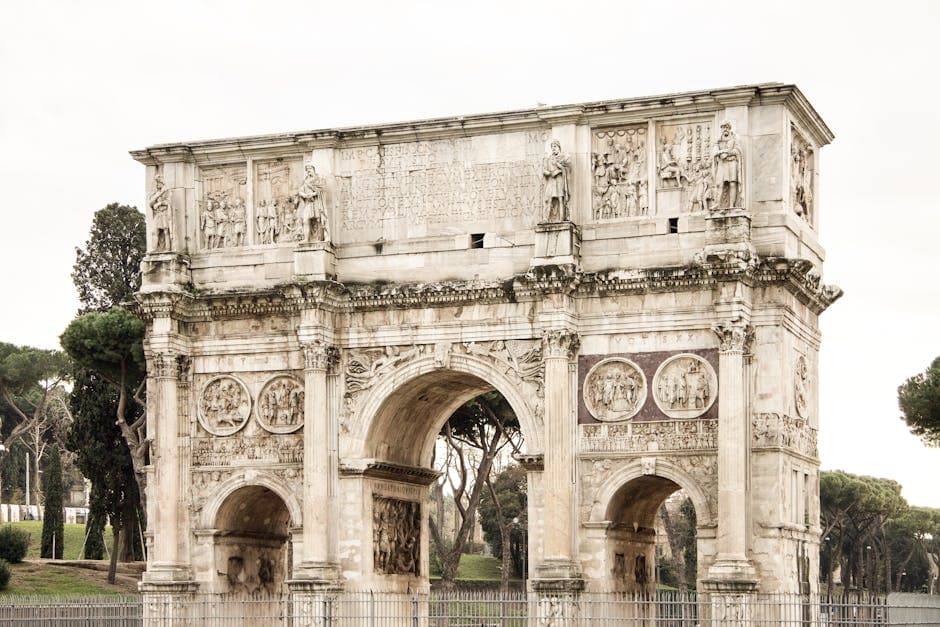
Arch of Constantine
Triumphal arch between pagan past and Christian future
At the Arch of Constantine, the focus is on imperial victory propaganda and the transition from a pagan empire to a Christianizing one. The script should describe the arch’s position between the Colosseum and Palatine, its reuse of earlier imperial reliefs, and its celebration of Constantine’s victory over a rival emperor. Explain the concept of spolia and how older panels from emperors like Trajan and Hadrian were repurposed to legitimize Constantine. A unique anecdote: note how some figures’ heads were recarved to resemble Constantine, a literal reshaping of history in stone.
View Tour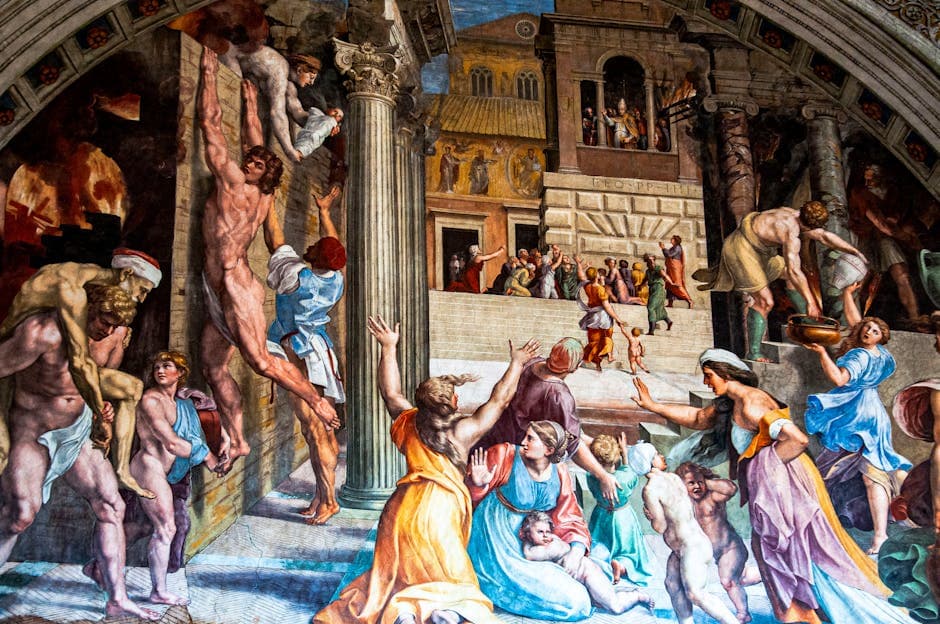
San Luigi dei Francesi (Caravaggio chapels)
French national church with Caravaggio’s bold canvases
Here the focus shifts to San Luigi dei Francesi as the national church of France in Rome and a showcase of Counter‑Reformation painting. The narrative should explain its role for the French community and then narrow in on the Contarelli Chapel with Caravaggio’s cycle on Saint Matthew. Describe Caravaggio’s dramatic lighting, use of ordinary models, and the way his scenes spill into the viewer’s space. Historically, point out how controversial his realism was compared to more idealized contemporaries. Unique anecdotes can include stories about Caravaggio allegedly using people from Roman taverns as models, or how one of his original versions was rejected as too unconventional, prompting a reworking of the composition, without reusing any rivalry anecdotes from other stops.
View Tour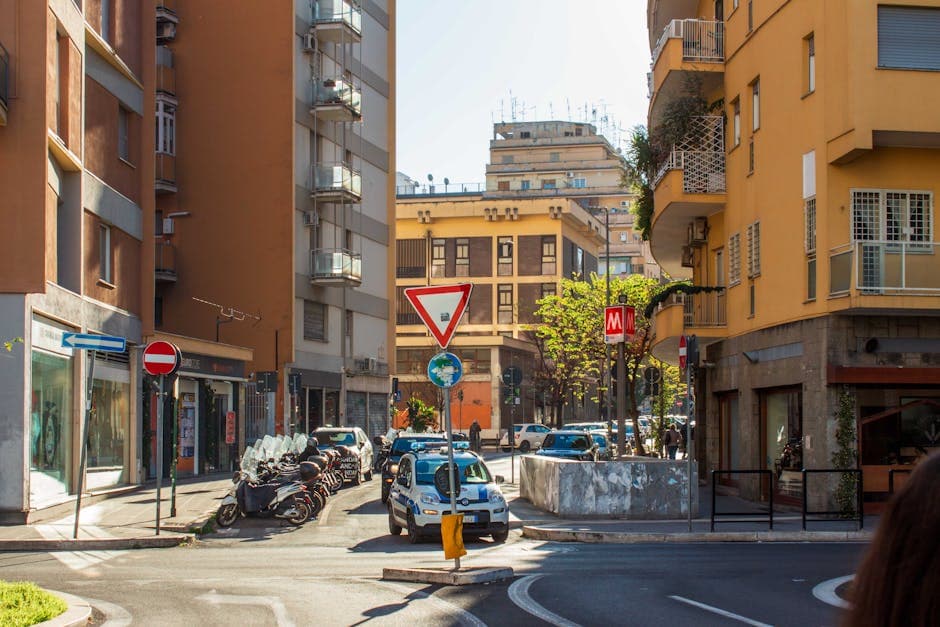
Ludus Magnus (gladiator school remains, overlook on Via Labicana)
Gladiator training ground hidden beside the Colosseum
This stop overlooks the remains of the Ludus Magnus, the main gladiatorial training school connected to the Colosseum. The narration should reconstruct the complex: central training arena, barracks, and underground passage leading toward the amphitheater. Emphasize the daily routines of gladiators, including training, medical care, and the social status of different fighter types. Connect it to the broader ‘backstage’ world needed to sustain the games. A unique anecdote: mention how archaeologists identified gladiator graffiti and scratched game boards nearby, hinting at betting and downtime in this martial environment.
View Tour
Sant’Ivo alla Sapienza (courtyard and Borromini dome from inside the courtyard gate)
Borromini’s geometric dome in university courtyard
This stop presents Sant’Ivo alla Sapienza as Borromini’s intellectual masterpiece, tucked inside the old Sapienza university courtyard. The narration should describe the approach through the courtyard, the alternating concave and convex rhythm of the lower structure, and the unusual dome with its corkscrew lantern. Emphasize Borromini’s inventive geometry and how the plan blends triangles and circles into a star‑like form. Historically, connect the building to the papal university and to a more scholarly audience than parish churches. A distinct anecdote might explore how observers have interpreted the lantern as a symbol of divine wisdom or the Holy Spirit, and how the rooftop silhouette has fascinated architects and artists studying in Rome, without repeating any Bernini‑related dramas described elsewhere.
View Tour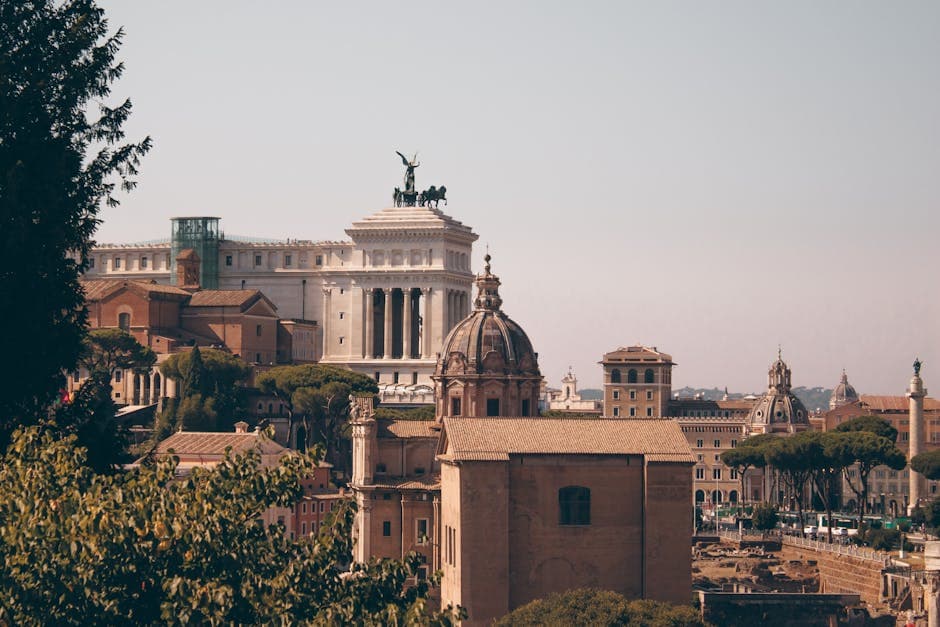
Roman Forum (view from Via dei Fori Imperiali terrace or Capitoline side)
Heart of political, religious, and civic ancient Rome
From the elevated terrace, this stop offers a panoramic story of the Roman Forum as the core of public life for many centuries. The script should identify major visible monuments—Senate House, temples, basilicas—and explain how the space evolved from a marshy valley to a dense civic center. Emphasize its role in politics, law, religion, and ceremony, with references to famous speeches and processions. A unique anecdote: describe how, in the Middle Ages, this entire area became known as the “Campo Vaccino,” or cow pasture, with cattle grazing among half-buried ruins before systematic excavations began.
View Tour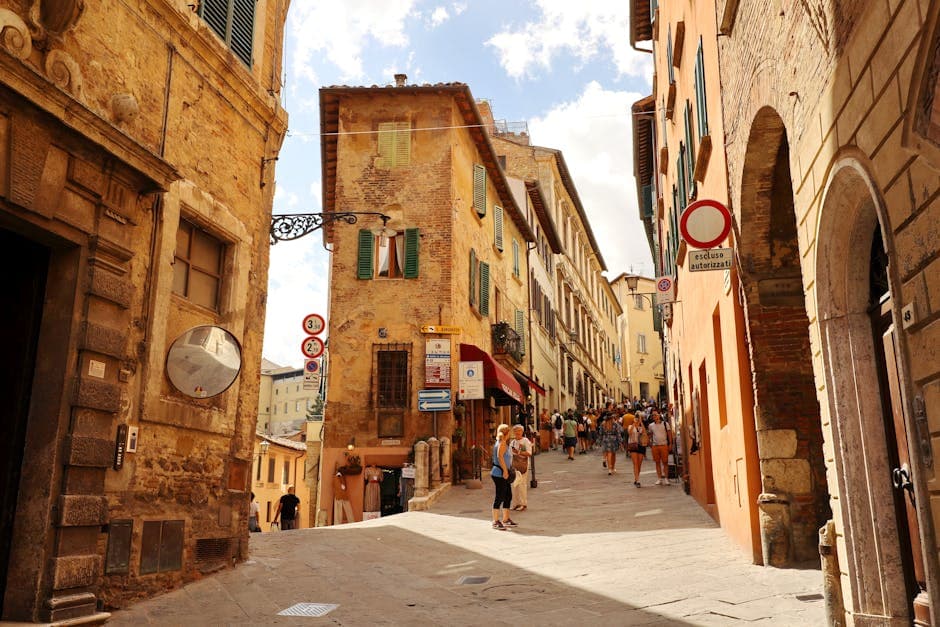
Palatine Hill (main entrance area)
Mythic birthplace and imperial residential plateau
At the Palatine Hill entrance, the narration should frame this rise as both legendary birthplace of Rome and later seat of emperors’ palaces. Cover the Romulus and Remus foundation myths associated with the hill and its early aristocratic houses. Then outline how successive emperors built vast, interconnected palaces here, giving us the word “palace” from Palatinus. A unique anecdote: mention how Renaissance gardeners and popes once used the ruins as ornamental gardens and vineyards, layering elite leisure over the remains of imperial power.
View Tour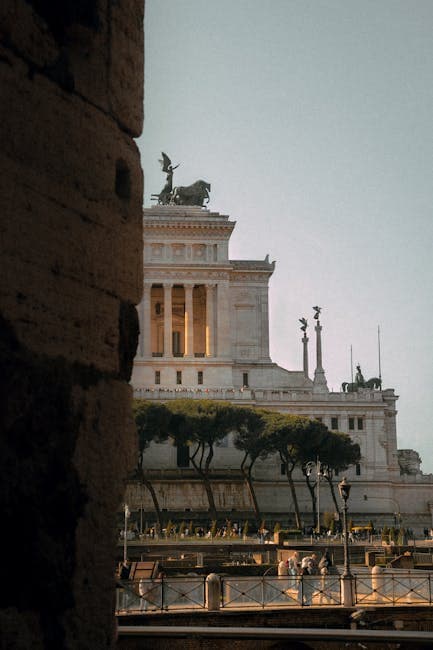
Sant’Andrea della Valle (interior)
Grand Baroque nave and operatic associations
At Sant’Andrea della Valle, the emphasis is on the scale and decoration of a major Baroque church interior. The narration should highlight the vast nave, the prominent dome (one of the largest in Rome), and the frescoed ceilings that create a sense of ascending movement. Historically, connect the church to powerful families and religious orders, and to the broader competition among Roman churches to impress worshippers. Cultural significance includes its role as the setting for the opening act of Puccini’s opera "Tosca". A unique anecdote could discuss how opera fans still visit to trace fictional scenes, or how the rich acoustic and visual environment embodies the theatrical spirit of Roman devotion, clearly distinct from anecdotes tied to any other church on the tour.
View Tour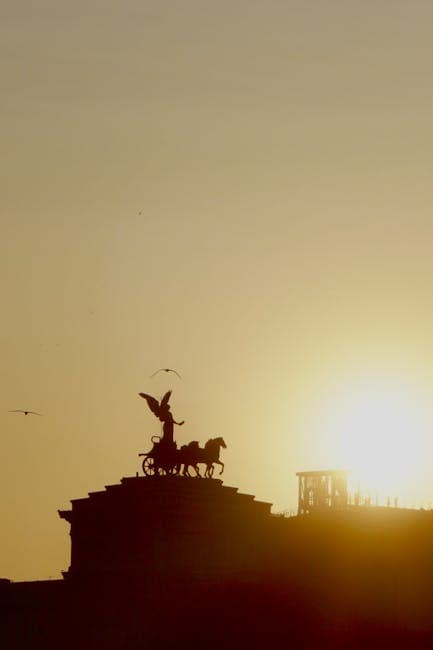
Arch of Titus
Flavian triumphal arch on the Sacred Way
This stop explores the Arch of Titus as an early imperial triumphal arch and key monument along the Sacred Way. The narration should explain its connection to the Flavian dynasty and the celebrated victory in Judea, describing the famous reliefs of the spoils from the Temple in Jerusalem and the triumphal procession. It should also mention the later Christian reinterpretation of these scenes. A unique anecdote: recall how, for centuries, some Jewish visitors avoided walking under the arch because of its depiction of the destruction of the Temple, turning a Roman boast into a painful symbol of loss.
View Tour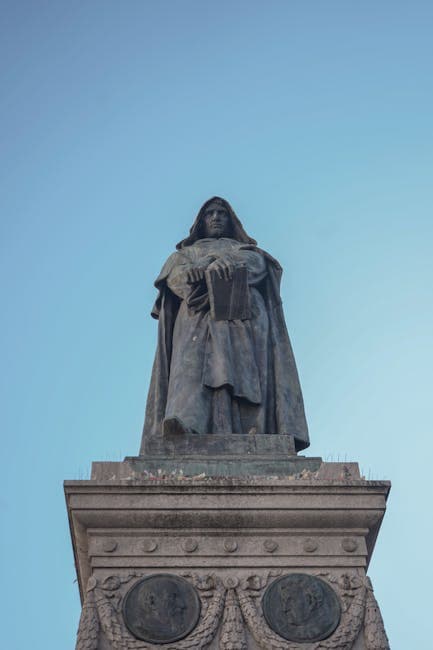
Campo de’ Fiori (square and statue of Giordano Bruno)
Lively market square overshadowed by Bruno’s memory
This stop explores Campo de’ Fiori as a vibrant market square with a darker historical underlayer. Narration should paint the contrast between today’s stalls and nightlife and its former use as a site for executions. The bronze statue of Giordano Bruno becomes the focal point: explain who he was, why he was condemned for heresy, and why his monument now faces the Vatican’s direction. A distinctive anecdote can recount the 19th‑century debates around erecting Bruno’s statue and how it became a symbol of free thought and anticlerical sentiment in a newly unified Italy. Emphasize the tension between everyday commerce and the memory of intellectual and religious conflict without echoing martyrdom stories from other stops.
View TourFrequently Asked Questions
How do audio walking tours work in Roma?
Our audio walking tours in Roma are self-guided experiences that you can start anytime. Simply download the Roamway app, select a tour, and follow the GPS-guided route. The audio narration automatically plays as you approach each point of interest, allowing you to explore at your own pace.
Are self-guided tours better than guided tours?
Self-guided audio tours offer flexibility that traditional guided tours can't match. You can pause, rewind, or skip sections, explore at your own pace, and start whenever you're ready. Plus, our tours are available in multiple languages and work offline once downloaded.
Do I need an internet connection during the tour?
No! Once you've downloaded a tour in the Roamway app, it works completely offline. The GPS navigation and audio narration function without an internet connection, making it perfect for international travelers who want to avoid data charges.
How long do the audio tours take?
Tour durations vary, but most of our audio tours in Roma range from 1 to 3 hours, depending on your pace and how much time you spend at each point of interest. You can complete them in one go or split them across multiple visits.
Ready to explore Roma?
Download Roamway and start your audio-guided adventure today.