
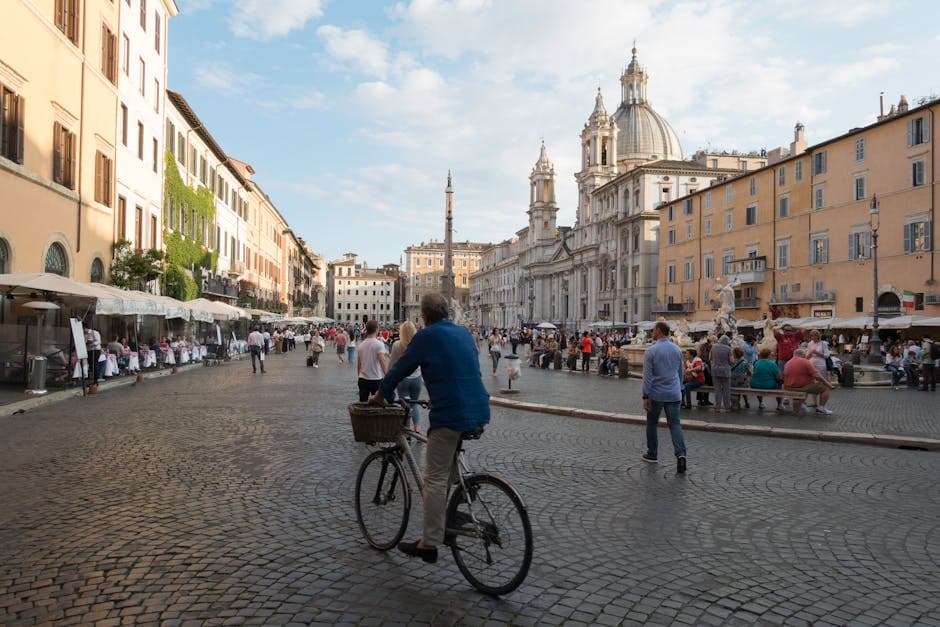
Rome: Baroque Squares, Fountains and Church Masterpieces
Roma, Italia
Audio Preview
Listen to a sample of this audio tour to get a feel for the experience.
What You'll Experience
On this Rome: Baroque Squares, Fountains and Church Masterpieces audio tour in Roma, you'll discover 10 carefully selected points of interest, each with its own story. The tour is designed to be completed at your own pace, with GPS navigation guiding you from one location to the next. As you approach each stop, the audio narration automatically begins, bringing history, culture, and local insights to life.
About This Tour
This tour explores central Rome from Piazza Navona to Piazza di Spagna, focusing on Baroque and late Renaissance art and architecture. It includes major fountains, grand piazzas, and churches with works by Bernini, Borromini, and Caravaggio. Themes include urban planning, religious history, artistic rivalry, and public life from the 16th to 18th centuries.
Points of Interest
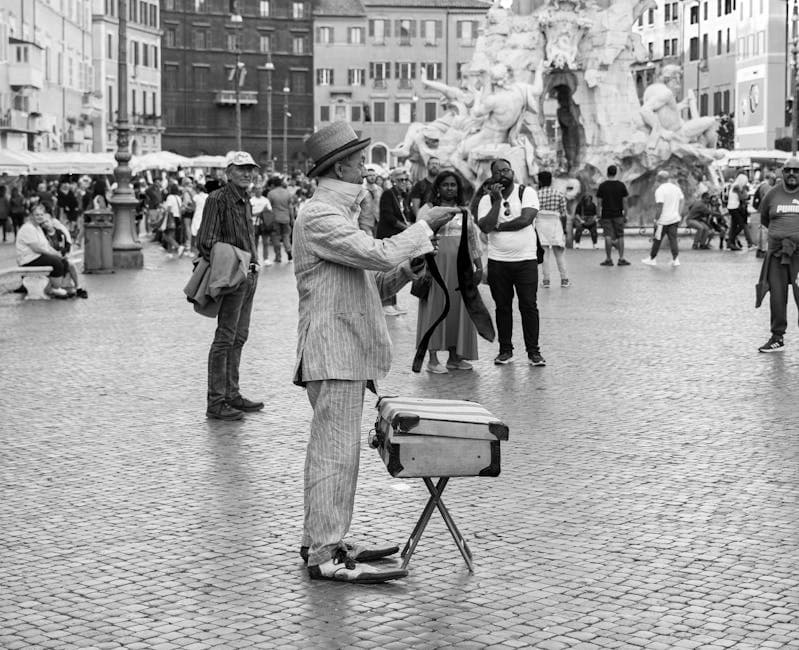
Piazza Navona (with Bernini’s Fountain of the Four Rivers)
Ancient stadium reborn as Baroque city stage
This stop introduces Piazza Navona as Rome’s great Baroque outdoor theatre, built over the footprint of the ancient Stadium of Domitian. The narration should explain how the elongated shape survives from the Roman racetrack, then describe the Baroque transformation under Pope Innocent X and the Pamphilj family. Bernini’s Fountain of the Four Rivers becomes the main focus: its personifications of major rivers, its obelisk, and its technical feats with water and stone. An anecdote can cover the temporary flooding of the piazza for summer “lake” festivals or the popular stories about Bernini’s supposed visual jabs at Borromini, presented cautiously as later legends rather than firm fact. Emphasize sound, movement, and how the piazza functions as a social space across centuries.
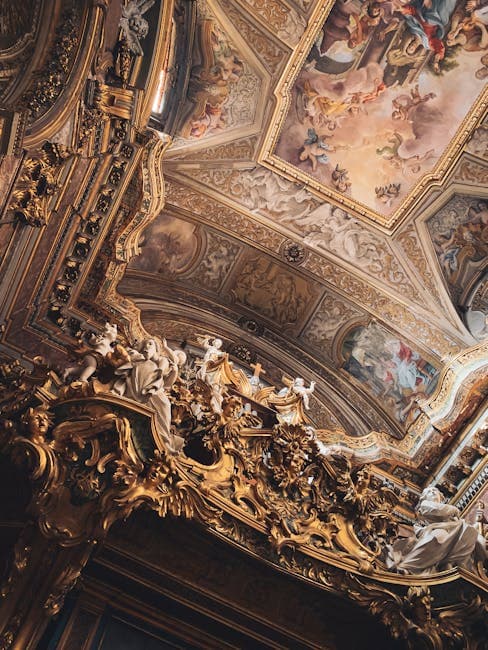
Sant’Agnese in Agone (facade and interior if open)
Pamphilj family church facing Bernini’s fountain
This stop focuses on Sant’Agnese in Agone as the Pamphilj family’s Baroque showpiece church, directly confronting Bernini’s Fountain of the Four Rivers. Narration should cover the concave façade, twin towers, and the way the church’s architecture frames Piazza Navona. Inside, if accessible, highlight the centralized plan, the dome, and key artworks tied to the martyrdom of Saint Agnes. Historically, link the church to Pope Innocent X and the Pamphilj palace complex. An anecdote may mention the traditional story of Saint Agnes’ miraculous protection of her modesty, or the old belief that this site marked the place of her public humiliation in the stadium, noting that details are based on later Christian tradition. Distinguish Borromini’s architectural language here from Bernini’s sculptural drama outside without repeating Navona’s specific legends.
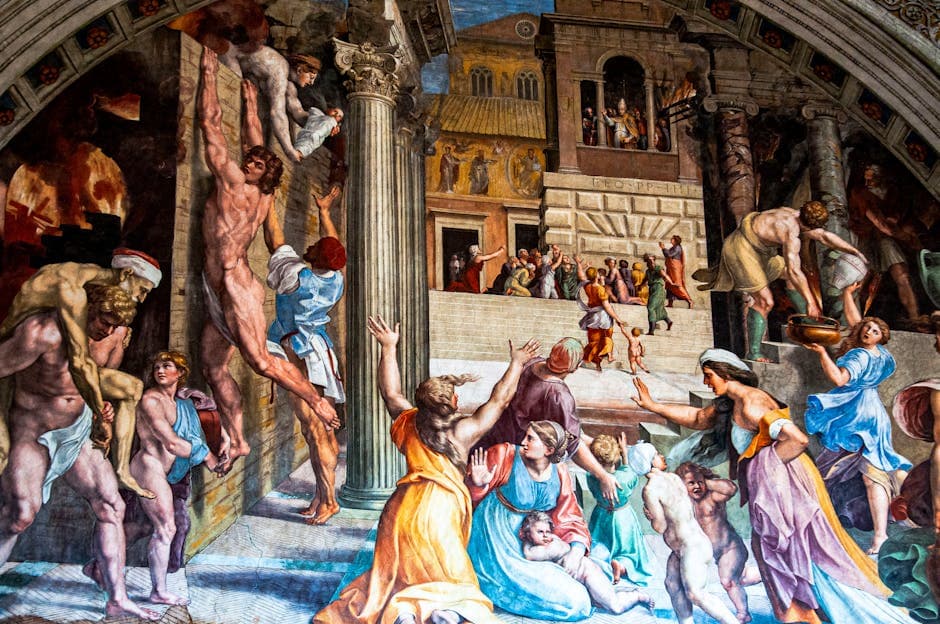
San Luigi dei Francesi (Caravaggio chapels)
French national church with Caravaggio’s bold canvases
Here the focus shifts to San Luigi dei Francesi as the national church of France in Rome and a showcase of Counter‑Reformation painting. The narrative should explain its role for the French community and then narrow in on the Contarelli Chapel with Caravaggio’s cycle on Saint Matthew. Describe Caravaggio’s dramatic lighting, use of ordinary models, and the way his scenes spill into the viewer’s space. Historically, point out how controversial his realism was compared to more idealized contemporaries. Unique anecdotes can include stories about Caravaggio allegedly using people from Roman taverns as models, or how one of his original versions was rejected as too unconventional, prompting a reworking of the composition, without reusing any rivalry anecdotes from other stops.

Sant’Ivo alla Sapienza (courtyard and Borromini dome from inside the courtyard gate)
Borromini’s geometric dome in university courtyard
This stop presents Sant’Ivo alla Sapienza as Borromini’s intellectual masterpiece, tucked inside the old Sapienza university courtyard. The narration should describe the approach through the courtyard, the alternating concave and convex rhythm of the lower structure, and the unusual dome with its corkscrew lantern. Emphasize Borromini’s inventive geometry and how the plan blends triangles and circles into a star‑like form. Historically, connect the building to the papal university and to a more scholarly audience than parish churches. A distinct anecdote might explore how observers have interpreted the lantern as a symbol of divine wisdom or the Holy Spirit, and how the rooftop silhouette has fascinated architects and artists studying in Rome, without repeating any Bernini‑related dramas described elsewhere.
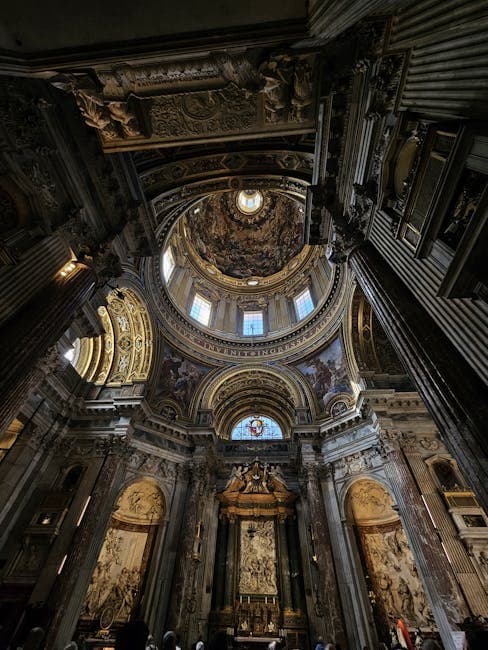
Sant’Andrea della Valle (interior)
Grand Baroque nave and operatic associations
At Sant’Andrea della Valle, the emphasis is on the scale and decoration of a major Baroque church interior. The narration should highlight the vast nave, the prominent dome (one of the largest in Rome), and the frescoed ceilings that create a sense of ascending movement. Historically, connect the church to powerful families and religious orders, and to the broader competition among Roman churches to impress worshippers. Cultural significance includes its role as the setting for the opening act of Puccini’s opera "Tosca". A unique anecdote could discuss how opera fans still visit to trace fictional scenes, or how the rich acoustic and visual environment embodies the theatrical spirit of Roman devotion, clearly distinct from anecdotes tied to any other church on the tour.
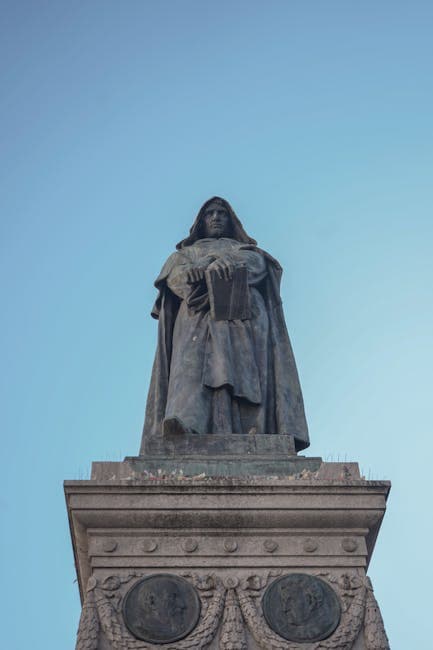
Campo de’ Fiori (square and statue of Giordano Bruno)
Lively market square overshadowed by Bruno’s memory
This stop explores Campo de’ Fiori as a vibrant market square with a darker historical underlayer. Narration should paint the contrast between today’s stalls and nightlife and its former use as a site for executions. The bronze statue of Giordano Bruno becomes the focal point: explain who he was, why he was condemned for heresy, and why his monument now faces the Vatican’s direction. A distinctive anecdote can recount the 19th‑century debates around erecting Bruno’s statue and how it became a symbol of free thought and anticlerical sentiment in a newly unified Italy. Emphasize the tension between everyday commerce and the memory of intellectual and religious conflict without echoing martyrdom stories from other stops.
Piazza Farnese (Palazzo Farnese exterior)
Renaissance palace square of the powerful Farnese
Piazza Farnese centers on the imposing façade of Palazzo Farnese, a high Renaissance palace later used as the French embassy. The narration should describe its regular, classical proportions, the heavy cornice, and the restrained decorative scheme that predates the more exuberant Baroque seen elsewhere on the tour. Mention the two monumental basins in the square, reused from ancient Roman baths. Historically, tie the palace to the Farnese family and papal ambitions. A unique anecdote might cover how the palace was modified over time by notable architects, or how its interior frescoes influenced artists on the Grand Tour, without repeating any stories about French national identity already linked to San Luigi dei Francesi.
Sant’Ignazio di Loyola (illusionistic ceiling)
Jesuit church with dazzling illusionistic ceiling
This stop delves into Sant’Ignazio di Loyola as a showcase of Jesuit Baroque and painted illusion. The narration should guide listeners to look up at the nave ceiling, describing how the painter extended architecture in fresco to suggest an open sky filled with figures and light. Explain the use of trompe‑l’oeil techniques, including the painted dome that replaces an actual one. Historically, connect the church to the Jesuit order and their didactic use of art. A unique anecdote can invite visitors to stand on a specific floor marker to see the illusion snap into place, and mention contemporary reactions to this visual trickery, without overlapping with any illusions discussed in other interiors.
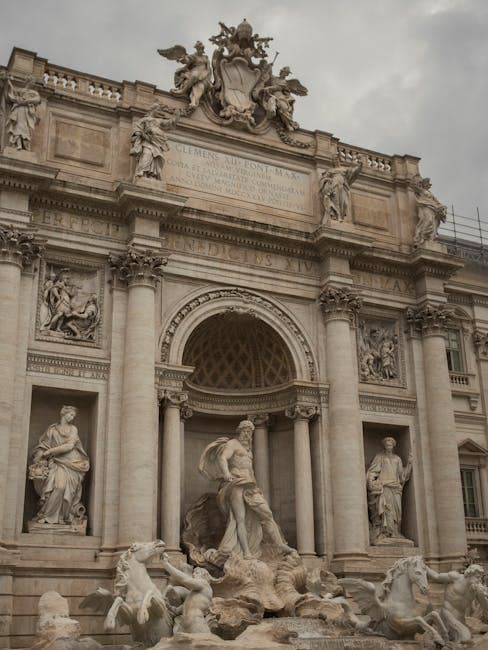
Trevi Fountain
Late Baroque fountain celebrating Rome’s water
At the Trevi Fountain, the focus is on water, spectacle, and late Baroque urban design. The narration should describe the fountain’s theatrical façade, the central ocean god figure, and the rocky cascades that merge sculpture with architecture. Historically, explain its role as the endpoint of an ancient aqueduct and as a symbol of papal investment in public water. A distinct anecdote should cover the custom of coin‑throwing into the fountain—its relatively modern origins and the idea that it ensures a return to Rome—along with mention that proceeds are now directed to charity. Avoid repeating any aqueduct‑related legends or crowd anecdotes elsewhere, keeping this stop’s stories centered on ritual and cinematic fame.

Piazza di Spagna & Spanish Steps (Trinità dei Monti view from below)
Elegant staircase linking piazza, fountain, and hillside church
The final stop, Piazza di Spagna, highlights the Spanish Steps, the Barcaccia fountain, and the view up to Trinità dei Monti. The narration should describe the broad staircase as an 18th‑century urban gesture connecting the Spanish embassy area below with the French church above, and how it became a favorite lounging spot for visitors. Historically, link the square to the international diplomatic presence and to the era of the Grand Tour, when foreign travelers made this a social hub. A unique anecdote can mention the long tradition of artists, writers, and later fashion houses clustering around the steps, or the seasonal flower displays that turn the staircase into a floral cascade, without reusing tourist rituals already associated with Trevi Fountain.
Start This Tour
Download Roamway to experience this audio tour
Tour Details
Access
Free
Stops
10 points of interest
Languages
GermanEnglishSpanishFrench
More tours in Roma
View all tours in RomaFrequently Asked Questions
How do I start this audio tour?
Download the Roamway app, search for this tour, and tap 'Start Tour'. The app will guide you to the starting point using GPS. Once you're there, the audio narration begins automatically.
Do I need an internet connection?
No! Once you've downloaded the tour in the Roamway app, it works completely offline. The GPS navigation and audio narration function without an internet connection.
Can I pause and resume the tour?
Yes! You can pause the tour at any time and resume later. Your progress is automatically saved, so you can complete the tour over multiple sessions if needed.