
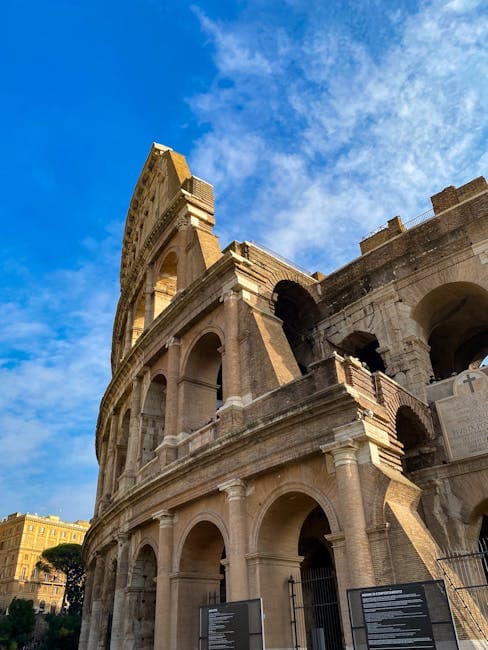
Rome: Colosseum to Forum and Imperial Rome
Roma, Italia
Audio Preview
Listen to a sample of this audio tour to get a feel for the experience.
What You'll Experience
On this Rome: Colosseum to Forum and Imperial Rome audio tour in Roma, you'll discover 11 carefully selected points of interest, each with its own story. The tour is designed to be completed at your own pace, with GPS navigation guiding you from one location to the next. As you approach each stop, the audio narration automatically begins, bringing history, culture, and local insights to life.
About This Tour
This tour explores ancient Rome’s central archaeological area, from the exterior of the Colosseum and nearby arches to the Roman Forum, Palatine Hill entrances, and the Temple of Venus and Roma. It includes viewpoints over the Imperial Fora, Trajan’s Column and Markets, and Piazza Venezia with the Vittoriano, focusing on history, urban development, and monumental architecture.
Points of Interest
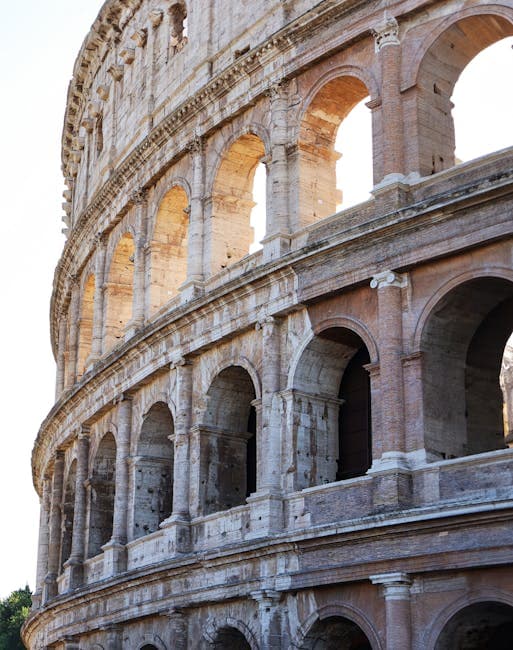
Colosseum (exterior viewpoint on Via dei Fori Imperiali)
Iconic arena and gateway to ancient imperial Rome
This stop uses the exterior view of the Colosseum from Via dei Fori Imperiali to introduce the whole archaeological zone and the tour’s main themes: spectacle, power, and urban transformation. The narration should cover its Flavian origins, basic structure, capacity, and the range of events staged here, stressing the political role of entertainment. It should also highlight later reuse, from housing and workshops to religious associations, and the modern conservation story. One unique anecdote to include is how the massive statue of Nero, the “Colossus,” gave the building its later nickname, even though the two were originally separate.
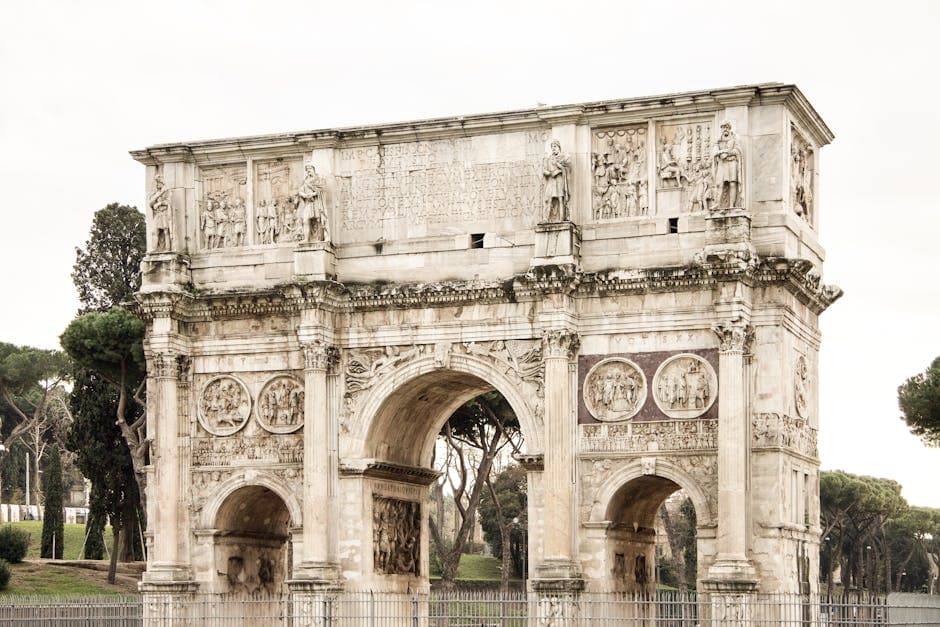
Arch of Constantine
Triumphal arch between pagan past and Christian future
At the Arch of Constantine, the focus is on imperial victory propaganda and the transition from a pagan empire to a Christianizing one. The script should describe the arch’s position between the Colosseum and Palatine, its reuse of earlier imperial reliefs, and its celebration of Constantine’s victory over a rival emperor. Explain the concept of spolia and how older panels from emperors like Trajan and Hadrian were repurposed to legitimize Constantine. A unique anecdote: note how some figures’ heads were recarved to resemble Constantine, a literal reshaping of history in stone.
Ludus Magnus (gladiator school remains, overlook on Via Labicana)
Gladiator training ground hidden beside the Colosseum
This stop overlooks the remains of the Ludus Magnus, the main gladiatorial training school connected to the Colosseum. The narration should reconstruct the complex: central training arena, barracks, and underground passage leading toward the amphitheater. Emphasize the daily routines of gladiators, including training, medical care, and the social status of different fighter types. Connect it to the broader ‘backstage’ world needed to sustain the games. A unique anecdote: mention how archaeologists identified gladiator graffiti and scratched game boards nearby, hinting at betting and downtime in this martial environment.
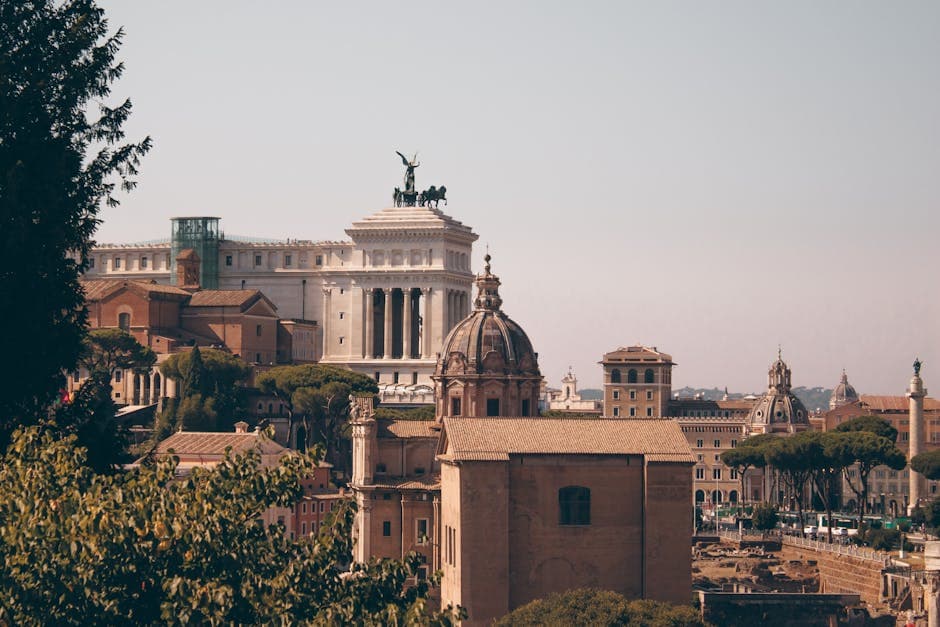
Roman Forum (view from Via dei Fori Imperiali terrace or Capitoline side)
Heart of political, religious, and civic ancient Rome
From the elevated terrace, this stop offers a panoramic story of the Roman Forum as the core of public life for many centuries. The script should identify major visible monuments—Senate House, temples, basilicas—and explain how the space evolved from a marshy valley to a dense civic center. Emphasize its role in politics, law, religion, and ceremony, with references to famous speeches and processions. A unique anecdote: describe how, in the Middle Ages, this entire area became known as the “Campo Vaccino,” or cow pasture, with cattle grazing among half-buried ruins before systematic excavations began.
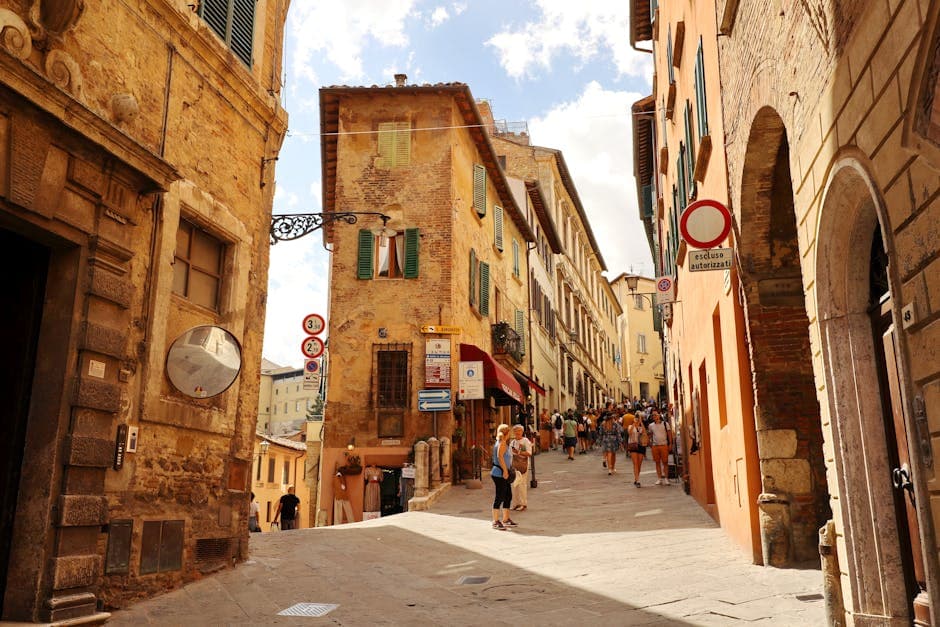
Palatine Hill (main entrance area)
Mythic birthplace and imperial residential plateau
At the Palatine Hill entrance, the narration should frame this rise as both legendary birthplace of Rome and later seat of emperors’ palaces. Cover the Romulus and Remus foundation myths associated with the hill and its early aristocratic houses. Then outline how successive emperors built vast, interconnected palaces here, giving us the word “palace” from Palatinus. A unique anecdote: mention how Renaissance gardeners and popes once used the ruins as ornamental gardens and vineyards, layering elite leisure over the remains of imperial power.
Arch of Titus
Flavian triumphal arch on the Sacred Way
This stop explores the Arch of Titus as an early imperial triumphal arch and key monument along the Sacred Way. The narration should explain its connection to the Flavian dynasty and the celebrated victory in Judea, describing the famous reliefs of the spoils from the Temple in Jerusalem and the triumphal procession. It should also mention the later Christian reinterpretation of these scenes. A unique anecdote: recall how, for centuries, some Jewish visitors avoided walking under the arch because of its depiction of the destruction of the Temple, turning a Roman boast into a painful symbol of loss.
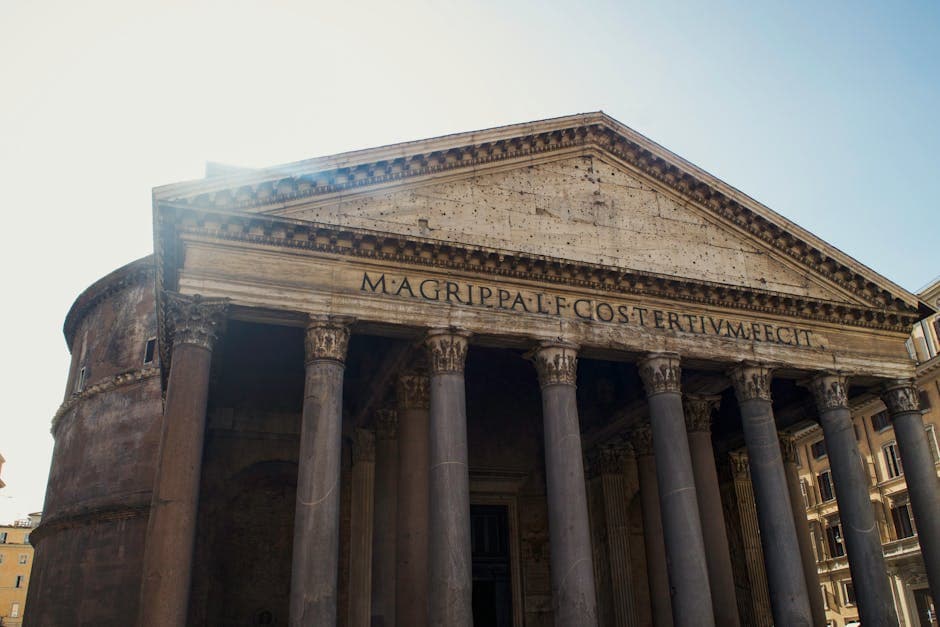
Temple of Venus and Roma (outer perimeter)
Hadrian’s grand double temple above the Forum
Here, the script focuses on the Temple of Venus and Roma as one of the largest temples in ancient Rome, designed in part by Emperor Hadrian. From the outer perimeter, explain its unusual back-to-back cellae dedicated to Venus (for Rome’s people) and Roma (the deified city), and its position overlooking both Colosseum and Forum. Note later damage and transformations, including a nearby Christian church. A unique anecdote: include the story that the sharp-tongued critic Apollodorus of Damascus is said to have mocked Hadrian’s design, a criticism that, according to some ancient sources, may have contributed to his downfall.
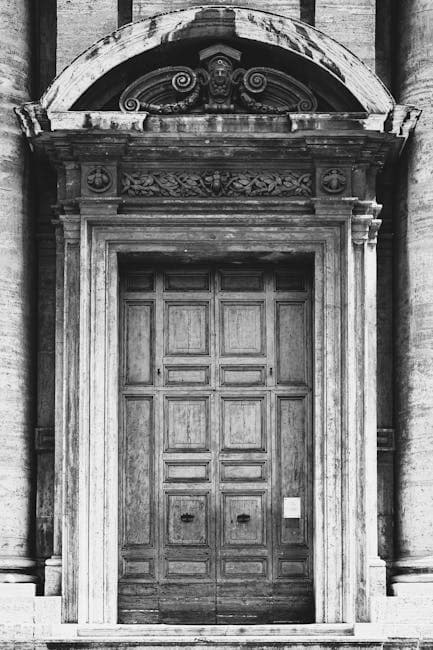
Basilica of Maxentius and Constantine (exterior)
Colossal late-imperial hall of law and power
At the exterior of the Basilica of Maxentius and Constantine, the narration should highlight its massive vaulted spaces and role as a law court and civic hall in the early 4th century. Explain how its engineering foreshadows later Christian basilicas, with concrete vaults and coffered ceilings. Discuss the political rebranding when Constantine took over the project after defeating Maxentius. A unique anecdote: mention the enormous statue of Constantine that once stood inside, fragments of which survive today, giving a sense of the intimidating scale and presence rulers wanted to project here.
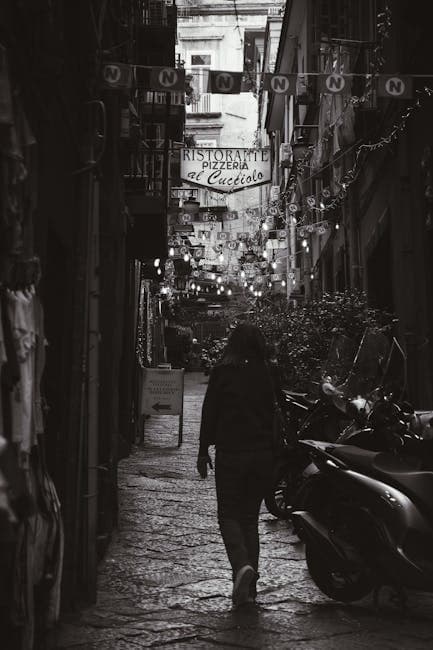
Imperial Fora (Trajan’s Forum and Markets, seen from Via dei Fori Imperiali and Via Biberatica)
Series of monumental forums reshaping central Rome
This stop uses the viewpoints along Via dei Fori Imperiali and Via Biberatica to explain the sequence of Imperial Fora—Julius Caesar, Augustus, Nerva, and especially Trajan. The narration should describe how each forum added new political, religious, or commercial functions and pushed the city’s center northward. Trajan’s Markets can be presented as an early multi-level commercial and administrative complex. A unique anecdote: highlight how Mussolini’s 20th-century avenue sliced through these forums, both uncovering and damaging ruins, and how parades once used this route to echo ancient imperial processions.
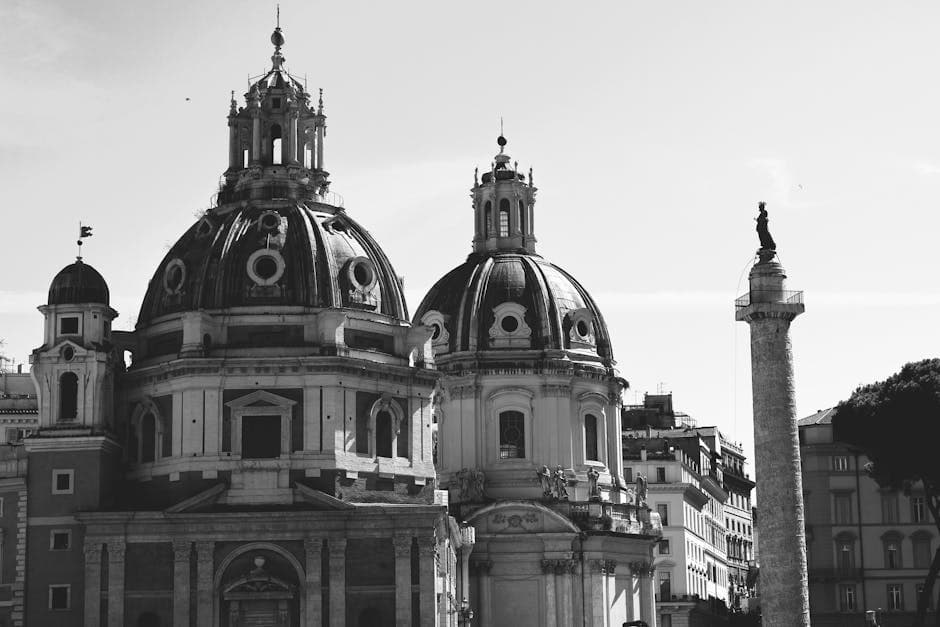
Trajan’s Column
Spiraling stone story of conquest and empire
At Trajan’s Column, the focus is on its function as a narrative monument commemorating campaigns in Dacia and the emperor’s virtues. The script should invite listeners to imagine the detailed relief band spiraling upwards, with scenes of battles, engineering works, and diplomacy. Explain its role as a kind of stone scroll and likely funerary monument associated with Trajan’s ashes. A unique anecdote: mention the later addition of the statue on top—originally of Trajan, replaced in the early modern period with a statue of Saint Peter—showing how Christian Rome literally crowned pagan monuments with new meanings.
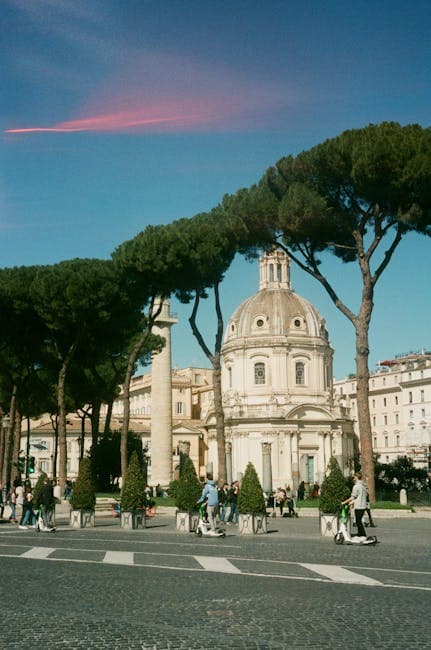
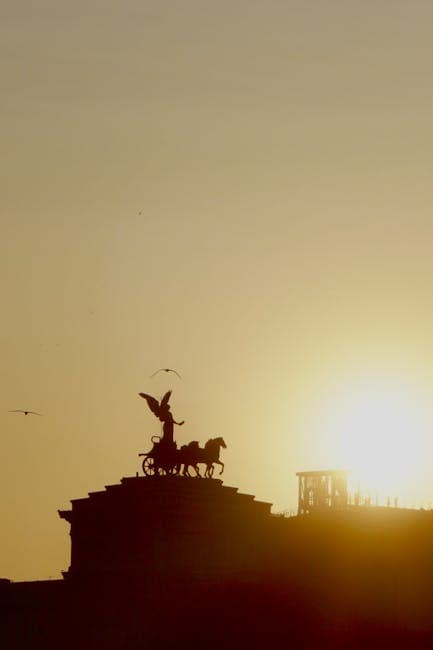
Piazza Venezia & Altare della Patria (Vittoriano, exterior)
National monument linking ancient grandeur and modern Italy
The final stop at Piazza Venezia and the Altare della Patria (Vittoriano) ties ancient imperial imagery to modern Italian nation-building. The narration should describe the vast white monument to Victor Emmanuel II, its classical references, and its role as a symbol of unified Italy and the Tomb of the Unknown Soldier. Place it within the urban fabric connecting the ancient forums to modern boulevards. A unique anecdote: note how the monument’s sheer size and color earned it popular nicknames comparing it to objects like a typewriter, reflecting ambivalent public reactions to this attempt at a new ‘imperial’ centerpiece.
Start This Tour
Download Roamway to experience this audio tour
Tour Details
Access
Free
Stops
11 points of interest
Languages
GermanEnglishSpanishFrench
More tours in Roma
View all tours in RomaFrequently Asked Questions
How do I start this audio tour?
Download the Roamway app, search for this tour, and tap 'Start Tour'. The app will guide you to the starting point using GPS. Once you're there, the audio narration begins automatically.
Do I need an internet connection?
No! Once you've downloaded the tour in the Roamway app, it works completely offline. The GPS navigation and audio narration function without an internet connection.
Can I pause and resume the tour?
Yes! You can pause the tour at any time and resume later. Your progress is automatically saved, so you can complete the tour over multiple sessions if needed.