
Berlin: Monuments, Memory and Museum Island Classics
Berlin, Deutschland
Audio Preview
Listen to a sample of this audio tour to get a feel for the experience.
What You'll Experience
On this Berlin: Monuments, Memory and Museum Island Classics audio tour in Berlin, you'll discover 12 carefully selected points of interest, each with its own story. The tour is designed to be completed at your own pace, with GPS navigation guiding you from one location to the next. As you approach each stop, the audio narration automatically begins, bringing history, culture, and local insights to life.
About This Tour
This central Berlin tour focuses on Unter den Linden, Bebelplatz, and Museum Island, featuring monuments, churches, and cultural institutions. It examines Prussian and imperial architecture, war and Cold War legacies, and contemporary reconstruction debates. Key sites include Brandenburg Gate, Bebelplatz, Neue Wache, Berliner Dom, Humboldt Forum, and the major Museum Island façades.
Points of Interest
Brandenburg Gate
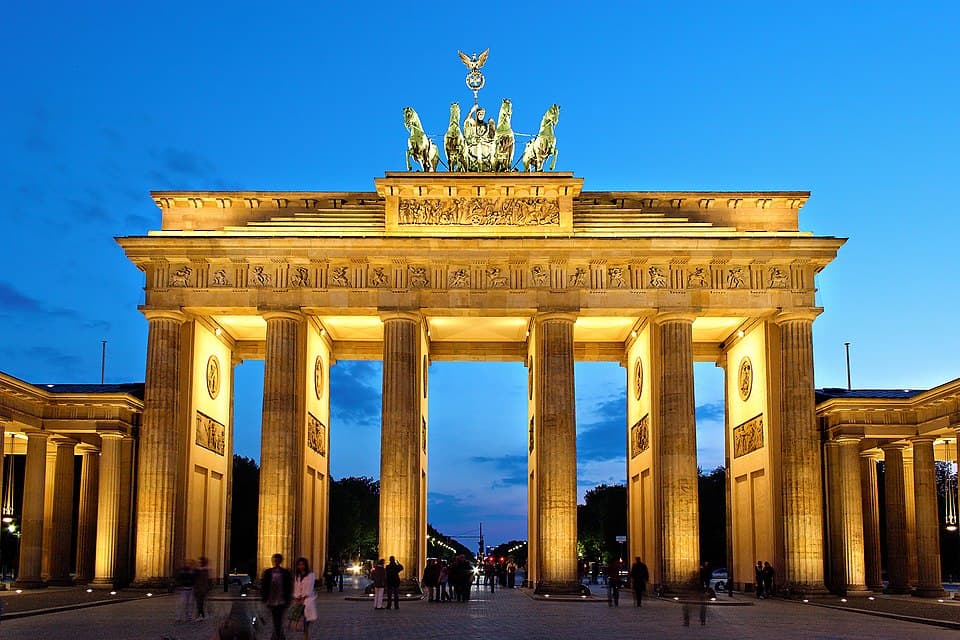
Symbolic gateway through Prussian, Nazi and Cold War eras
This stop introduces Brandenburg Gate as the monumental western entrance to historic Berlin and the symbolic starting point for the tour. The script should cover its late 18th‑century neoclassical design, links to Frederick William II, and its model in the Athenian Propylaea. It should trace the gate’s changing meanings under the Prussian monarchy, the German Empire, the Nazi regime, and especially its role on the border between East and West Berlin during the Cold War. An anecdote can describe how the Quadriga sculpture was taken to Paris by Napoleon and later triumphantly returned to Berlin, subtly altered to reflect Prussian victory. Another story might recall the powerful images of crowds celebrating German reunification around the gate in 1989–1990, highlighting its emergence as a symbol of unity rather than division.
Hotel Adlon Exterior
Luxury hotel façade beside Berlin’s political stage
This stop focuses on the exterior of Hotel Adlon, a reconstruction of Berlin’s legendary grand hotel overlooking Pariser Platz. The narration should explain the original hotel’s early 20th‑century fame as a meeting place for aristocrats, artists, and politicians, and its near‑destruction in the final days of World War II. It should clarify how the current building, opened after reunification, combines homage to the historic façade with contemporary hotel functions, and how its presence reshapes the square’s atmosphere. One anecdote might describe the Adlon’s role as a backdrop for high‑profile state visits and discreet diplomacy in the interwar years. Another can mention a notable cultural guest or film production that used the hotel as a setting, illustrating its ongoing association with glamour and spectacle.
Berlin State Opera
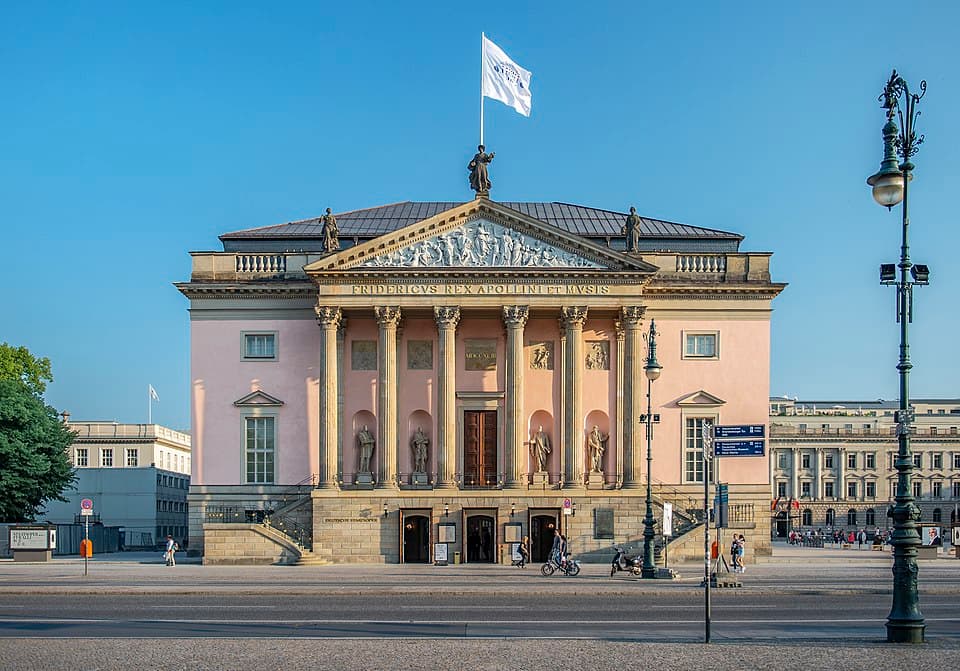
Prussian court theatre on Unter den Linden boulevard
This stop looks at the Berlin State Opera building on Unter den Linden as a symbol of Frederick II’s cultural ambitions. The script should explain that this was one of Europe’s earliest freestanding opera houses and part of a planned ensemble of royal buildings along the boulevard. It should address the building’s neoclassical style, repeated fires and war damage, and its various reconstructions through the 19th and 20th centuries, including GDR‑era redesigns and post‑reunification renovation. One anecdote could recall an early premiere or famous performance associated with the house, underlining its role in European music history. Another might note how audiences continued attending performances amid postwar ruins, using culture as a sign of resilience in a devastated city.
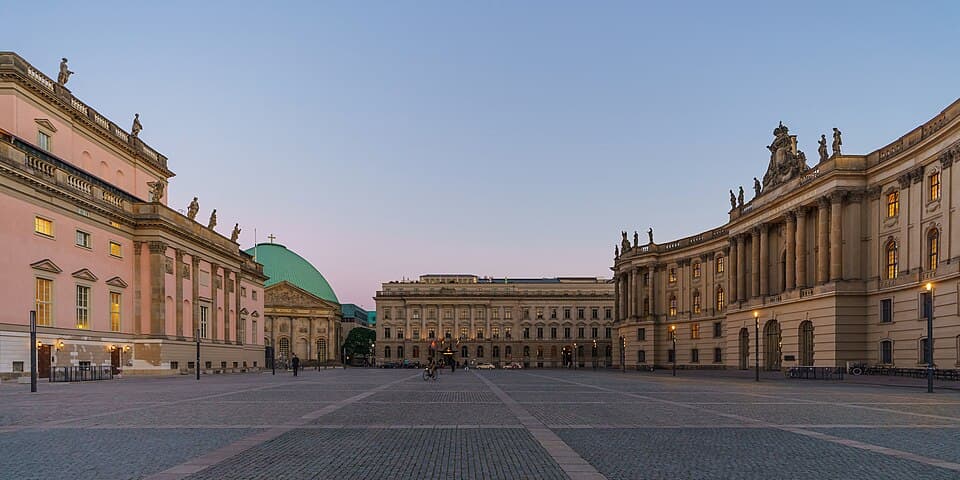
Bebelplatz Ensemble
Square of churches, libraries and a book burning void
This stop covers the entire Bebelplatz ensemble, highlighting St. Hedwig’s Cathedral, the baroque former Royal Library façade (now part of Humboldt University), and neighboring university buildings. The narration should emphasize Frederick II’s urban planning vision and the square’s evolution into a center of religious, intellectual, and state power. A core theme is the 1933 Nazi book burning that took place here, with attention to the underground memorial of empty shelves by artist Micha Ullman and how it frames questions of censorship and memory. One anecdote might describe contemporary accounts of students and Nazi organizations throwing works by banned authors into the flames. Another could explore how St. Hedwig’s unusual circular design and Catholic presence reflected the Prussian king’s complex relationship with religion and tolerance.
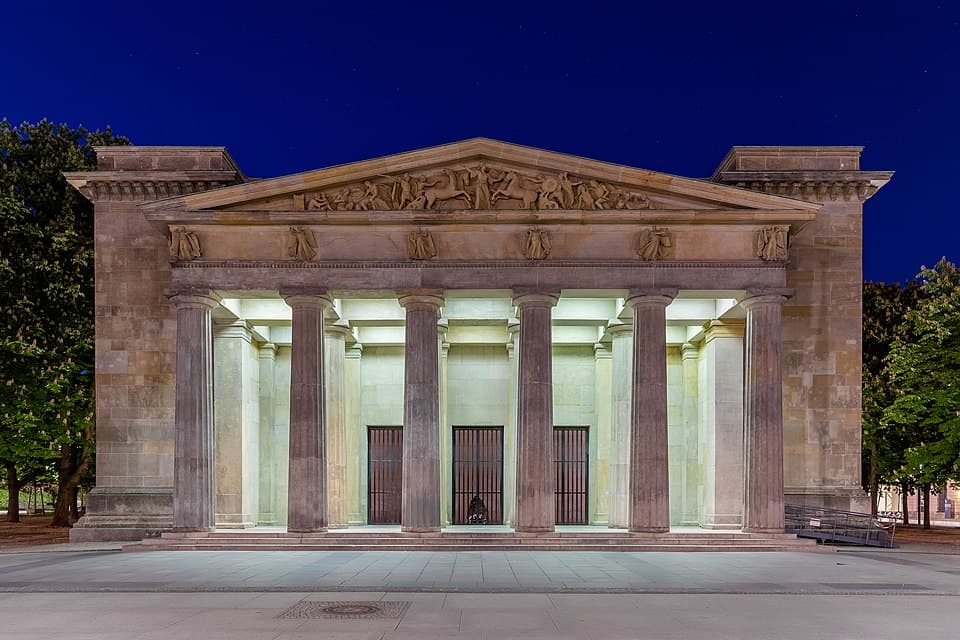
Neue Wache
From royal guardhouse to national memorial space
This stop examines Neue Wache on Unter den Linden, originally a Prussian guardhouse designed by Karl Friedrich Schinkel and now a central memorial to the victims of war and dictatorship. The script should describe its austere classical exterior, the transformation of its function under different regimes, and the stark interior dominated by Käthe Kollwitz’s sculpture of a grieving mother and her dead son. It should address how the East German state recast it as a memorial to victims of fascism and militarism, and how reunited Germany later redefined the dedication to all victims of war and tyranny. One anecdote may recount Kollwitz’s personal losses in World War I, connecting her biography to the sculpture’s emotional weight. Another could mention the building’s symbolic reopening ceremonies after reunification, underscoring contested ideas of national remembrance.
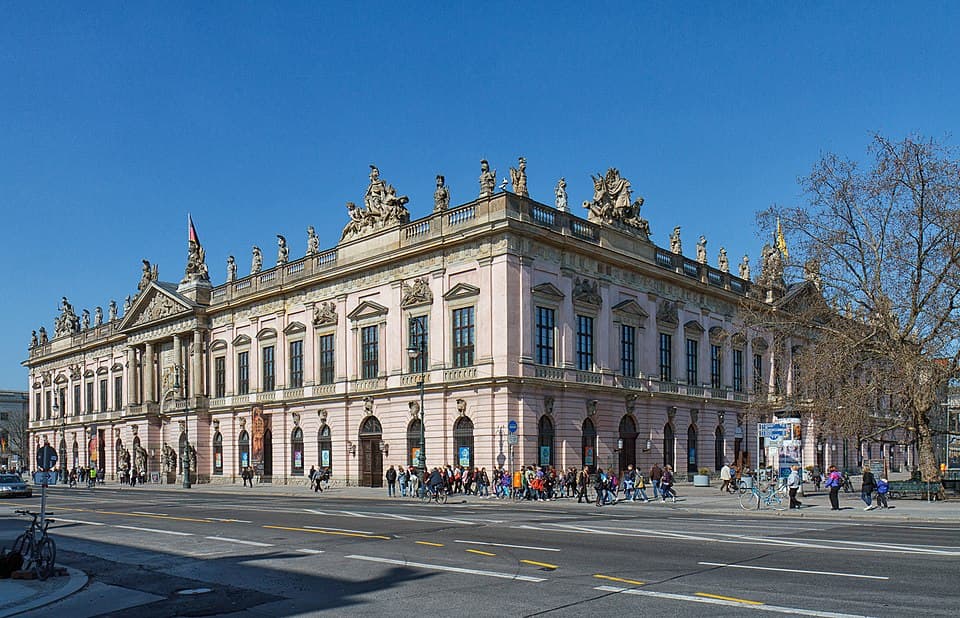
Zeughaus / German Historical Museum
Baroque arsenal turned national history museum
This stop focuses on the Zeughaus, Berlin’s former baroque arsenal, and its present role as part of the German Historical Museum complex. The narration should describe its elaborate sculpted façade, especially the grimacing mask heads symbolizing dying warriors, and explain its original purpose as a storehouse and display space for Prussian weaponry. It should then trace its conversion into a museum, including uses under different political systems and the addition of a modern exhibition building nearby. One anecdote might recount how the arsenal’s grand hall was occasionally used for state occasions, turning instruments of war into a decorative backdrop. Another could highlight post‑reunification debates about how the museum should present sensitive chapters of German history, underlining the politics of curating a “national narrative.”
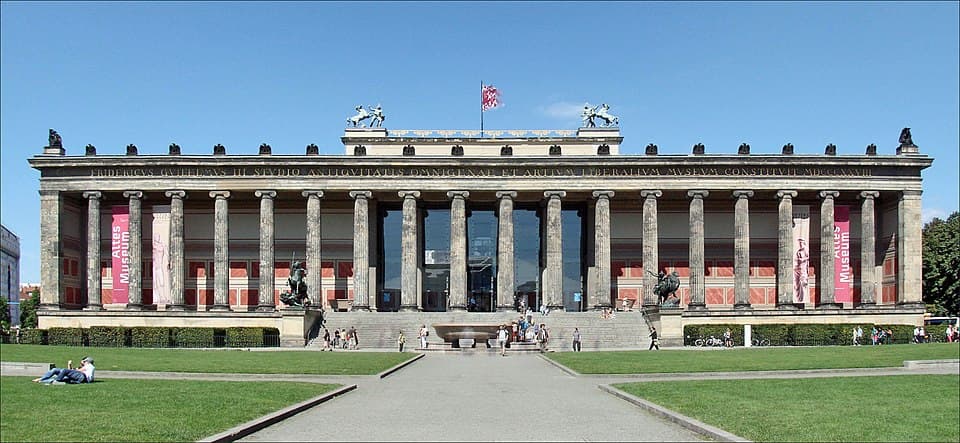
Lustgarten And Altes Museum
Royal garden framed by early museum classicism
This stop centers on the Lustgarten as a ceremonial open space in front of the Altes Museum, with Berlin Cathedral as a dramatic backdrop. The script should outline how the garden shifted from royal kitchen garden to parade ground to civic park, and how it became a stage for political demonstrations and mass rallies in the 19th and 20th centuries. It should draw attention to the Altes Museum’s classical colonnade and its pioneering role as an early public art museum, embodying ideas about educating citizens through culture. One anecdote might describe a notable political rally or protest that filled the Lustgarten, illustrating its role as a barometer of public moods. Another can evoke a 19th‑century visitor’s perspective, seeing the new museum as a temple of art in an otherwise militarized cityscape.
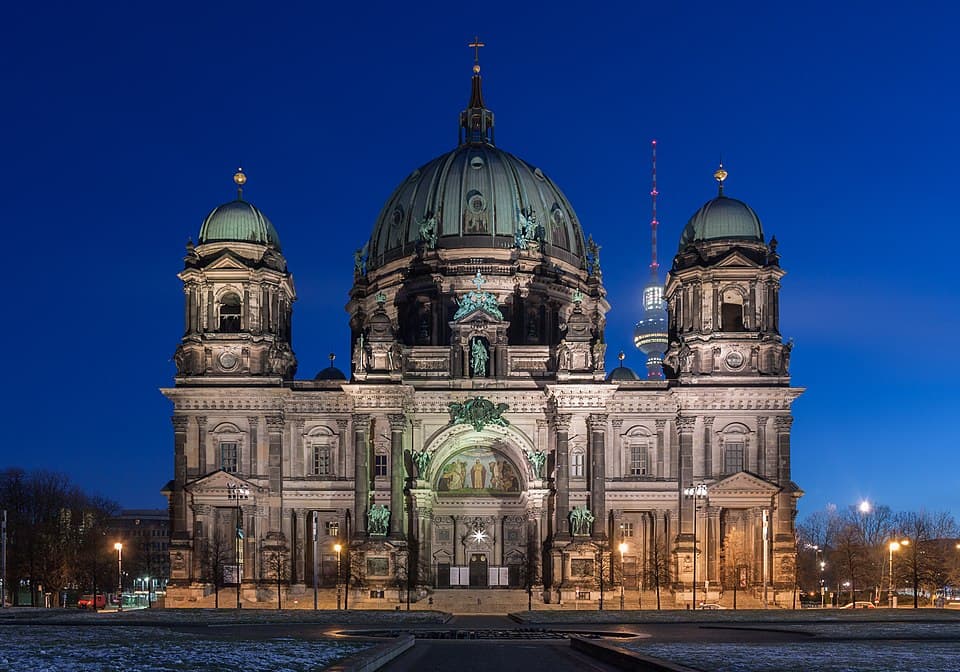
Berlin Cathedral Exterior
Imperial Protestant showpiece facing Museum Island
This stop examines the exterior of Berlin Cathedral, built as a monumental Protestant counterpart to historic Catholic churches and as a dynastic church for the Hohenzollern rulers. The narration should highlight its eclectic historicist style, towering dome, and sculptural decoration, connecting these features to the ambitions of the newly unified German Empire. It should cover wartime damage, the Soviet‑era decision to simplify parts of the design during reconstruction, and ongoing restoration work. One anecdote could describe how the crypt beneath the church became the burial place for generations of Hohenzollerns, reinforcing its dynastic function. Another might note how the damaged dome remained a conspicuous ruin in East Berlin for years, serving as a visual reminder of war and postwar scarcity.
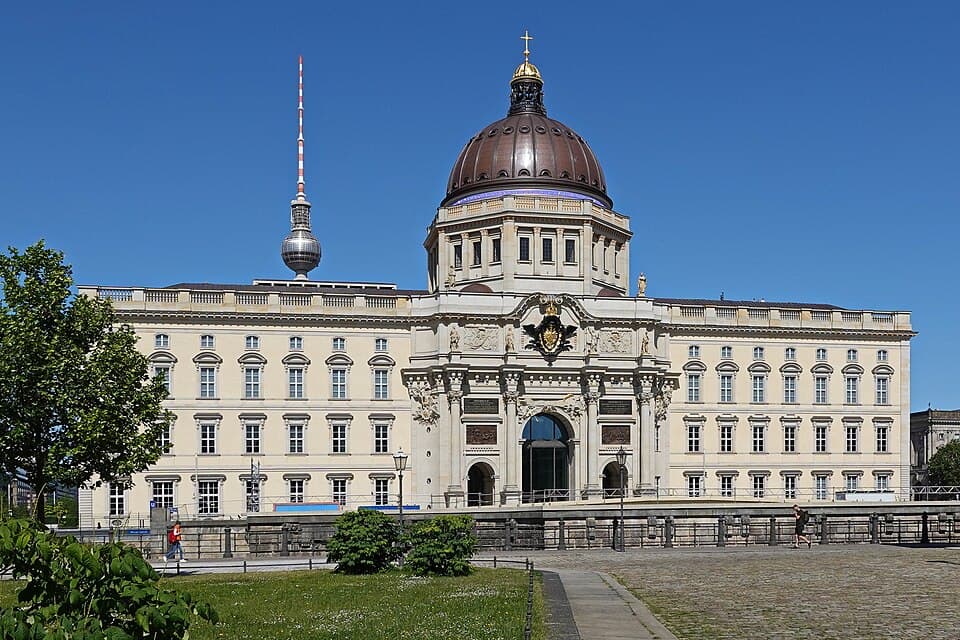
Humboldt Forum And Berlin Palace
Reconstructed baroque façades over a contested void
This stop explores the Humboldt Forum and the reconstructed façades of the former Berlin Palace on the south side of Museum Island. The script should explain the original royal palace’s role as the Hohenzollern residence and political hub, its severe wartime damage, and its demolition by the East German government. It should then describe the GDR’s Palace of the Republic that once occupied the site, its removal after reunification, and the controversial decision to rebuild a baroque shell housing a modern cultural institution. One anecdote might recount public protests and heated parliamentary debates over whether to reconstruct the palace or create an entirely contemporary building. Another could evoke memories of the Palace of the Republic as a popular venue for concerts and leisure, complicating the idea of a simple return to a pre‑war past.
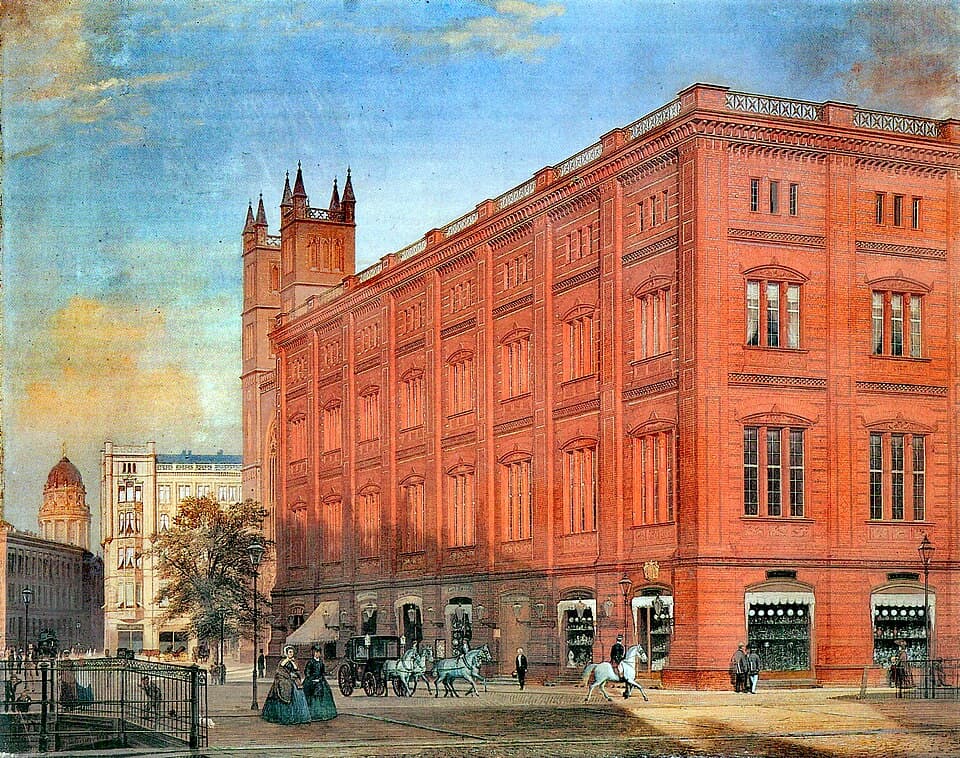
Schinkelplatz And Bauakademie
Square of Schinkel statues and a missing school
This stop focuses on Schinkelplatz, framed by views of the Humboldt Forum and the site of the former Bauakademie, Karl Friedrich Schinkel’s influential architecture school and office building. The narration should introduce Schinkel as a key figure of Prussian classicism and explain how the Bauakademie’s innovative brick design once stood here before its wartime damage and later demolition. It should point out current reconstruction efforts or placeholder structures, using them to discuss broader debates about whether to recreate historical buildings or favor contemporary designs. One anecdote may describe how Schinkel’s designs for Berlin—including monuments, churches, and museums—helped give the city a coherent classical image in the 19th century. Another could mention temporary uses of the vacant site, such as pavilions or cultural events, illustrating how Berlin experiments with its absences as well as its monuments.
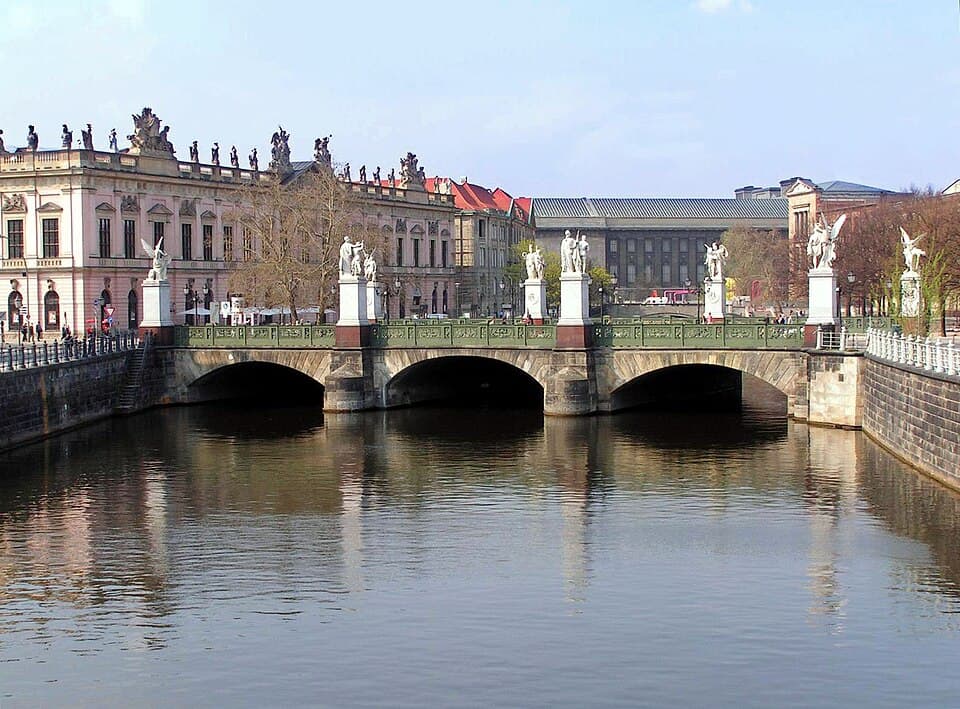
Schlossbrücke
Bridge of allegorical sculptures and framed vistas
This stop examines Schlossbrücke, the bridge linking Unter den Linden to the area of the former royal palace and Museum Island. The script should describe its neoclassical design and the program of marble sculptures showing scenes of a young hero’s life, tying them to 19th‑century ideals of education, struggle, and sacrifice. It should highlight how the bridge functions as a viewing platform, framing perspectives of the cathedral, Humboldt Forum, and the boulevard stretching back toward Brandenburg Gate. One anecdote may tell how some of the statues suffered wartime damage and were later restored or recast, leaving subtle traces for careful observers. Another can touch on the bridge’s role in official parades and military processions, as troops and dignitaries moved between palace and city center.
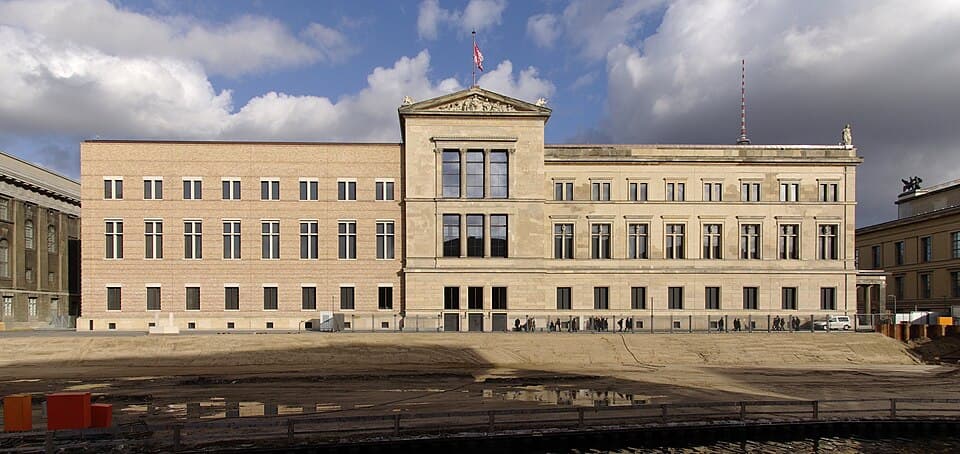
Museum Island Façades
UNESCO museum ensemble of shifting narratives
This final stop surveys the main façades of Museum Island’s key museums, including the Altes Museum, Neues Museum, and Pergamon Museum, seen from a vantage point that allows comparison of their different styles and restoration histories. The narration should explain the island’s development from a royal museum project into a UNESCO World Heritage ensemble, emphasizing the idea of a “museum landscape” rather than isolated buildings. It should touch on wartime damage, postwar restoration in East Berlin, and more recent refurbishments by architects who consciously left visible scars of history. One anecdote could describe how Neues Museum stood as a roofless ruin for decades before its sensitive rebuild, symbolizing both loss and continuity. Another may raise questions about the provenance of some collections, linking the island’s monumental architecture to current debates about colonialism and the future of European museums. This stop should also provide a reflective conclusion to the tour’s themes of monuments, memory, and reconstruction in Berlin.
Start This Tour
Download Roamway to experience this audio tour
Tour Details
Access
Free
Stops
12 points of interest
Languages
GermanEnglishSpanishFrench
More tours in Berlin
View all tours in BerlinOther tours you might enjoy:
Berlin: Landmarks, Nazi Era Sites & Cold War Borderlands
This central Berlin route links the Brandenburg Gate, Reichstag, Potsdamer Platz, Gendarmenmarkt, and Unter den Linden with key 20th‑century sites. It examines Prussian architecture, Nazi dictatorship and terror institutions, the Holocaust memorial, Soviet war remembrance, and Cold War border crossings, showing how Berlin’s cityscape reflects German and European history.
Berlin Kreuzberg: Street Art, Canals and Counterculture
This tour explores Kreuzberg’s Görlitzer Bahnhof area, Görlitzer Park, and the canal paths along the Landwehrkanal between Lohmühlenbrücke and Admiralbrücke. It focuses on street art, migrant histories, punk and club culture, and everyday life around Kottbusser Tor, Oranienstraße, Maybachufer, and the former hospital complex at Mariannenplatz.
Berlin: Bernauer Straße Wall History & Mauerpark Culture
This tour follows the former Berlin Wall along Bernauer Straße and into Mauerpark, tracing key sites of division, escape attempts, and remembrance. It includes the Berlin Wall Memorial, preserved border installations, the Chapel of Reconciliation, and Wall history plaques, then continues through Mauerpark, the flea market area, and nearby streets to explore everyday GDR life and post-reunification change.
Frequently Asked Questions
How do I start this audio tour?
Download the Roamway app, search for this tour, and tap 'Start Tour'. The app will guide you to the starting point using GPS. Once you're there, the audio narration begins automatically.
Do I need an internet connection?
No! Once you've downloaded the tour in the Roamway app, it works completely offline. The GPS navigation and audio narration function without an internet connection.
Can I pause and resume the tour?
Yes! You can pause the tour at any time and resume later. Your progress is automatically saved, so you can complete the tour over multiple sessions if needed.