
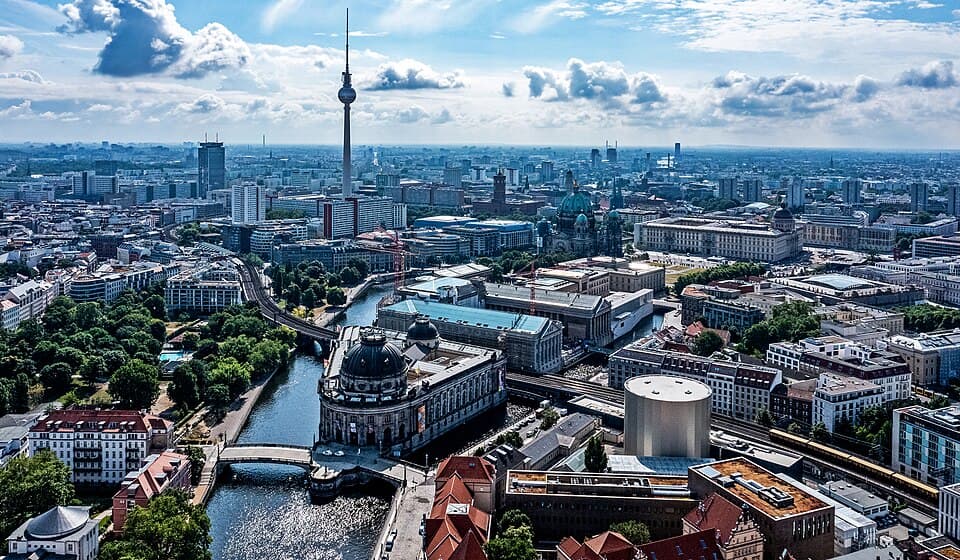
Berlin Kreuzberg: Street Art, Canals and Counterculture
Berlin, Deutschland
Audio Preview
Listen to a sample of this audio tour to get a feel for the experience.
What You'll Experience
On this Berlin Kreuzberg: Street Art, Canals and Counterculture audio tour in Berlin, you'll discover 12 carefully selected points of interest, each with its own story. The tour is designed to be completed at your own pace, with GPS navigation guiding you from one location to the next. As you approach each stop, the audio narration automatically begins, bringing history, culture, and local insights to life.
About This Tour
This tour explores Kreuzberg’s Görlitzer Bahnhof area, Görlitzer Park, and the canal paths along the Landwehrkanal between Lohmühlenbrücke and Admiralbrücke. It focuses on street art, migrant histories, punk and club culture, and everyday life around Kottbusser Tor, Oranienstraße, Maybachufer, and the former hospital complex at Mariannenplatz.
Points of Interest
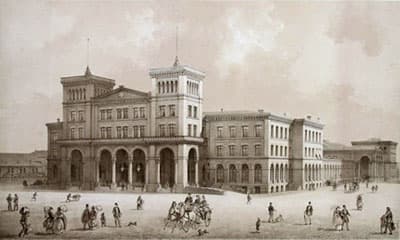
Görlitzer Bahnhof Area
Street art corridor beneath the U1 tracks
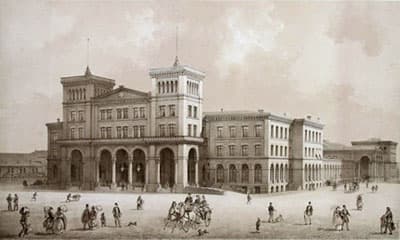
This stop introduces the noisy Skalitzer Straße corridor around the U1 Görlitzer Bahnhof station, with its dense layering of graffiti, tags, posters, and murals. The script should explain the history of the former Görlitzer long‑distance railway station, whose grounds later became Görlitzer Park, and how the elevated U‑Bahn shaped Kreuzberg’s urban fabric. It should highlight this stretch as an open‑air gallery and communication wall for political slogans, subcultural symbols, and neighborhood messages. One anecdote could focus on how local residents and artists fought to preserve legal graffiti spaces during redevelopment discussions. Another can mention how the area’s gritty image once discouraged investment, indirectly protecting low‑rent spaces for artists and migrant businesses.
Spreewaldplatz And Park Entrance
From busy streets into Görlitzer Park
This stop covers Spreewaldplatz as a transitional square between the traffic of Skalitzer Straße and the greenery of Görlitzer Park. The narration should describe the visible playgrounds, open space, nearby housing blocks, and the main path into the park on the former railway grounds. It should explain how the demolition of the old station left a scar that was slowly transformed into public space. One anecdote may describe neighborhood campaigns to turn the derelict rail area into a park instead of intensive development. Another can mention how Spreewaldplatz has periodically been a gathering point for demonstrations and community festivals, showing its dual role as both a local hangout and political stage.
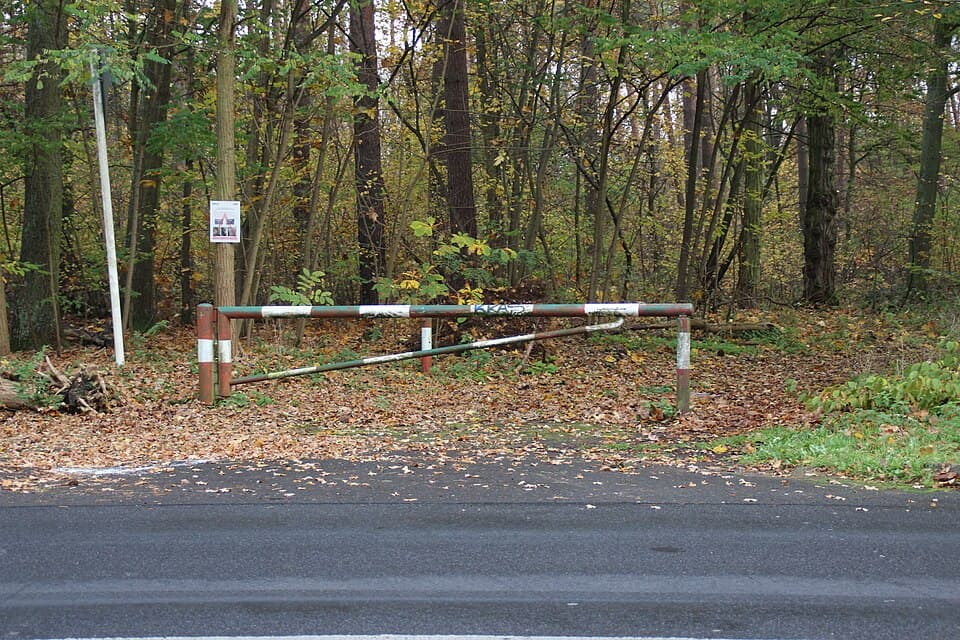
Görlitzer Park Core Paths
Green slopes on former rail yards
Here the focus shifts to the interior paths and viewpoints of Görlitzer Park, with grassy slopes, trees, and remnants of the old railway terrain. The script should outline how the park reflects Kreuzberg’s social tensions: beloved picnic spot, informal sports grounds, but also a site of drug dealing, heavy policing, and media debates. It can evoke how the uneven topography hints at old tracks and platforms now hidden under greenery. One anecdote could mention early community gardens and playground projects built by residents in the years after the Wall, asserting their right to shape the space. Another may recall a specific neighborhood initiative to negotiate with authorities over policing strategies in the park, illustrating local self‑organization.
Lohmühlenbrücke
Bridge between Kreuzberg and Treptow
This stop uses Lohmühlenbrücke as a vantage point over the Landwehrkanal and towards the Treptow side. The narration should describe the canal as a man‑made waterway that once served freight and industrial transport, now turned into a leisure and walking axis. It should highlight how this bridge marks a border between former East and West Berlin neighborhoods, even if that division is now invisible. One anecdote could recall local stories of people meeting on or near the bridge after the fall of the Wall, exploring neighborhoods that had long seemed distant. Another might mention a small community effort to add informal seating or guerrilla gardening near the bridge, reflecting residents’ desire to claim the waterfront.
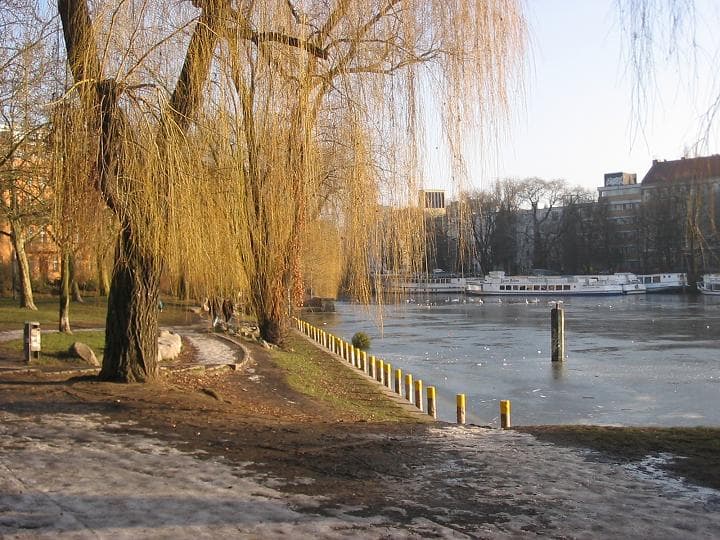
Landwehrkanal Maybachufer
Tree-lined canal promenade and bank
This stop follows the Landwehrkanal along the Maybachufer stretch, emphasizing wide views of water, moored boats, and the tree‑lined promenade. The narration should explain how the canal once functioned as a key industrial artery and later became a recreational landscape, with people fishing, sitting on the banks, and cycling past. It can note the characteristic metal railings, steps down to the water, and long rows of plane trees that define the atmosphere. One anecdote may describe how ice on the canal in especially cold winters briefly turns it into an unusual playground, despite official warnings. Another might recall a local art project that used the water surface or opposite bank as a screen for temporary light installations, reinforcing the canal’s cultural role.
Türkischer Markt Maybachufer
Lively Turkish market along the canal
This stop focuses on the Turkish Market along Maybachufer, which transforms the canal bank into a bustling bazaar on market days. The script should describe stalls selling fruit, vegetables, herbs, fabrics, street food, and household goods, along with the sound of bargaining in multiple languages. It should place the market within the history of Turkish guest workers settling in Kreuzberg and building businesses here. One anecdote could center on a long‑running family stall that expanded from simple produce to specialty regional foods as new customers arrived. Another might note how musicians sometimes set up along the market route, turning the walk into an impromptu soundtrack for shopping and socializing.
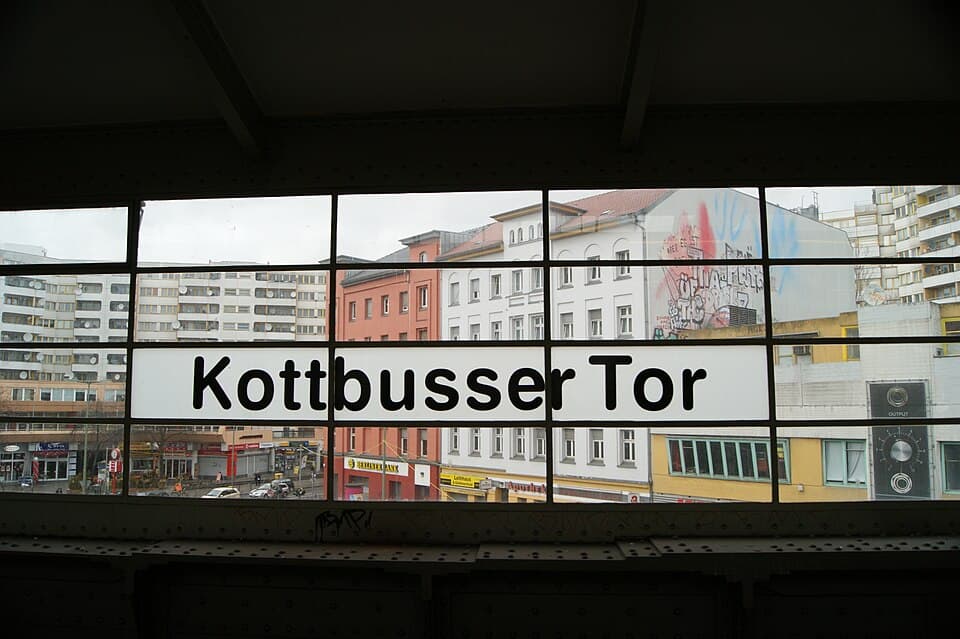
Kottbusser Tor
Busy junction of U-Bahn, blocks and graffiti
This stop tackles Kottbusser Tor, or “Kotti”, as a chaotic crossroads of elevated U‑Bahn lines, large postwar housing complexes, shops, and dense graffiti. The narration should discuss its reputation as a center of Kreuzberg’s migrant communities, leftist politics, and nightlife, as well as ongoing issues with poverty and drug use. It should draw attention to the concrete architecture, neon signage, and layers of posters and tags around the station. One anecdote could describe a residents’ protest camp set up on the square’s edge to draw attention to rising rents and displacement. Another might recall stories of early punk bands using the covered spaces near the tracks as informal meeting points before heading to gigs nearby.
Oranienstraße
Alternative main street of Kreuzberg SO36
This stop follows Oranienstraße as a key artery lined with independent shops, bars, eateries, and small galleries. The narration should trace how the street evolved from a working‑class corridor to a hub of squats, left‑wing bookshops, and experimental venues, and later into a symbol of gentrifying Kreuzberg. Visible details include older tenement facades, small shopfronts, and street art around doorways and shutters. One anecdote could tell of a now‑established café or bar that began as an illegal or semi‑legal collective space during the squatter era. Another might recount how a particular house number became nationally known after clashes between residents and police over eviction attempts, embedding Oranienstraße in wider political debates.
Mariannenplatz And Bethanien
Former hospital turned arts and community hub
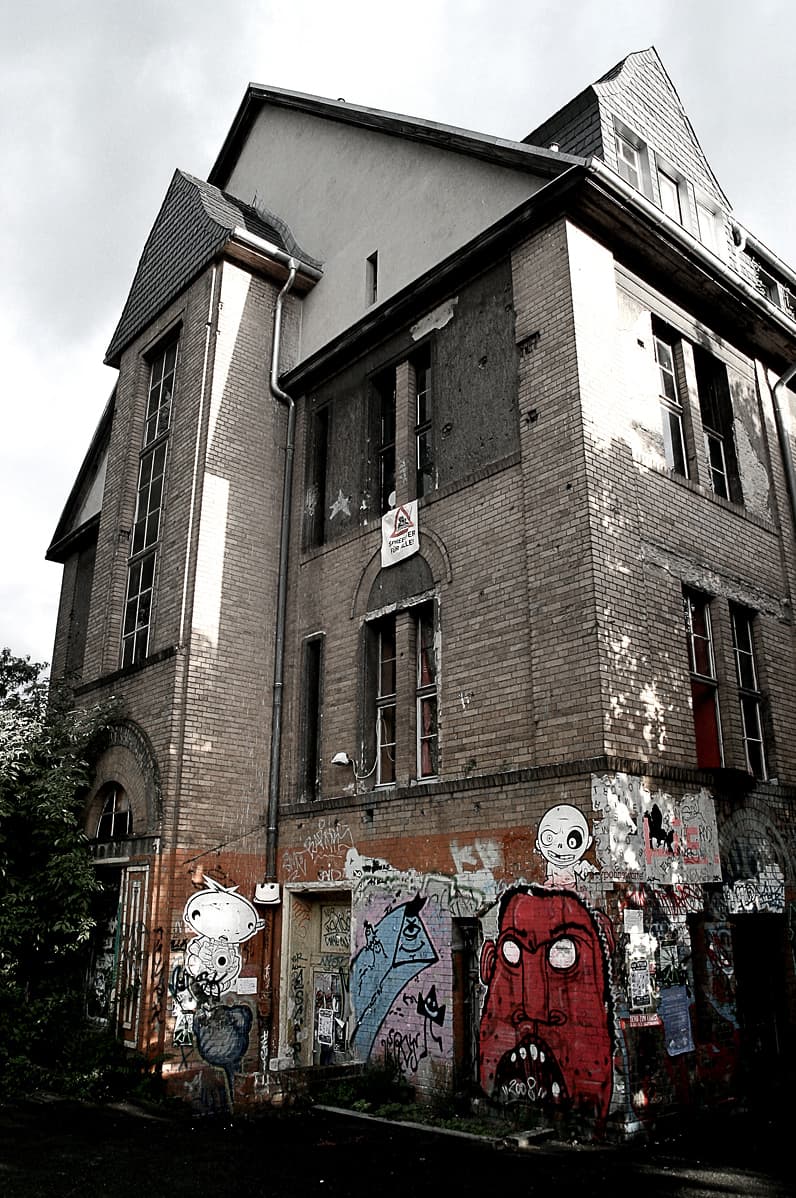
This stop explores Mariannenplatz and the courtyard of Kunstquartier Bethanien, housed in a historic former hospital complex. The script should describe the imposing brick building, arched windows, and central tower, set around a green square that often hosts gatherings and relaxation. It should outline Bethanien’s path from charitable institution to partially abandoned site, then to a focus of squatting and cultural politics before its conversion into an arts and community center. One anecdote might recount a specific squat in one wing of the building that became a symbol of Kreuzberg’s autonomous movement. Another can highlight an early exhibition or project by immigrant or refugee artists here, showing how Bethanien helped open institutional doors to marginalized voices.
SO36 Club Exterior
Legendary punk and subculture venue façade
This stop zooms in on the exterior of SO36, a long‑standing club on Oranienstraße named after Kreuzberg’s old postal code. The narration should describe the club’s modest street frontage, posters, stickers, and graffiti, and explain its significance for punk, hardcore, queer, and migrant nightlife scenes. It can outline how the venue weathered political pressure, noise complaints, and changing trends, yet remained a reference point for alternative culture. One anecdote could recall a famously chaotic concert or event that cemented SO36’s reputation as a wild, boundary‑pushing space. Another might mention a themed night that brought together Turkish, Arabic, and German music, illustrating how the club experimented with crossing cultural boundaries.
Wrangelkiez Side Streets
Narrow backstreets of art and everyday life
This stop guides listeners through Wrangelkiez’s smaller side streets, with their mix of tenement houses, corner bars, small shops, and abundant street art. The narration should emphasize the intimate scale: narrow roads, bikes chained to railings, window altars, and improvised plantings on balconies and pavements. It should connect the visible murals and tags to the neighborhood’s creative reputation and contested housing market. One anecdote could highlight a courtyard wall that became a rotating canvas for local artists, sometimes repainted overnight. Another might describe a small neighborhood festival or street party organized by residents, where DJs, children’s games, and food stalls briefly transform the quiet streets into a communal stage.
Admiralbrücke
Canal bridge and evening meeting point
This final stop focuses on Admiralbrücke, a historic stone bridge over the Landwehrkanal that has become a popular evening hangout. The script should describe the low arches, views along the canal, and people sitting on the parapets or steps, especially at sunset. It should explain how the bridge’s relaxed social atmosphere made it a symbol of Kreuzberg’s public life, while also sparking debates about noise, litter, and regulation. One anecdote might recall a period when police and local authorities attempted to restrict gatherings here, prompting negotiations with residents and regulars. Another could mention an impromptu acoustic concert or poetry reading that turned the bridge into a temporary open‑air stage, capturing Kreuzberg’s spontaneous creativity.
Start This Tour
Download Roamway to experience this audio tour
Tour Details
Access
Free
Stops
12 points of interest
Languages
GermanEnglishSpanishFrench
More tours in Berlin
View all tours in BerlinOther tours you might enjoy:
Berlin: Landmarks, Nazi Era Sites & Cold War Borderlands
This central Berlin route links the Brandenburg Gate, Reichstag, Potsdamer Platz, Gendarmenmarkt, and Unter den Linden with key 20th‑century sites. It examines Prussian architecture, Nazi dictatorship and terror institutions, the Holocaust memorial, Soviet war remembrance, and Cold War border crossings, showing how Berlin’s cityscape reflects German and European history.
Berlin: Monuments, Memory and Museum Island Classics
This central Berlin tour focuses on Unter den Linden, Bebelplatz, and Museum Island, featuring monuments, churches, and cultural institutions. It examines Prussian and imperial architecture, war and Cold War legacies, and contemporary reconstruction debates. Key sites include Brandenburg Gate, Bebelplatz, Neue Wache, Berliner Dom, Humboldt Forum, and the major Museum Island façades.
Berlin: Bernauer Straße Wall History & Mauerpark Culture
This tour follows the former Berlin Wall along Bernauer Straße and into Mauerpark, tracing key sites of division, escape attempts, and remembrance. It includes the Berlin Wall Memorial, preserved border installations, the Chapel of Reconciliation, and Wall history plaques, then continues through Mauerpark, the flea market area, and nearby streets to explore everyday GDR life and post-reunification change.
Frequently Asked Questions
How do I start this audio tour?
Download the Roamway app, search for this tour, and tap 'Start Tour'. The app will guide you to the starting point using GPS. Once you're there, the audio narration begins automatically.
Do I need an internet connection?
No! Once you've downloaded the tour in the Roamway app, it works completely offline. The GPS navigation and audio narration function without an internet connection.
Can I pause and resume the tour?
Yes! You can pause the tour at any time and resume later. Your progress is automatically saved, so you can complete the tour over multiple sessions if needed.