
Berlin: Bernauer Straße Wall History & Mauerpark Culture
Berlin, Deutschland
Audio Preview
Listen to a sample of this audio tour to get a feel for the experience.
What You'll Experience
On this Berlin: Bernauer Straße Wall History & Mauerpark Culture audio tour in Berlin, you'll discover 12 carefully selected points of interest, each with its own story. The tour is designed to be completed at your own pace, with GPS navigation guiding you from one location to the next. As you approach each stop, the audio narration automatically begins, bringing history, culture, and local insights to life.
About This Tour
This tour follows the former Berlin Wall along Bernauer Straße and into Mauerpark, tracing key sites of division, escape attempts, and remembrance. It includes the Berlin Wall Memorial, preserved border installations, the Chapel of Reconciliation, and Wall history plaques, then continues through Mauerpark, the flea market area, and nearby streets to explore everyday GDR life and post-reunification change.
Points of Interest
Berlin Wall Memorial
Central memorial tracing Bernauer Straße’s divided past
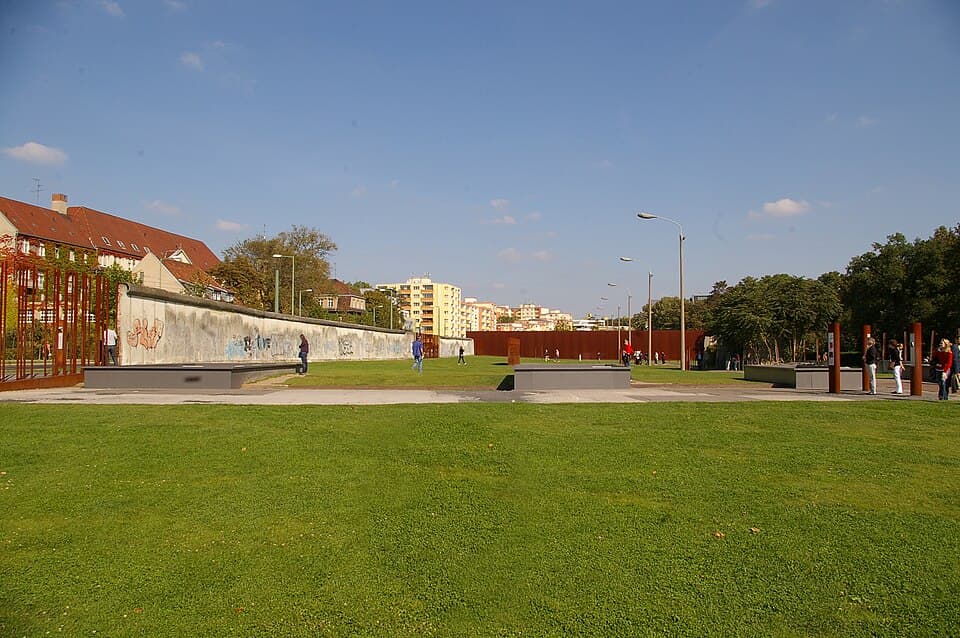
This stop orients visitors at the main entrance to the Berlin Wall Memorial on Bernauer Straße, framing the entire tour. It should introduce why Bernauer Straße became one of the most emblematic streets of division, with houses on one side in the East and pavement in the West. The narration can explain the memorial’s layout: preserved border strip, documentation center, remembrance window, and open-air exhibits. One anecdote may describe how, right after the Wall went up, residents jumped from apartment windows to reach West Berlin while West Berlin fire brigades tried to catch them with rescue nets. Another may mention how international television crews filmed along this street, turning it into a global symbol of the new barrier.

Open-Air Documentation Panels
Street-side panels telling Bernauer Straße Wall stories
This stop focuses on the outdoor information panels lining Bernauer Straße, which guide visitors through the street’s transformation from a normal residential area to a fortified border. The script should explain how historical photos are matched with current views, helping visitors imagine vanished facades and border structures. It can highlight stories of local residents whose homes were bricked up, and of a wedding that took place with guests separated by the border, shouting congratulations across the street. Another anecdote could describe how one photo sequence captured a child being passed through a window to relatives in the West in the first days of the Wall, before controls tightened.
Reconciliation Church Memorial Site
Footprint of a church erased by the border strip
Here the narration covers the former Reconciliation Church, which once stood in the middle of what became the death strip. It should describe how the church, located in East Berlin but pressed against the border, fell into disuse and was eventually demolished by East German authorities to clear sightlines. The guide can evoke the outlines of the old foundation marked in the ground and the symbolic role the church played for the parish on both sides before the Wall. One anecdote might tell of the last wedding or baptism held here before the building was sealed off. Another can note how parishioners in the West could only glimpse their church’s tower from viewing platforms, listening to services broadcast over loudspeakers before demolition.
Chapel of Reconciliation
New clay chapel symbolizing loss and healing
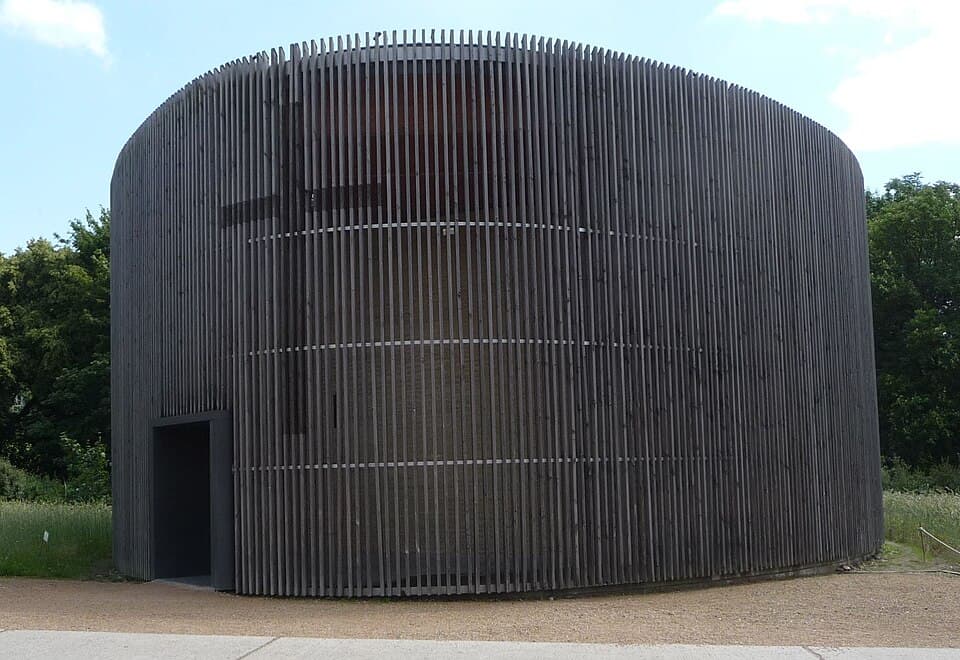
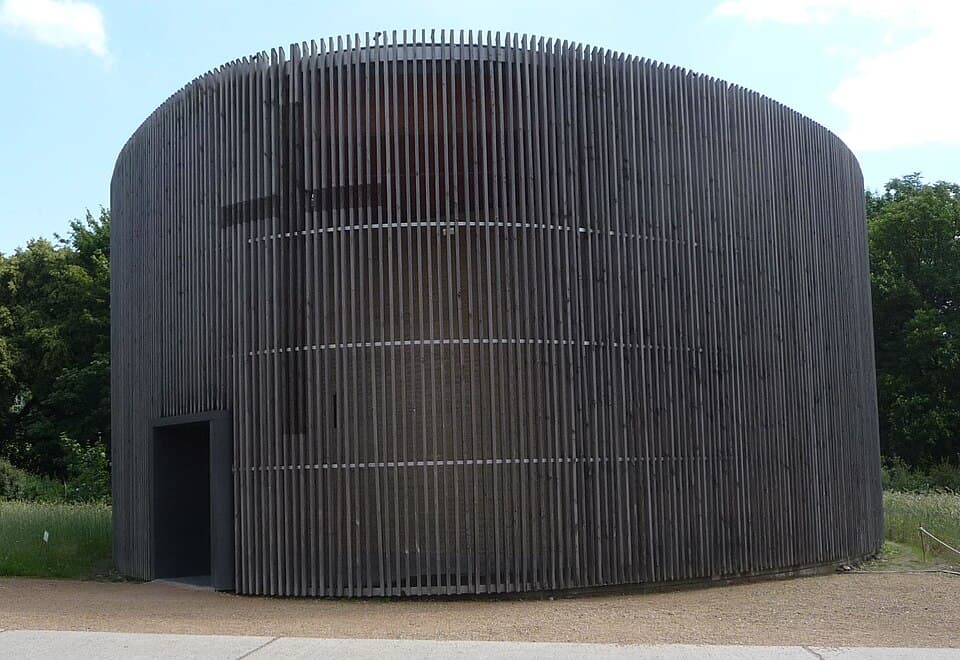
This stop explores the Chapel of Reconciliation, built on the former church site after reunification. The narration should describe its unusual oval form, rammed earth walls incorporating debris from the old church, and the timber outer structure. It can emphasize the chapel’s role as a place for daily remembrance of those who died at the Wall and as a space for quiet reflection within a busy city. One anecdote may tell how soil from former guard paths was carefully removed and blessed before construction. Another can mention the daily tolling of a bell cast from old weapons, symbolically transforming instruments of violence into a call for peace.
Observation Tower and Border Strip
Overlooking preserved fences, walls, and patrol zone
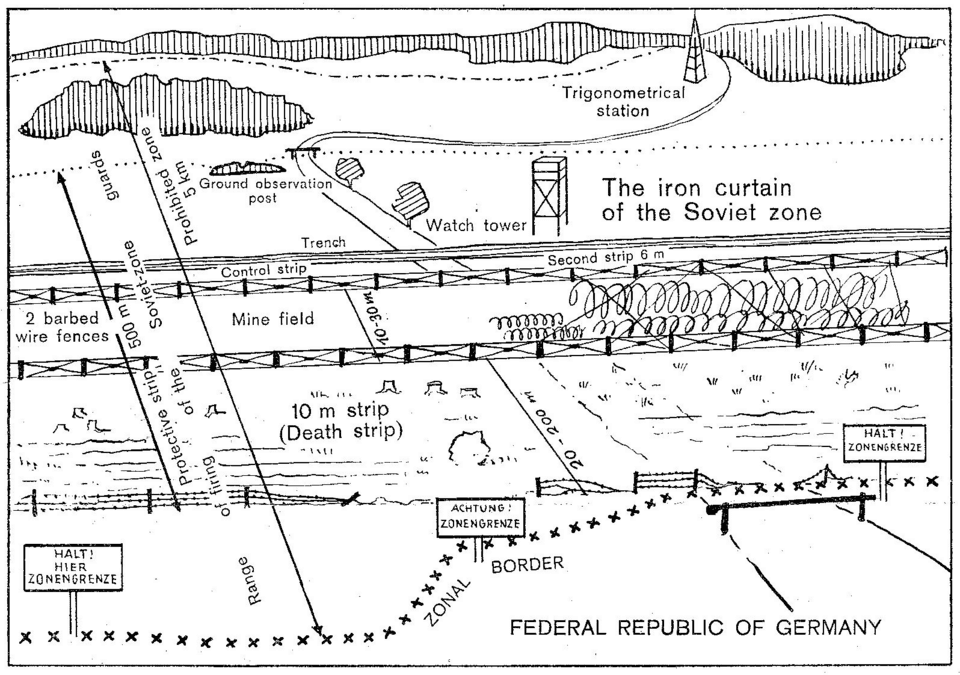
At this stop, visitors focus on the reconstructed observation tower and the preserved section of the Berlin Wall border strip. The script should explain the layered security system: outer wall, inner wall, patrol road, raked sand, lights, and towers, and how border guards operated within this space. It can describe the view from the tower platform, contrasting today’s memorial with the once-lethal barrier. One anecdote might recount a border guard’s defection across the strip, emphasizing the risks for both guards and civilians. Another could mention how the raked sand was checked for footprints each morning, with guards held responsible for any unexplained tracks.
Bernauer Straße U-Bahn Surroundings
Street-level window into former underground ghost stations
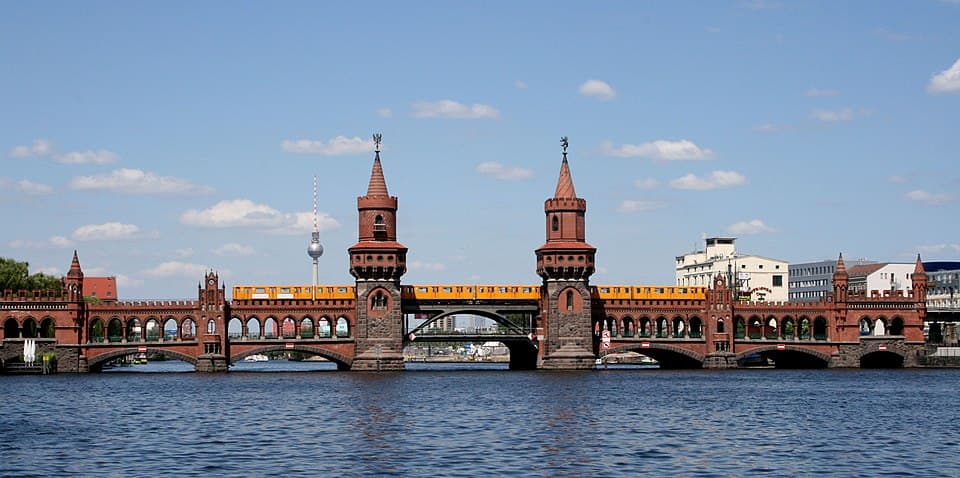
This stop uses the area around Bernauer Straße U-Bahn station to talk about the concept of ghost stations during the division. The narration should explain how some subway lines from West Berlin passed through tunnels under East Berlin, where stations were closed, dimly lit, and guarded, with trains rolling through without stopping. It can connect the present-day entrance and signage to the Cold War underground geography. One anecdote may describe West Berlin passengers peering through train windows at deserted platforms, guarded by armed police. Another could mention how East German maintenance staff had to work under heavy surveillance in these tunnels, aware that any contact with the passing trains was forbidden.
Mauerpark
Former death strip transformed into lively urban park
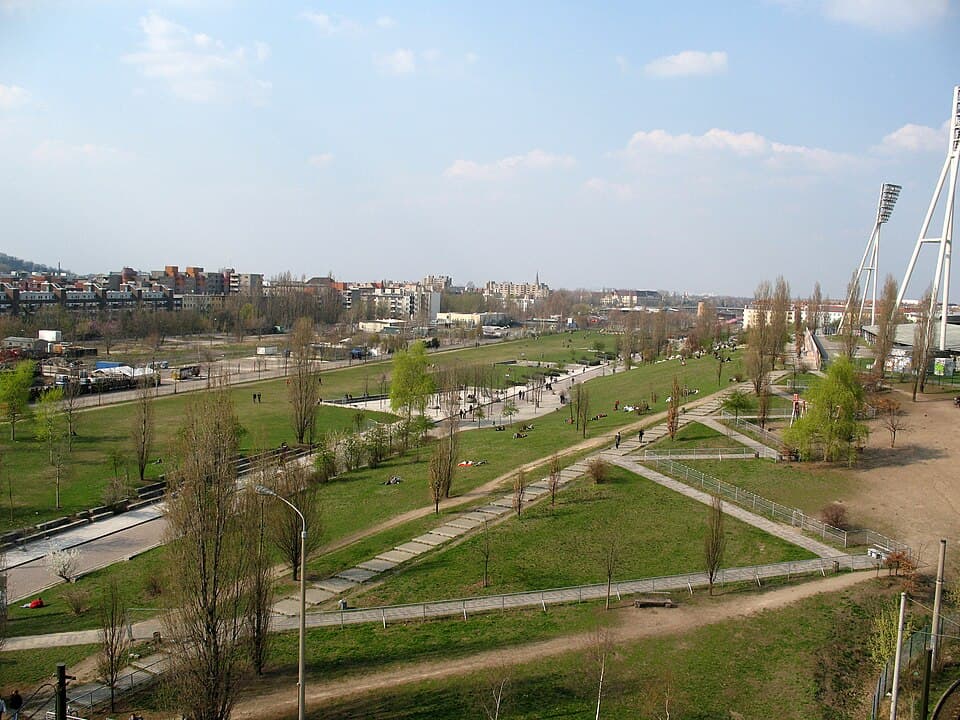
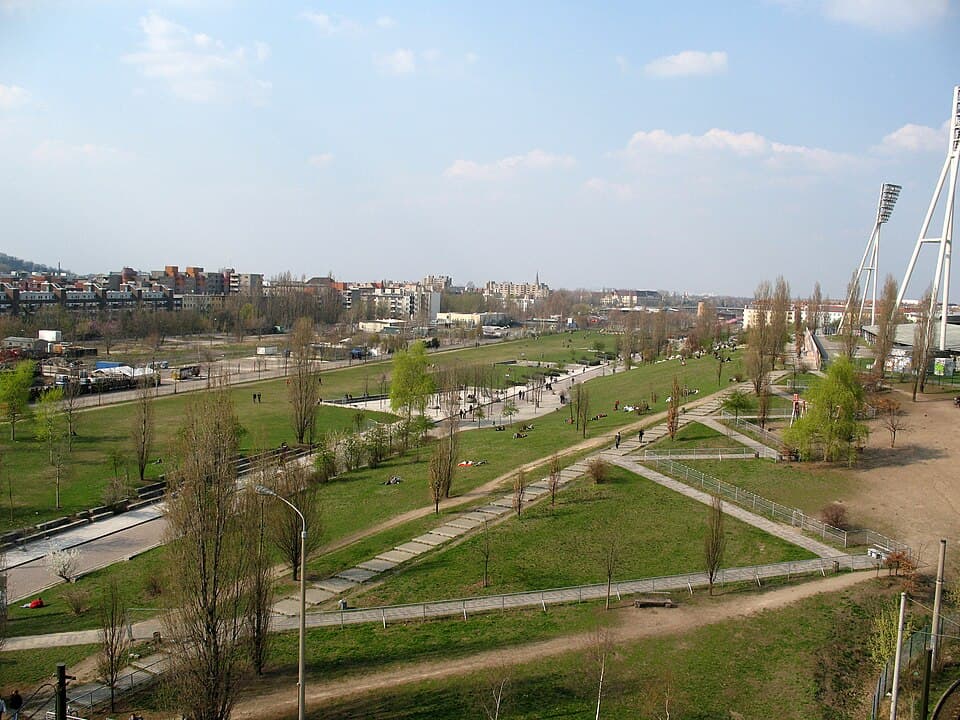
Mauerpark marks the transition from border zone to public green space, lying on former death strip land between Prenzlauer Berg and Wedding. The script should describe how, after reunification, locals and activists pushed to turn the wasteland into a park, and how the name “Mauerpark” preserves the memory of the Wall. It can evoke today’s atmosphere: sloping lawns, families, musicians, and the long graffiti-covered Wall remnants along the park’s edge. One anecdote might tell how early informal campfires and illegal gardening here in the 1990s gradually evolved into officially recognized community uses. Another can mention that the remaining wall segment became a legal graffiti wall, attracting street artists from around the world.
Mauerpark Flea Market
Weekend market mixing GDR relics and modern crafts
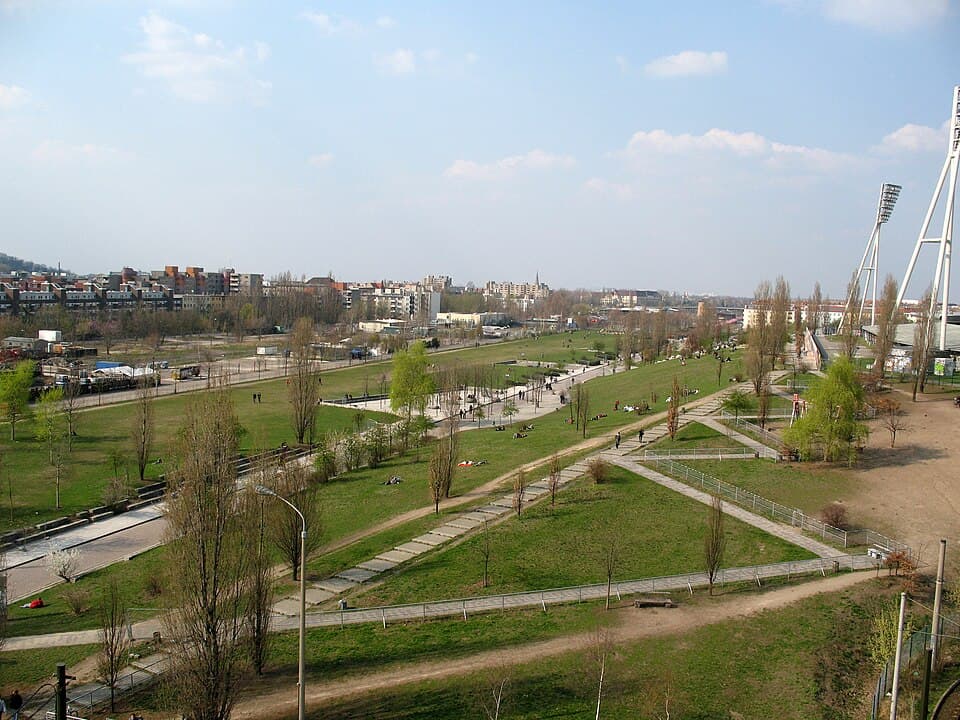
This stop centers on the flea market area of Mauerpark, especially active on weekends. The narration should explain how the market grew from modest stalls into a major meeting point, reflecting Berlin’s post-reunification culture of reuse, vintage hunting, and informal commerce. It can describe typical sights: tables of old records, GDR-era household items, handmade art, and food stands catering to diverse tastes. One anecdote might recall how one of the original stallholders started selling leftover East German military uniforms and household goods, attracting curious visitors in the 1990s. Another may highlight an early impromptu open-mic performance that helped spark the park’s now-famous Sunday music and street performance culture nearby.
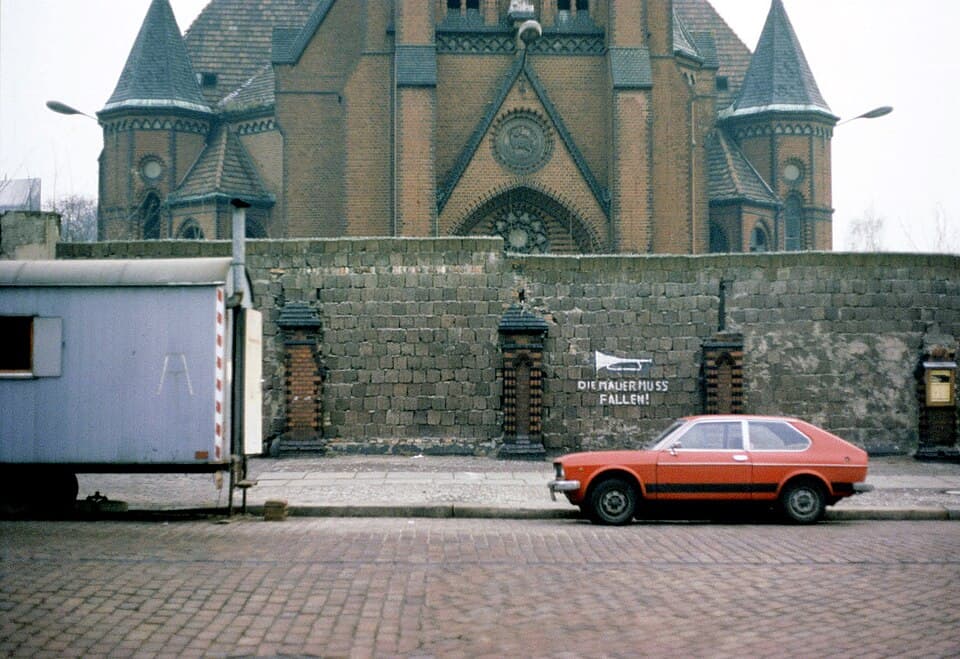
Eberswalder Straße Wall Plaques
Street plaques marking where the Wall once cut across
Here the focus is on the Wall history plaques near Eberswalder Straße, which quietly mark the line of the former border. The script should explain how these plaques, often set into pavement or on posts, help residents and visitors trace the missing structure through today’s busy streets. It can connect the location to the once-divided neighborhoods of Prenzlauer Berg and Wedding. One anecdote might describe how, when plaques were first installed, some locals spontaneously added flowers or candles on anniversaries of the Wall’s opening. Another may note a story of a resident who realized their childhood route to school had once crossed the exact spot now marked, illustrating how the border line can fade from everyday memory without such reminders.
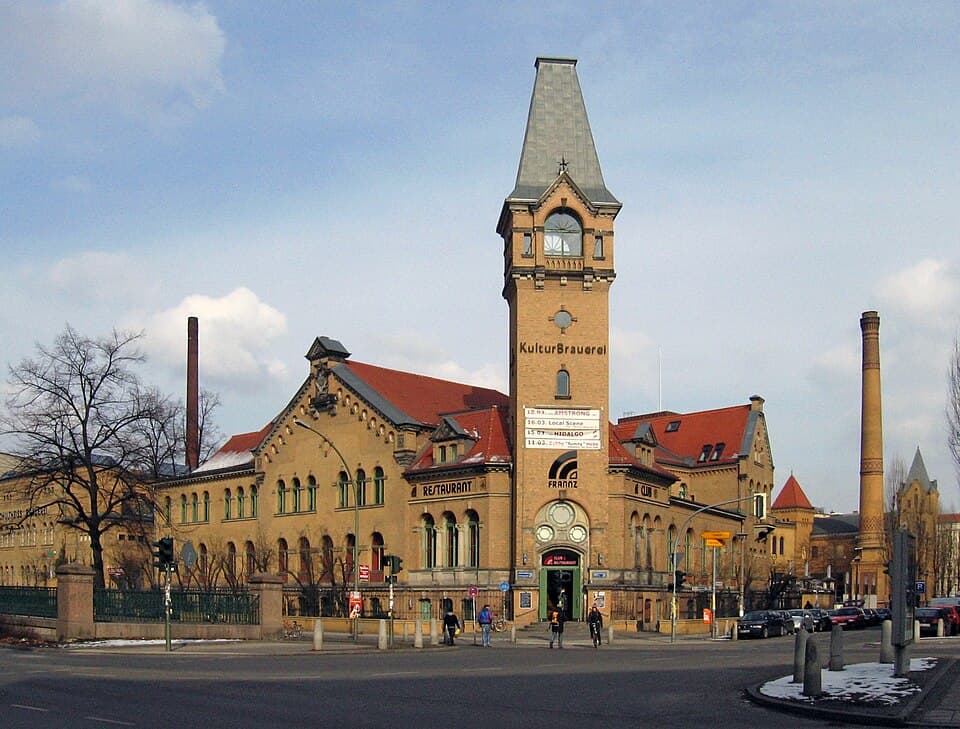
Kulturbrauerei Courtyard
Historic brewery complex turned cultural courtyard
This stop introduces the brick industrial complex of the former Schultheiss brewery, now known as Kulturbrauerei. The narration should sketch its 19th-century origins as a major brewery and its later use in the GDR period as a state-run production site, connecting industrial history with everyday beer culture. It can describe the characteristic yellow-brick facades, chimneys, and courtyards that now house theaters, clubs, and the Museum in der Kulturbrauerei. One anecdote may mention brewery workers’ traditions, such as getting a daily beer allowance, which persisted in modified form under socialism. Another could recall how, in the years after reunification, cultural groups and artists began informally using parts of the empty brewery before it was officially redeveloped.
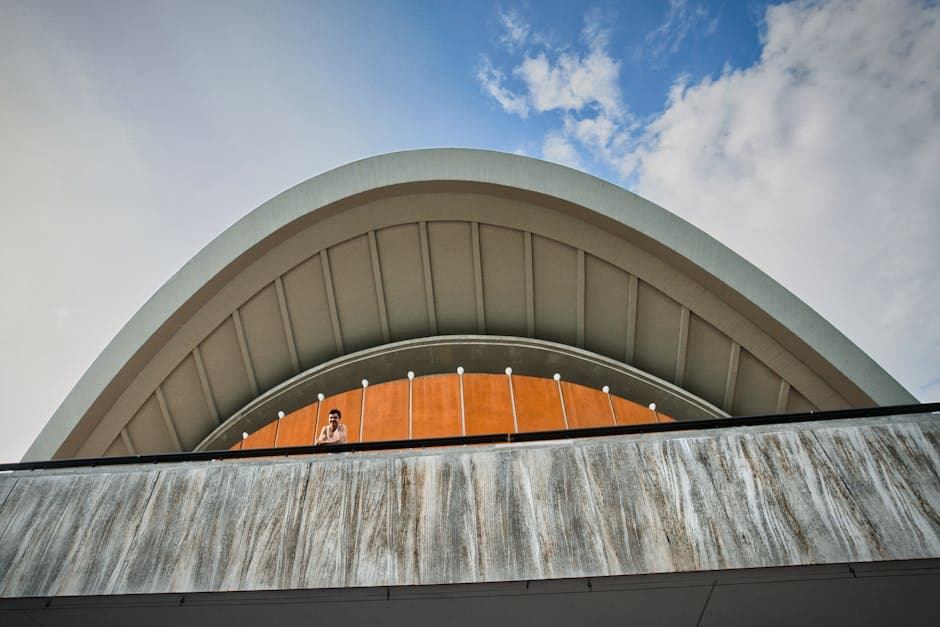
Museum in der Kulturbrauerei
Facade of museum exploring everyday life in the GDR
This stop focuses on the exterior and context of the Museum in der Kulturbrauerei, which hosts exhibitions on everyday life in the GDR. The script should explain the museum’s thematic focus: daily routines, consumer goods, youth culture, and state control, emphasizing how it complements the Wall sites seen earlier. It can relate the modern glass and adapted industrial facades to the building’s former brewery use. One anecdote may reference a typical GDR household object—like a common washing machine or children’s toy—that visitors often recognize from family stories or flea markets. Another might mention that curators collected personal photo albums and letters from former GDR citizens to build an archive of ordinary experiences, not just political events.
Kastanienallee Streetscape
Former East Berlin street turned creative neighborhood strip
This final stop explores Kastanienallee as a representative streetscape of former East Berlin, now known for its cafes, boutiques, and creative scene. The narration should contrast its current lively atmosphere with its quieter days under the GDR, when shops were mostly state-run and buildings often in disrepair. It can describe typical late-19th-century tenement facades, courtyard structures, and how squatting and alternative culture in the 1990s helped shape the area’s character. One anecdote may recall a notable early squatted house or artists’ collective that organized street festivals here after the Wall fell. Another might reference how long-time residents remember queuing at a particular HO (state shop) or bakery on this street, illustrating both continuity and change in everyday life.
Start This Tour
Download Roamway to experience this audio tour
Tour Details
Access
Free
Stops
12 points of interest
Languages
GermanEnglishSpanishFrench
More tours in Berlin
View all tours in BerlinOther tours you might enjoy:
Berlin: Landmarks, Nazi Era Sites & Cold War Borderlands
This central Berlin route links the Brandenburg Gate, Reichstag, Potsdamer Platz, Gendarmenmarkt, and Unter den Linden with key 20th‑century sites. It examines Prussian architecture, Nazi dictatorship and terror institutions, the Holocaust memorial, Soviet war remembrance, and Cold War border crossings, showing how Berlin’s cityscape reflects German and European history.
Berlin Kreuzberg: Street Art, Canals and Counterculture
This tour explores Kreuzberg’s Görlitzer Bahnhof area, Görlitzer Park, and the canal paths along the Landwehrkanal between Lohmühlenbrücke and Admiralbrücke. It focuses on street art, migrant histories, punk and club culture, and everyday life around Kottbusser Tor, Oranienstraße, Maybachufer, and the former hospital complex at Mariannenplatz.
Berlin: Monuments, Memory and Museum Island Classics
This central Berlin tour focuses on Unter den Linden, Bebelplatz, and Museum Island, featuring monuments, churches, and cultural institutions. It examines Prussian and imperial architecture, war and Cold War legacies, and contemporary reconstruction debates. Key sites include Brandenburg Gate, Bebelplatz, Neue Wache, Berliner Dom, Humboldt Forum, and the major Museum Island façades.
Frequently Asked Questions
How do I start this audio tour?
Download the Roamway app, search for this tour, and tap 'Start Tour'. The app will guide you to the starting point using GPS. Once you're there, the audio narration begins automatically.
Do I need an internet connection?
No! Once you've downloaded the tour in the Roamway app, it works completely offline. The GPS navigation and audio narration function without an internet connection.
Can I pause and resume the tour?
Yes! You can pause the tour at any time and resume later. Your progress is automatically saved, so you can complete the tour over multiple sessions if needed.