
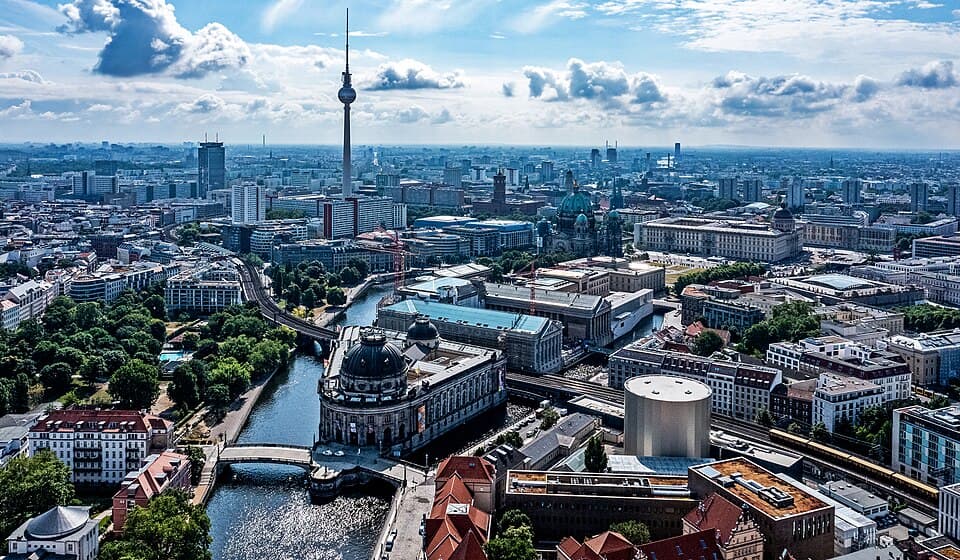
Berlin Friedrichshain–Kreuzberg: Food, Nightlife and Street Art
Berlin, Deutschland
Audio Preview
Listen to a sample of this audio tour to get a feel for the experience.
What You'll Experience
On this Berlin Friedrichshain–Kreuzberg: Food, Nightlife and Street Art audio tour in Berlin, you'll discover 12 carefully selected points of interest, each with its own story. The tour is designed to be completed at your own pace, with GPS navigation guiding you from one location to the next. As you approach each stop, the audio narration automatically begins, bringing history, culture, and local insights to life.
About This Tour
This tour explores Berlin’s Friedrichshain and adjacent Kreuzberg, focusing on Boxhagener Platz, Simon-Dach-Straße, and the RAW-Gelände area. It covers local markets, casual food corridors, and former industrial sites, as well as East Side Gallery and Oberbaumbrücke. Themes include post-reunification urban change, street art, nightlife culture, and everyday food traditions.
Points of Interest
Boxhagener Platz
Neighborhood square with weekly market life
This stop introduces Boxhagener Platz, known locally as “Boxi,” a leafy square framed by late 19th‑century apartment blocks and busy cafés. The script should describe the Wochenmarkt on market days, with its mix of produce, street food, and community stalls, and contrast it with the quieter weekday atmosphere. It should situate Boxi in former East Berlin, noting post‑Wall changes as bars and organic food stands arrived. One anecdote could mention the popular Sunday flea market’s role as a meeting place for students, families, and bargain hunters, and another about how some long‑time residents remember the more utilitarian GDR-era market culture here.
Simon-Dach-Straße
Restaurant and bar strip off Boxhagener Platz
This stop covers Simon-Dach-Straße as a dense corridor of bars, cafés, and restaurants that exploded in popularity after reunification. The script should note the street’s pre‑war residential character, its GDR years as a relatively quiet backstreet, and its rapid change in the 1990s and 2000s. It should highlight how multilingual menus, outdoor seating, and varied cuisines reflect tourism and new migrant communities. One anecdote might describe how residents once organized petitions about noise and bar licensing, while another could recall early, tiny bars that started with improvised furniture and homemade cocktails before the area became mainstream.
Grünberger Straße Corridor
Casual food spots and everyday eateries
This stop focuses on Grünberger Straße as a more mixed, everyday food corridor compared with the bar-heavy Simon-Dach-Straße. The script should point out döner and falafel shops, bakeries, Vietnamese and other Asian eateries, and small Späti kiosks, tying them to immigration waves and Berlin’s informal late-night food culture. It should reference the typical Berlin Imbiss tradition and how quick, affordable food fits local lifestyles. One anecdote might mention a famously generous döner portion or beloved family-run bakery that locals recommend, and another could recall how some snack bars stayed open throughout major football tournaments, drawing crowds onto the sidewalk.
Markthalle Neun
Historic market hall and modern food venue
This stop treats Markthalle Neun as a contrast to Boxi’s open-air market, highlighting its 19th‑century iron-and-brick architecture and role as one of Berlin’s remaining covered market halls. The script should explain how market halls once supplied city neighborhoods and how this one later shifted toward curated food events and street food markets. It should mention debates about rising prices and accessibility alongside enthusiasm for regional and international specialties. One anecdote could recall an early Street Food Thursday drawing huge queues for bao or tacos, and another might note older Kreuzberg residents remembering the hall as a practical place for weekly groceries before its reinvention.
Rigaer Straße Area
Squats, backyard bars, and political graffiti
This stop introduces Rigaer Straße and its surroundings as a symbol of left-wing squatting culture, tenant struggles, and alternative backyard bars, viewed only from the exterior. The script should outline how empty or neglected buildings after reunification became squats and later sites of conflict over eviction and renovation. It should cautiously reference police operations and neighborhood demonstrations without sensationalizing. One anecdote might mention a well-known house front draped with banners during a heated eviction dispute, and another could evoke low-key backyard bars that opened seasonally, with mismatched furniture and makeshift stages hidden behind front buildings.
RAW-Gelände Entrance
Former railway works turned cultural and party zone
This stop presents the entrance to RAW-Gelände as the gateway to a sprawling former railway repair yard now packed with bars, food stands, clubs, climbing walls, and event spaces. The script should describe remaining industrial structures, rail tracks, and brick workshops, explaining the area’s origins as a maintenance complex in the railway era and its semi-official cultural reuse after the Wall fell. It should highlight the dense street art and murals visible at the entrance. One anecdote could recall early informal raves or skate events held among the derelict sheds, and another might describe how food containers and pop-up stalls gradually formed an improvised street food lane here.

Urban Spree Courtyard
Street art courtyard with craft beer and food trucks
This stop zooms in on the Urban Spree courtyard inside RAW-Gelände as a focused microcosm of street art, live music, and casual drinking and eating. The script should describe the gallery building, outdoor seating, large murals, and occasional food trucks or pop-up kitchens. It should explain how Urban Spree positioned itself between an art space and a relaxed beer garden, often hosting concerts and festivals. One anecdote might recall a mural project where international artists repainted entire walls over a weekend, and another could describe a summer evening when visitors sprawled on wooden benches listening to a band while queueing for burgers or vegan wraps from a truck.
Suicide Circus Façades
Club exteriors and RAW nightlife atmosphere
This stop covers the exterior of Suicide Circus and neighboring club and venue façades at RAW-Gelände, focusing on nightlife culture rather than entering. The script should touch on Berlin’s techno and electronic music reputation, outdoor dance floors, and how these clubs reuse railway structures and platforms. It should explain how strict door policies and photo rules shape the scene, while keeping details general and respectful. One anecdote might recount how a makeshift wooden walkway to an outdoor floor became a kind of insider landmark among regulars, and another could note that on summer weekends, the muffled bass and queue lines form an audible and visual backdrop for nearby food stands.
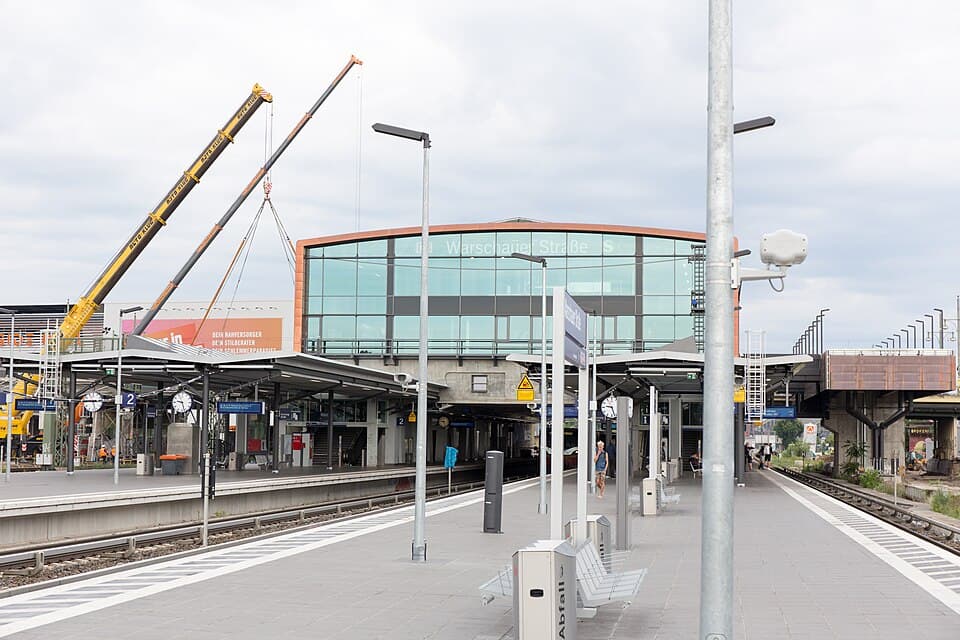
Warschauer Straße Bridge
Transit hub with views and fast street snacks
This stop uses the Warschauer Straße bridge as a vantage point over train tracks, RAW-Gelände, and the approach to the Spree, while also focusing on the cluster of kebab, currywurst, and late‑night snack stands nearby. The script should describe the elevated S‑Bahn and U‑Bahn station, crowds of partygoers and commuters, and the bridge’s role as a funnel between Friedrichshain and the riverfront. It should tie in Berlin’s famous döner kebab and quick snacks as fuel for nights out. One anecdote might mention a long‑running kebab stand known for serving both clubbers at dawn and workers at midday, and another could evoke the tradition of grabbing a currywurst while watching trains rattle beneath the bridge.
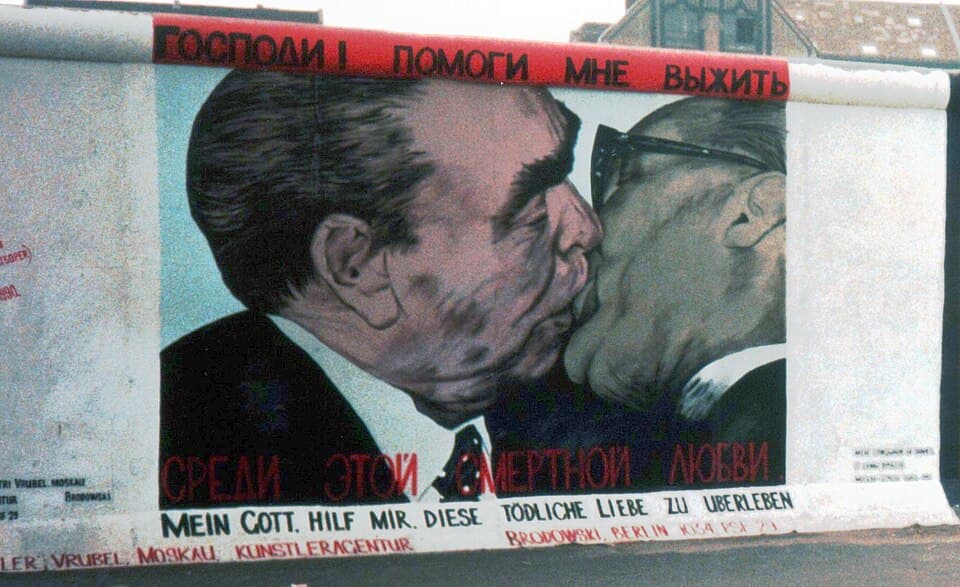
East Side Gallery
Open-air Berlin Wall memorial with murals and kiosks
This stop presents the East Side Gallery as a long surviving section of the Berlin Wall painted by artists after 1989, now lined with snack stalls and riverside kiosks. The script should explain that this was once part of the border and death strip, then became a symbol of freedom and artistic expression, while also discussing preservation challenges and tourism pressures. It should point out specific, well-known murals as visual anchors. One anecdote might recount how some artists returned years later to repaint or restore their works after they were damaged, and another could describe a riverside kiosk that started as a simple container bar and evolved into a busy sunset hangout.
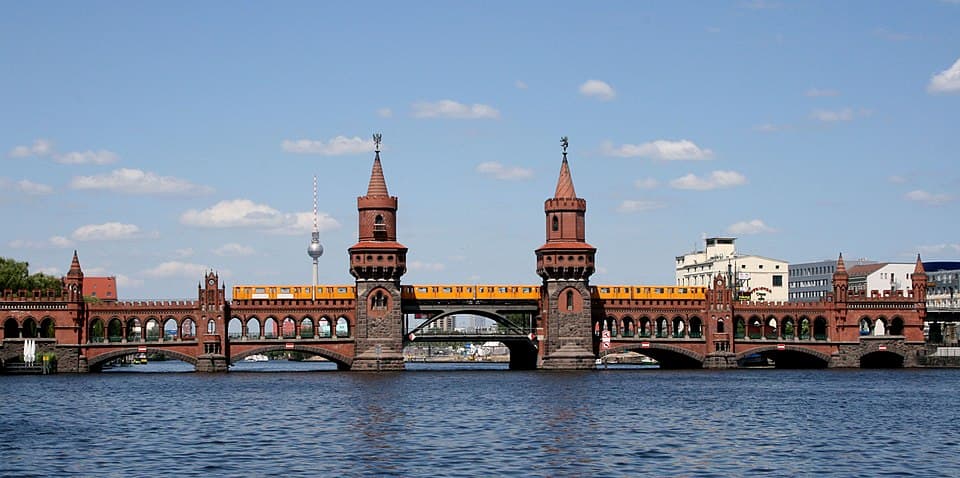
Oberbaumbrücke
Historic bridge linking Friedrichshain and Kreuzberg
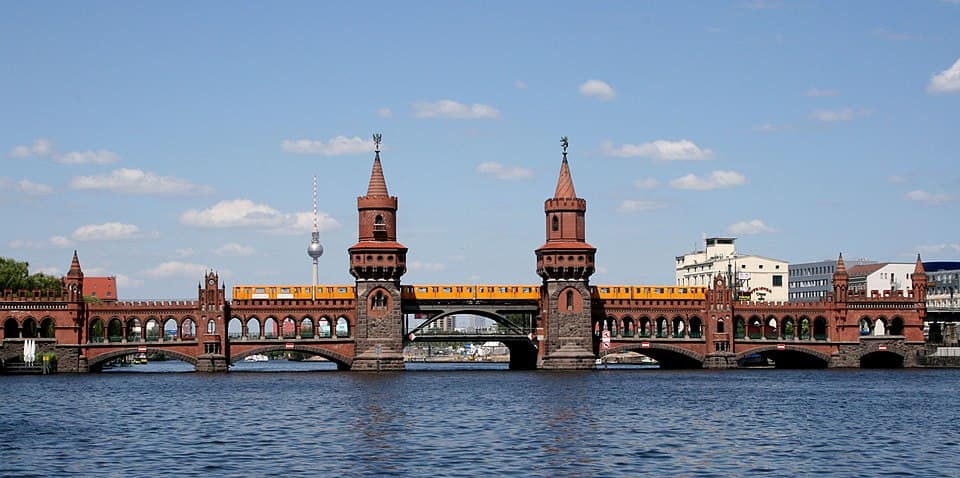
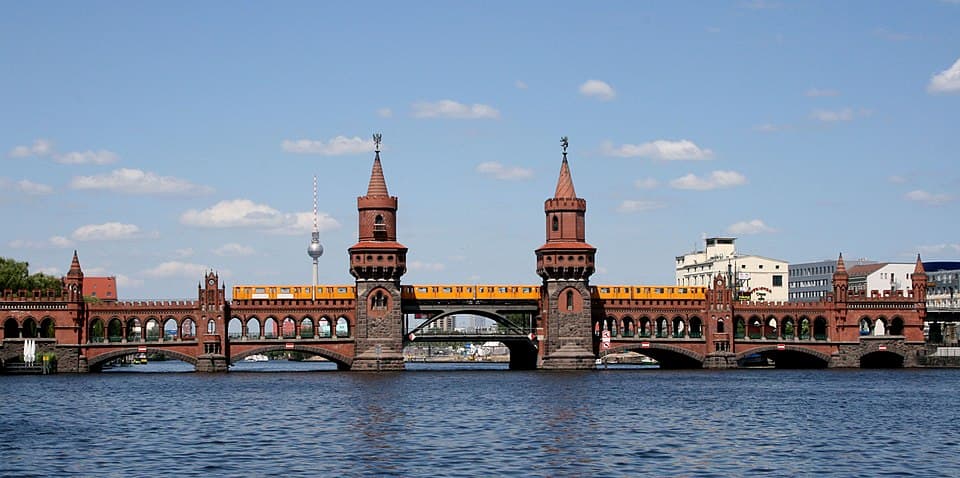
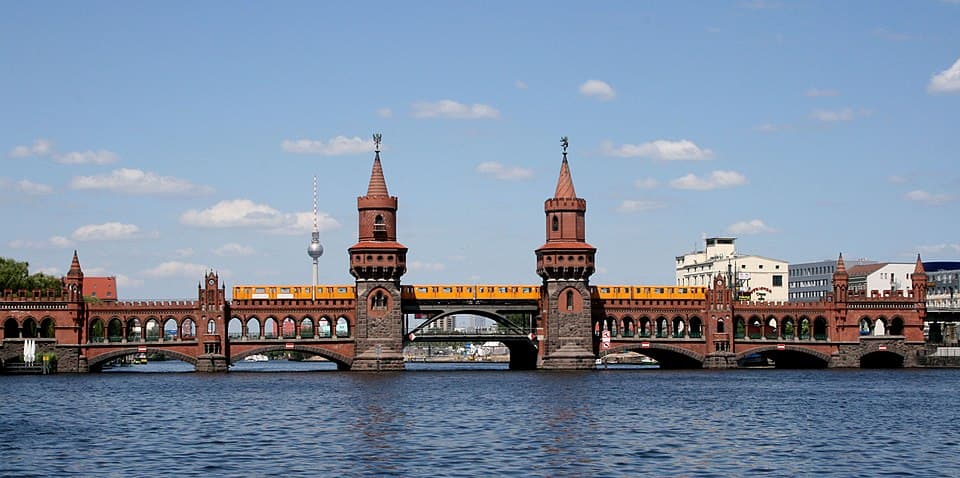
This stop uses Oberbaumbrücke as both a historic river crossing and a viewpoint over the Spree, with nearby bars and club terraces on both banks. The script should describe its distinctive brick towers and arches, origins as a checkpoint between East and West, and later role as a symbol of the reunited city. It should link passing U‑Bahn trains above with people strolling below. One anecdote could mention the playful annual water fight once staged here between Friedrichshain and Kreuzberg residents, and another might evoke how photographers and filmmakers favor the bridge’s silhouette at sunset as boats pass by.

Schleusenufer Promenade
Riverside walk with relaxed food and drink kiosks
This final stop highlights the Schleusenufer stretch of riverside promenade in Kreuzberg, with informal bars, kiosks, and simple food stands along the water. The script should describe people sitting on steps or low walls with drinks, the sight of tour boats passing, and the contrast with the more intense RAW and bridge scenes earlier. It should briefly recap how riverbanks once marked strict borders and industrial zones but now host relaxed leisure. One anecdote might recall a tiny kiosk that became famous for its homemade lemonade or mixed spritz drinks, and another could mention spontaneous open-air film screenings or DJ sets occasionally organized here on warm nights.
Start This Tour
Download Roamway to experience this audio tour
Tour Details
Access
Free
Stops
12 points of interest
Languages
GermanEnglishSpanishFrench
More tours in Berlin
View all tours in BerlinOther tours you might enjoy:
Berlin: Landmarks, Nazi Era Sites & Cold War Borderlands
This central Berlin route links the Brandenburg Gate, Reichstag, Potsdamer Platz, Gendarmenmarkt, and Unter den Linden with key 20th‑century sites. It examines Prussian architecture, Nazi dictatorship and terror institutions, the Holocaust memorial, Soviet war remembrance, and Cold War border crossings, showing how Berlin’s cityscape reflects German and European history.
Berlin Kreuzberg: Street Art, Canals and Counterculture
This tour explores Kreuzberg’s Görlitzer Bahnhof area, Görlitzer Park, and the canal paths along the Landwehrkanal between Lohmühlenbrücke and Admiralbrücke. It focuses on street art, migrant histories, punk and club culture, and everyday life around Kottbusser Tor, Oranienstraße, Maybachufer, and the former hospital complex at Mariannenplatz.
Berlin: Monuments, Memory and Museum Island Classics
This central Berlin tour focuses on Unter den Linden, Bebelplatz, and Museum Island, featuring monuments, churches, and cultural institutions. It examines Prussian and imperial architecture, war and Cold War legacies, and contemporary reconstruction debates. Key sites include Brandenburg Gate, Bebelplatz, Neue Wache, Berliner Dom, Humboldt Forum, and the major Museum Island façades.
Frequently Asked Questions
How do I start this audio tour?
Download the Roamway app, search for this tour, and tap 'Start Tour'. The app will guide you to the starting point using GPS. Once you're there, the audio narration begins automatically.
Do I need an internet connection?
No! Once you've downloaded the tour in the Roamway app, it works completely offline. The GPS navigation and audio narration function without an internet connection.
Can I pause and resume the tour?
Yes! You can pause the tour at any time and resume later. Your progress is automatically saved, so you can complete the tour over multiple sessions if needed.