
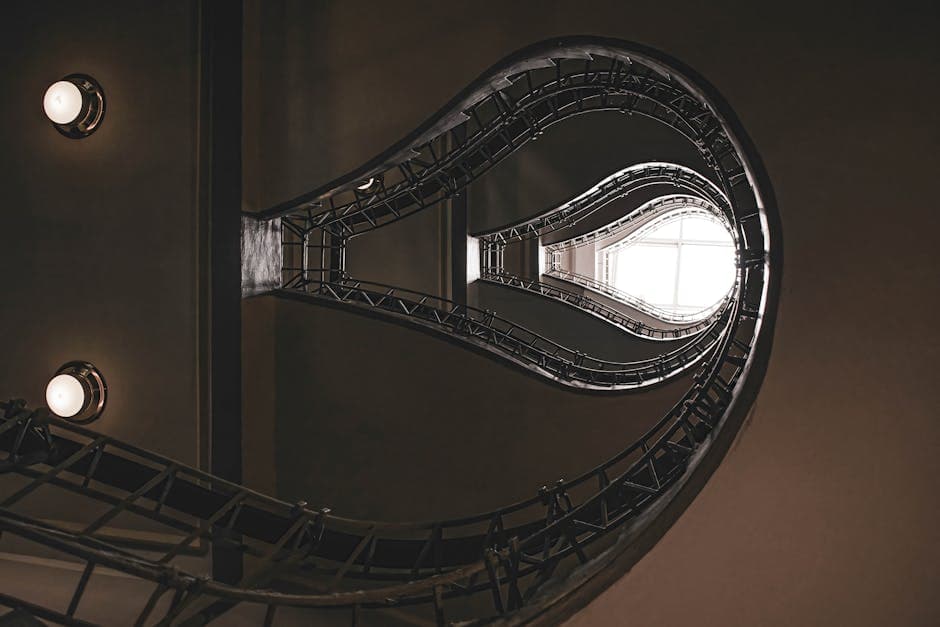
Audiotours in Praga — Explore at your own pace
Praga, Czech Republic is a city of soaring spires, cobbled streets, and centuries of stories layered along the Vltava River. Our audio-guided tours lead you through Gothic cathedrals, Baroque churches, royal courtyards, and revolutionary squares at your own rhythm. With flexible, self-guided routes and immersive narration, you can explore Praga’s most iconic sights and hidden corners whenever it suits your schedule.
Free Tours
4 tours available
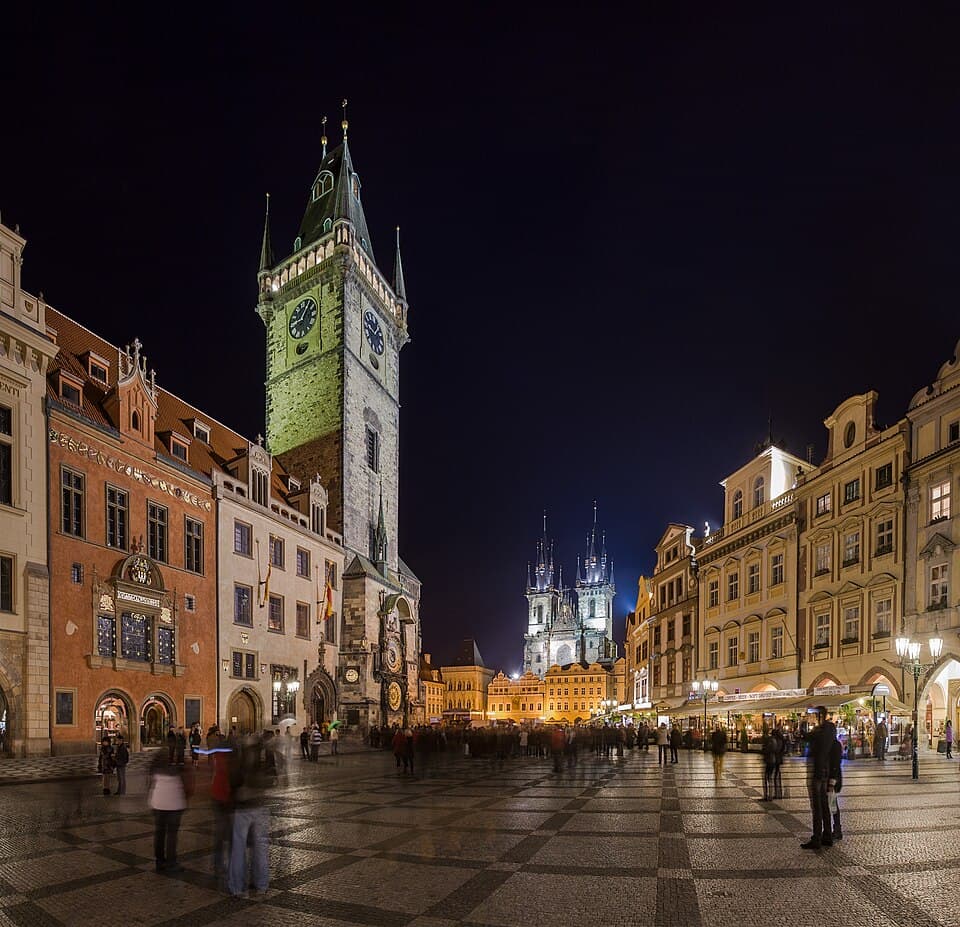
Prague: Castle District, Lesser Town and Charles Bridge
This tour explores Prague’s historic Castle District and Lesser Town, from the courtyards of Prague Castle and St. Vitus Cathedral to the Old Royal Palace, St. George’s Basilica, and Golden Lane. It continues through Nerudova Street and Malá Strana to the Lennon Wall, Kampa Island, and Charles Bridge, focusing on political history, religious heritage, and architectural development.
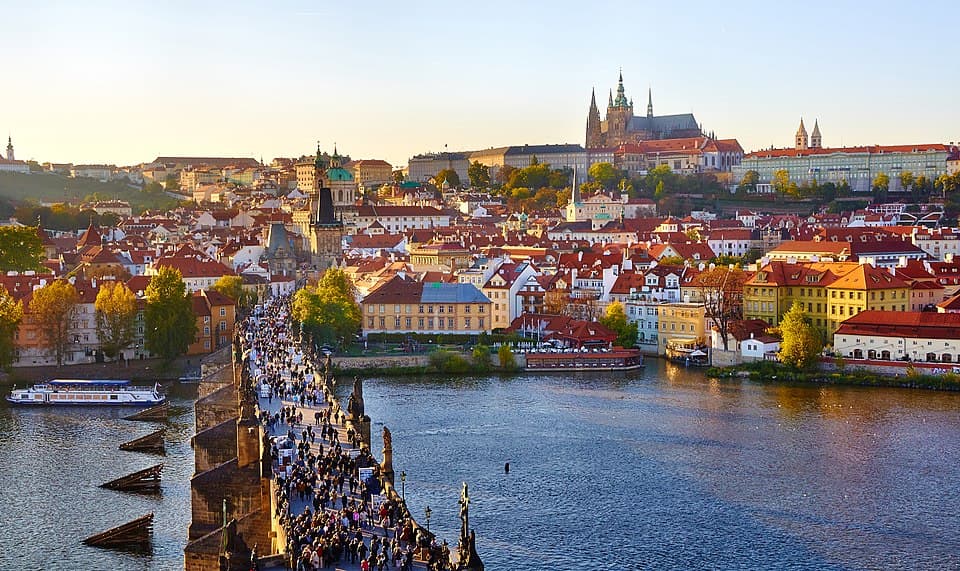
Prague Old Town & Jewish Quarter: History and Heritage
This tour explores Prague’s Old Town Square, the Astronomical Clock, and nearby medieval courtyards before continuing through Charles University and the historic theater district. It then focuses on the Jewish Quarter, including synagogues, the Old Jewish Cemetery, and museum sites, highlighting religious history, urban development, and architectural styles from Gothic to Art Nouveau.
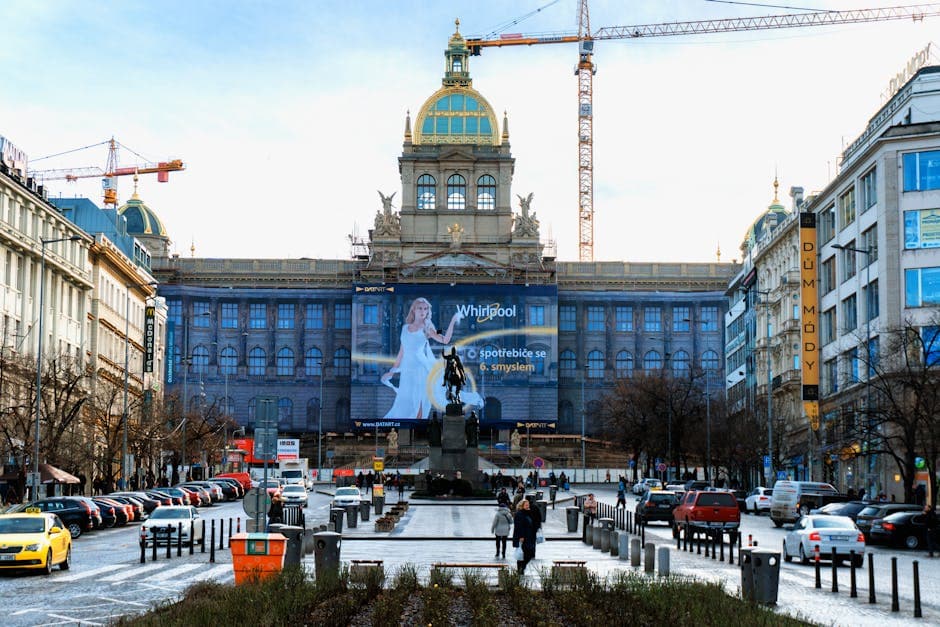
Prague New Town: Wenceslas Square, Revolutions & Riverfront
This tour explores central Prague from Wenceslas Square to the Vltava riverfront, focusing on modern Czech history. It covers sites linked to Saint Wenceslas, the National Museum, Jan Palach, the Velvet Revolution, and the First Republic. Key themes include political protests, 19th–20th century architecture, urban development, and cultural life around Národní třída, the National Theatre, and the Dancing House.
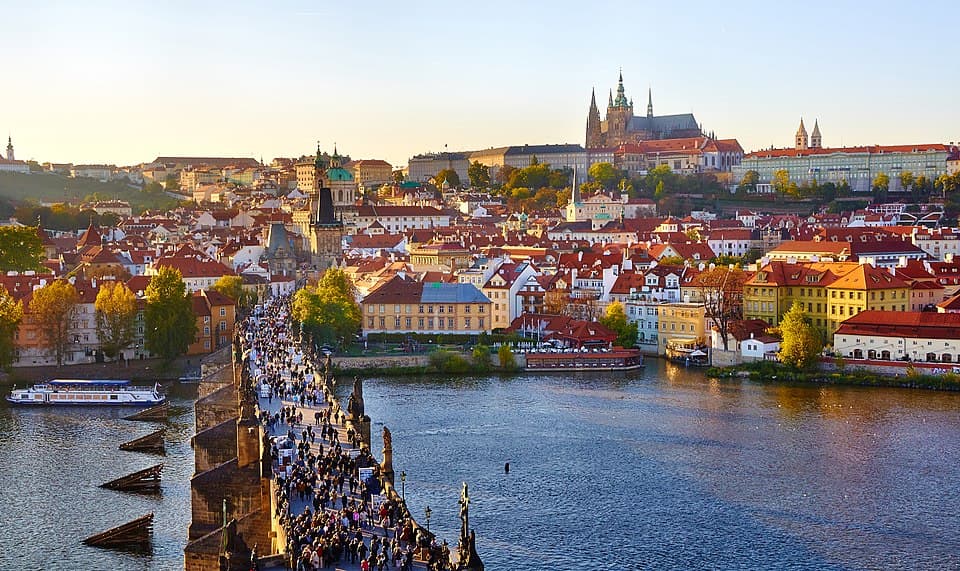
Prague: Gothic and Baroque Churches from Castle to Old Town
This tour explores Prague’s major Gothic and Baroque churches from Prague Castle through Malá Strana to the Old Town. It includes exteriors and interiors of sites such as St. Vitus Cathedral, Loreta, Strahov Monastery, St. Nicholas, and the Church of Our Lady before Týn. The route examines religious history, architectural styles, and artistic decoration along Charles Bridge and surrounding quarters.
About Praga
Top Attractions
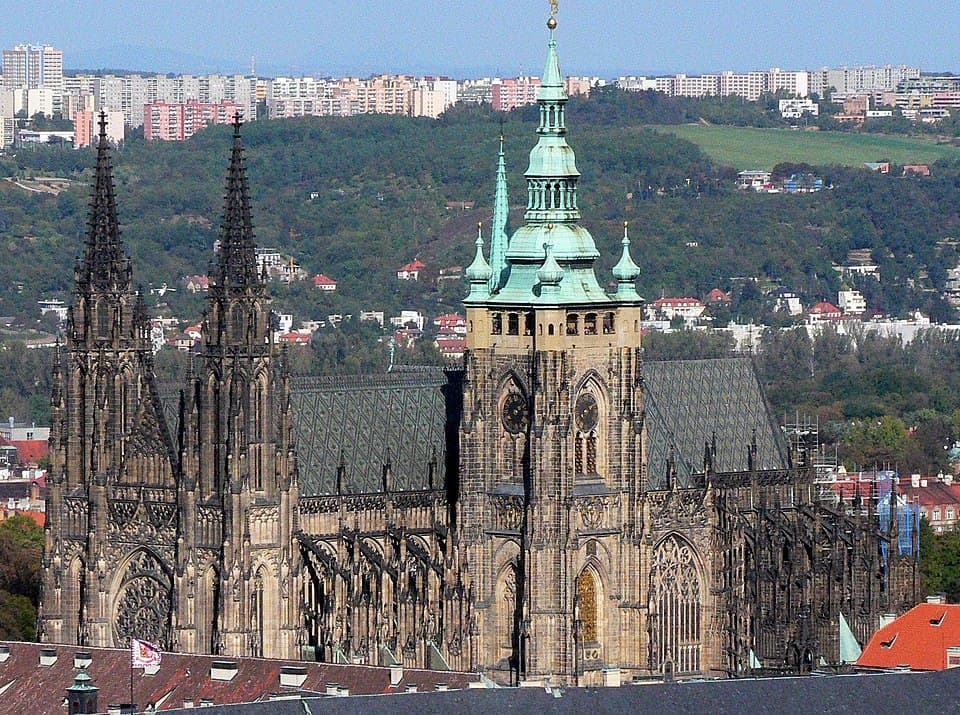
St. Vitus Cathedral
Royal Gothic heart of Prague Castle complex
This stop introduces St. Vitus Cathedral as the spiritual and symbolic center of the Czech lands and the anchor of the whole tour. The script should lead listeners around the exterior, explaining Gothic features such as flying buttresses, pinnacles, portals, and the mixture of medieval and later neo‑Gothic work, then move inside to key highlights like the nave, stained‑glass windows, and major chapels. It should mention royal patronage, especially Charles IV, and the cathedral’s role as coronation church and burial place for Bohemian rulers and saints. One distinctive anecdote can focus on the creation of a famous Art Nouveau stained‑glass window by a modern Czech artist, showing how later generations continued to shape the interior. Another anecdote may highlight a particular royal tomb or shrine that drew medieval pilgrims.
View Tour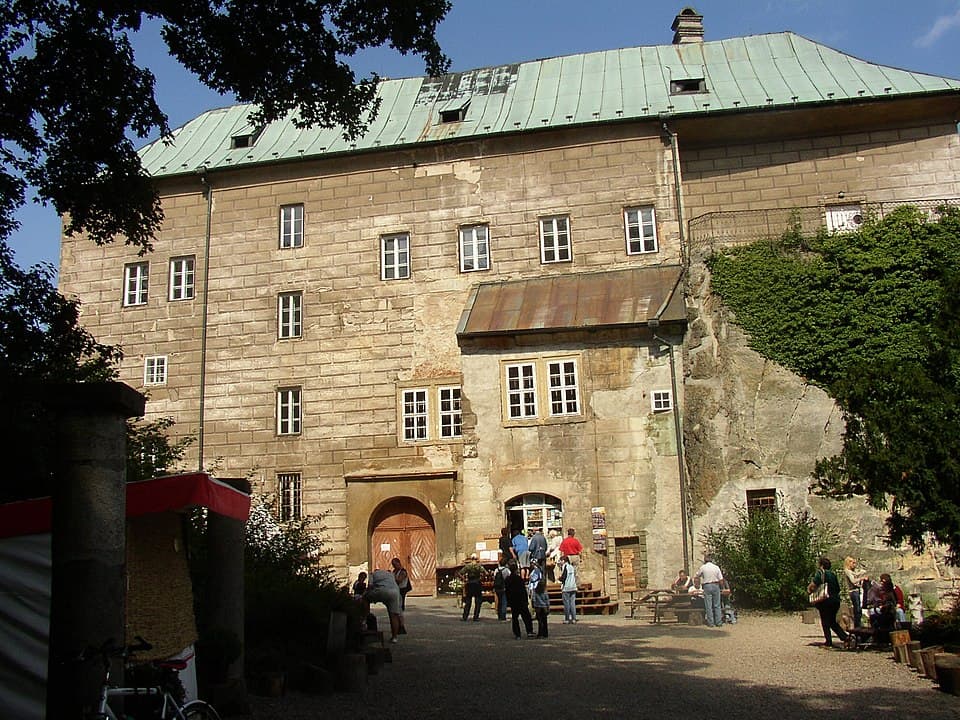
Prague Castle Entrance
Royal hilltop gateway to Czech political power
This stop introduces Prague Castle from the Hradčanské náměstí side, focusing on its role as a seat of Czech rulers and modern presidents. The script should outline the castle’s evolution from an early fortified settlement into one of the largest castle complexes in Europe, touching on major dynasties like the Přemyslids, Luxembourgs, and Habsburgs. Architecturally, it should point out the mix of medieval walls, Renaissance and Baroque palace façades, and 20th‑century adaptations. It should also cover the daily ceremonial changing of the guard as a modern echo of historic court ritual, and mention one distinct anecdote, such as the post‑World War I transformation of the complex when Czechoslovakia became an independent state.
View Tour
Wenceslas Square Approach
Modern Prague’s grand boulevard and protest stage
This stop introduces Wenceslas Square as a long, sloping boulevard rather than a traditional square, framed by 19th–20th century façades and crowned by the National Museum. The script should outline its origins in Charles IV’s New Town plan and its transformation from a horse market to a civic and commercial center. It should highlight the square’s role as a mass gathering place for events under the Habsburgs, Nazi occupation, communism, and after 1989. An anecdote can describe how crowds filled the square during major demonstrations, such as people standing on tram stops and statues to gain a better view of speakers. This stop sets the tone, connecting space, politics, and everyday life before the tour moves uphill toward the statue and museum façade.
View Tour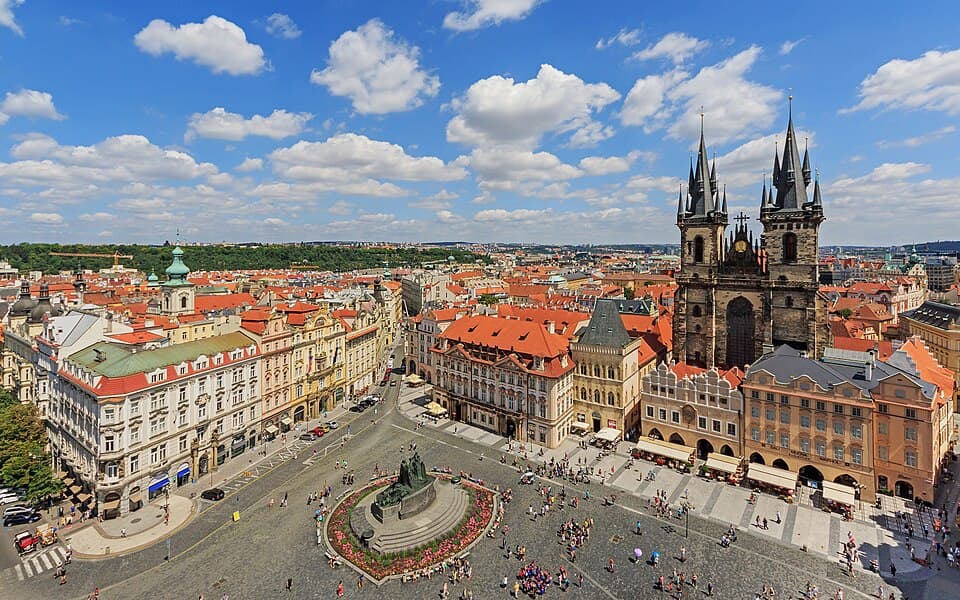
Old Town Square
Medieval marketplace and heart of civic life
This stop orients listeners in Old Town Square as the historic heart of Prague, from medieval marketplace to modern gathering space. The narration should highlight the mix of Gothic, Baroque, and Renaissance facades, the looming Týn church, and the Old Town Hall tower, as well as monuments like the Jan Hus statue. It should cover the square’s role in royal processions, executions, and revolutionary moments, without focusing on any one event too deeply. An anecdote could describe how merchants once sold goods here in chaotic stalls, or how the square has periodically filled with crowds during key political changes.
View Tour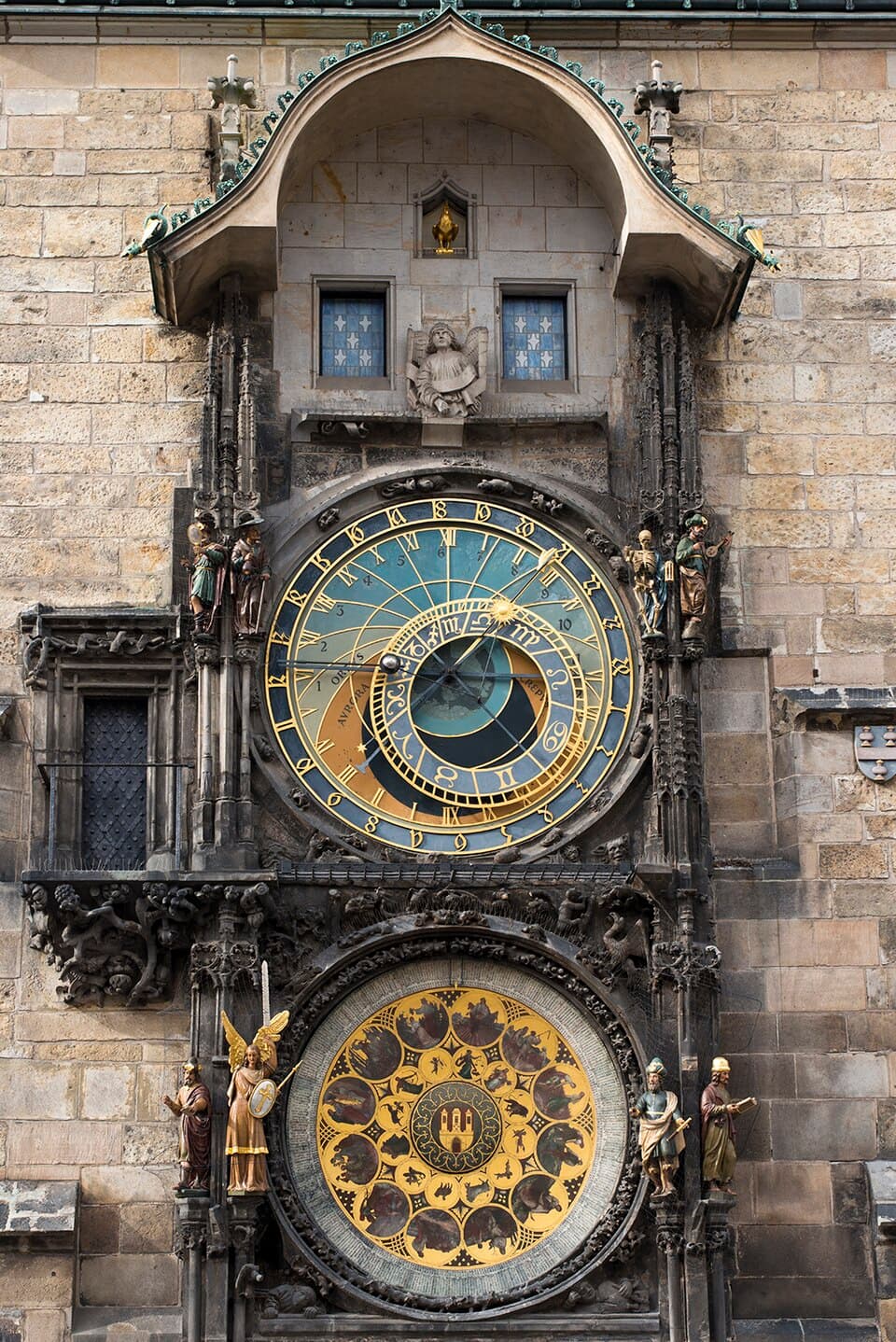
Prague Astronomical Clock
Medieval timekeeper on Old Town Hall wall
This stop focuses on the Astronomical Clock (Orloj) and its setting on the Old Town Hall, including the courtyard behind. The narration should explain the clock’s three main parts (astronomical dial, calendar, and animated figures), its symbolic depiction of time and the cosmos, and how it reflected medieval scientific knowledge and civic pride. It should note historical repairs, legends of its maker, and damage during wartime, while clearly separating myth from fact. An anecdote might describe crowds gathering hourly for the figure procession, or how locals once used the clock to track holy days and seasonal changes.
View Tour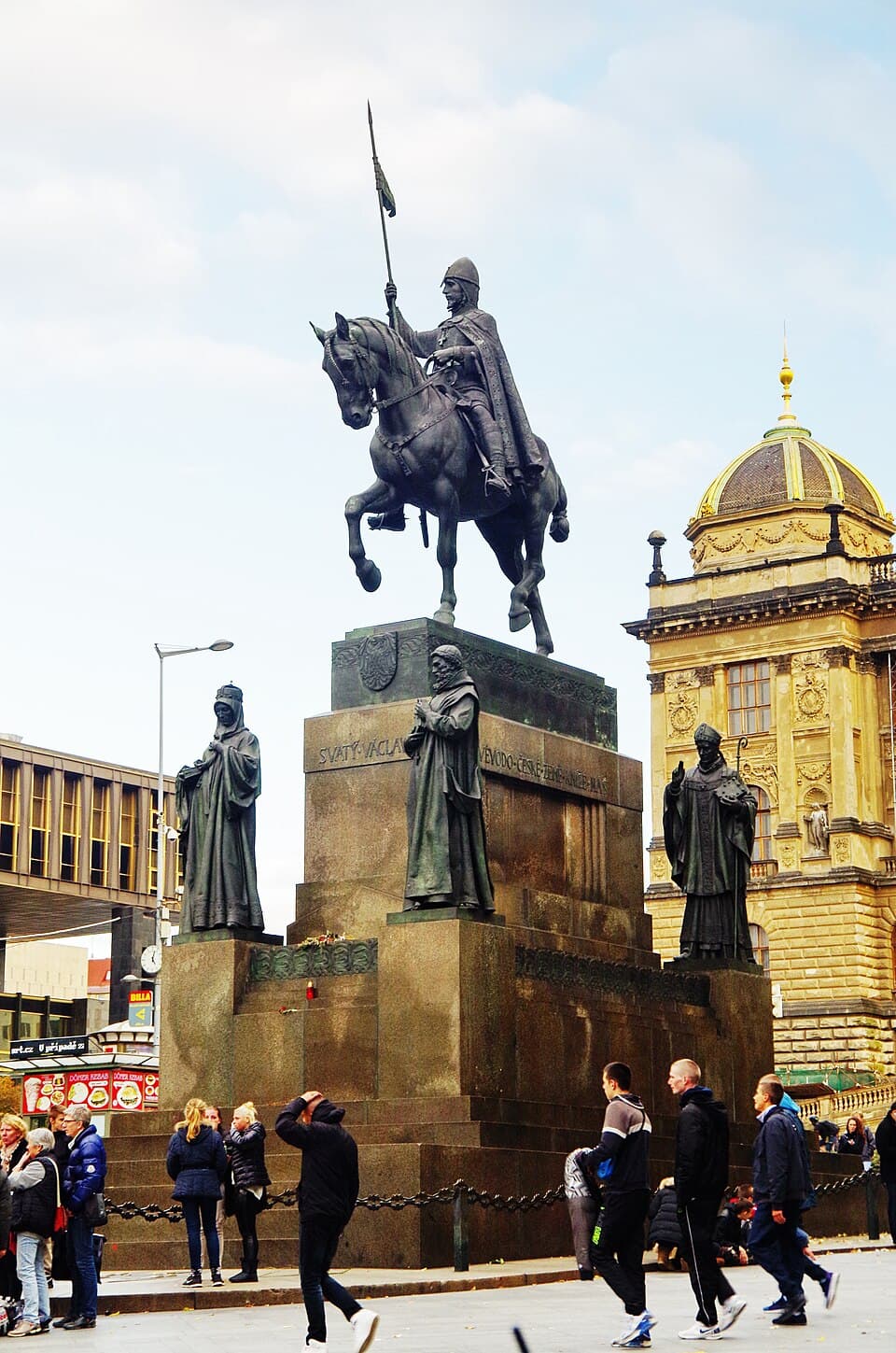
Saint Wenceslas Statue
Patron duke watching over the National Museum
This stop focuses on the equestrian statue of Saint Wenceslas and the monumental façade of the National Museum behind it. The script should explain Saint Wenceslas as a 10th‑century duke and patron saint, and how the statue became a symbolic meeting point and backdrop for demonstrations and vigils. It should describe the National Museum’s neo‑Renaissance architecture as a statement of Czech national pride and learning during the National Revival. An anecdote might recount how people arranged to “meet under the tail” of the Wenceslas statue, turning a patriotic monument into a colloquial urban landmark. Another anecdote can allude to damage from historical events, such as marks left by warfare or demonstrations that locals still point out.
View Tour
St. George’s Basilica
Romanesque sobriety beside Gothic splendor
This stop contrasts St. George’s Basilica with the soaring Gothic of St. Vitus, emphasizing its Romanesque massing, thick walls, and simple rounded arches. The narration should outline its origins as an early medieval Benedictine foundation and one of the oldest surviving church structures within the Castle. Attention should be given to the plain brick and stone exterior, the twin towers, and the austere interior that reflects pre‑Gothic sensibilities. One unique anecdote can describe how the basilica once served as a burial place for early Přemyslid rulers, linking the quiet space to dynastic memory. Another may mention its later adaptation as a venue for concerts and exhibitions, illustrating how historic sacred buildings are reused in modern cultural life.
View Tour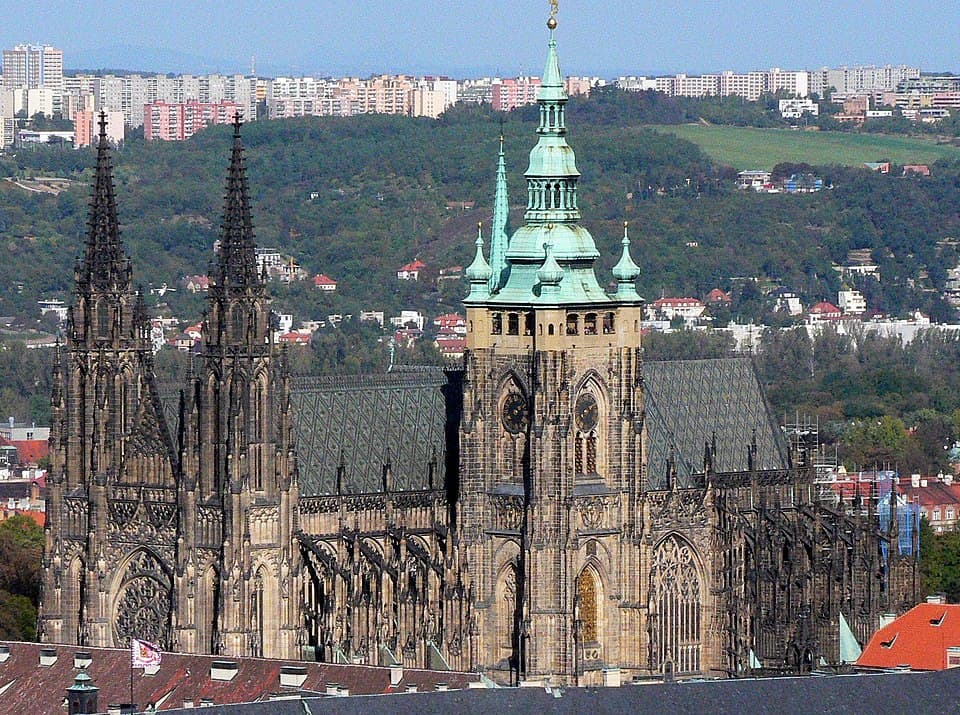
St. Vitus Cathedral
Gothic heart of Czech kings and saints
This stop focuses on St. Vitus Cathedral as the spiritual and ceremonial core of Prague Castle. The script should describe its towering Gothic architecture, stained glass, flying buttresses, and the way the later Neo‑Gothic façade completed an older structure. Historically, it should highlight the cathedral’s role in coronations, royal burials, and housing relics of important saints, as well as its association with figures like Charles IV. Culturally, it should explain how the cathedral symbolizes Czech identity, including references to the Chapel of St. Wenceslas and the Crown Chamber. A unique anecdote could cover the long, interrupted building process that spanned centuries, culminating in a 19th–20th century completion driven by a citizens’ initiative.
View Tour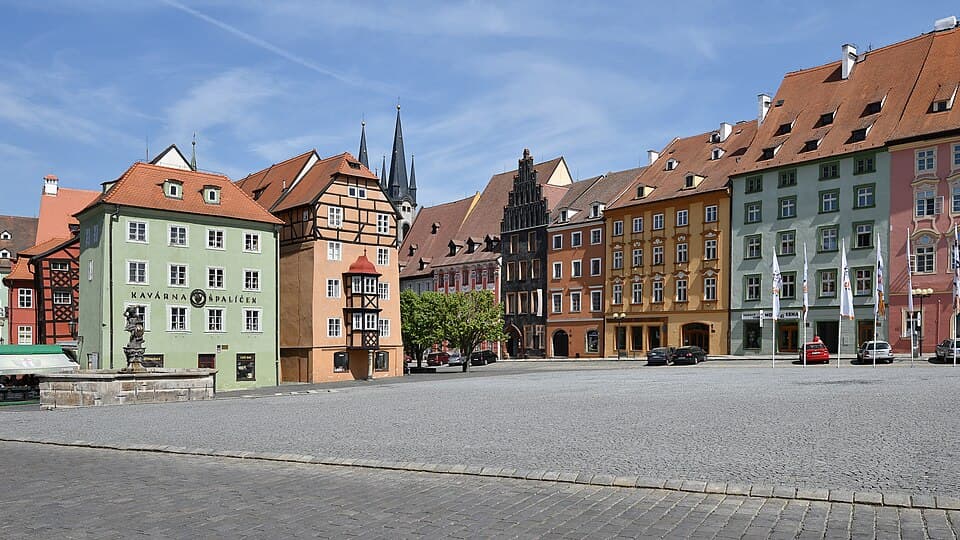
Loreta Pilgrimage Complex
Baroque Marian shrine with cherished Holy Hut
This stop presents the Loreta complex as a Baroque pilgrimage site dedicated to the Virgin Mary, centered around a replica of the Holy House of Loreto. The script should describe entering the courtyard, the arcaded cloisters, and the richly decorated church facade facing the square. It should explain how the Loreto devotion, supported by noble patrons, embodied Catholic renewal after the Protestant and Hussite periods. A unique anecdote can highlight the famous carillon that periodically chimes from the tower and how its melodies once marked time for the neighborhood. Another anecdote may focus on a particular ex‑voto or precious reliquary associated with answered prayers or protection during a crisis, underscoring the personal nature of pilgrimage piety here.
View Tour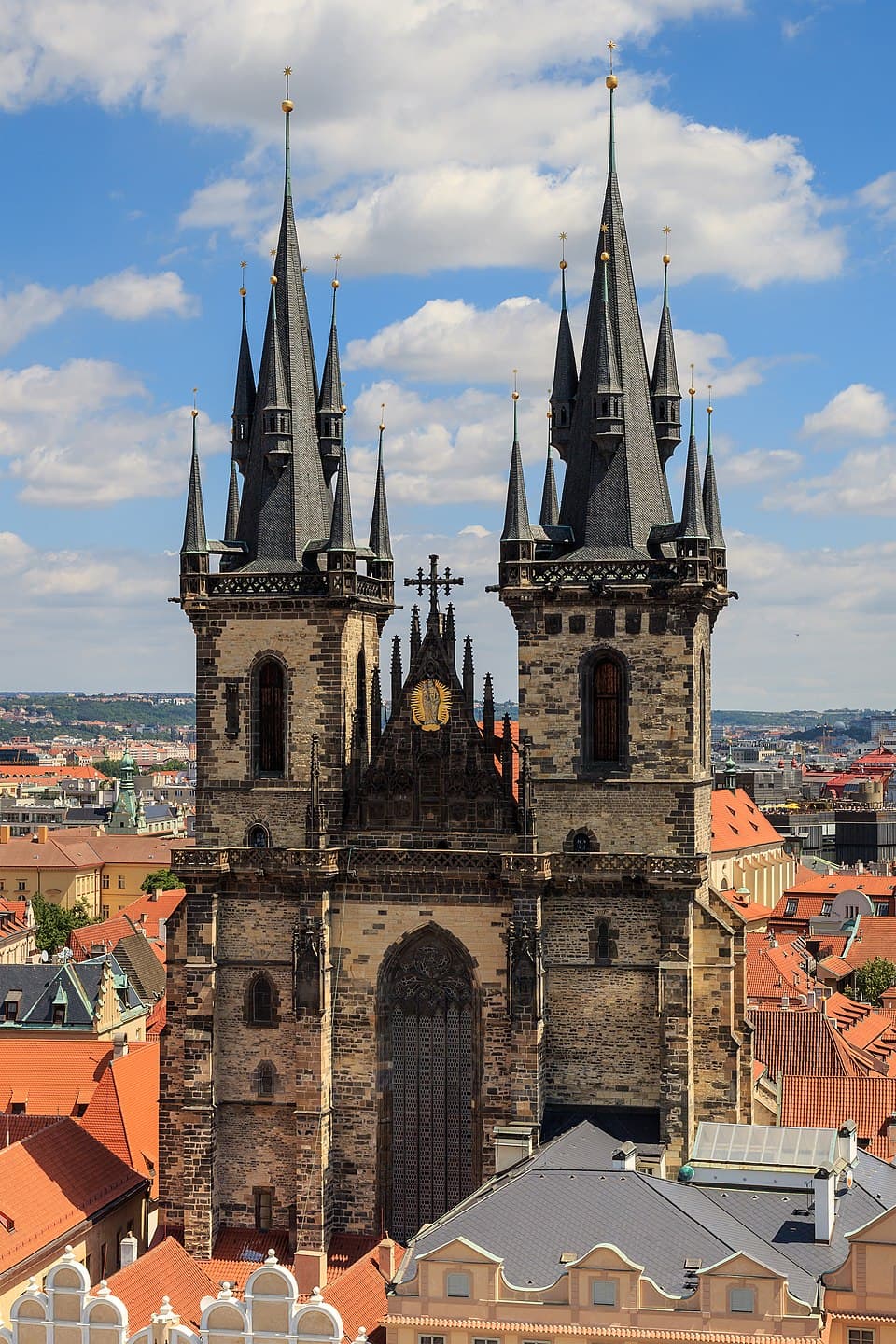
Church of Our Lady before Týn
Gothic twin-towered symbol of Old Town
Here the focus is the Church of Our Lady before Týn, its striking twin Gothic towers, and its position overlooking Old Town Square from behind a row of houses. The narration should explore its medieval origins, links to wealthy merchants and university scholars, and connections to reform movements like Hussitism. Inside, it can mention key artworks, altars, and tombs, including burials of notable figures associated with the church. An anecdote might address the asymmetry of the towers, or how the church’s facade is partly hidden, creating the illusion that houses stand in front of the main entrance.
View Tour
Old Royal Palace
Medieval seat and grand ceremonial hall
This stop covers the Old Royal Palace and Vladislav Hall as the political heart of medieval and early modern Bohemia. The script should describe the mix of Gothic and later architectural elements, emphasizing Vladislav Hall’s vast ribbed vaults, large windows, and its unusual use for royal festivities, markets, and even indoor horse tournaments. Historically, it should explain the palace’s role as residence of Bohemian kings and later Habsburg administrators, as well as the location of notable events. A key unique anecdote should be the famous Defenestration of Prague that took place here, explaining how officials were thrown from the windows and how that incident fed into larger religious and political conflicts.
View Tour
Jan Palach Memorial
Quiet tribute to student sacrifice in 1969
Here the focus is on the modest memorial near Wenceslas Square honoring Jan Palach and Jan Zajíc, students who self‑immolated in 1969 to protest the Soviet occupation after the Prague Spring. The script should recount their actions in cautious, respectful terms and situate them in the broader context of post‑1968 repression. It should describe the memorial’s simple design and how flowers and candles often appear there, especially around anniversaries. One anecdote might describe how, during Palach’s funeral, huge silent crowds lined the streets despite official pressure, treating the procession as a political protest. Another could mention how later, in the late communist period, unofficial commemorations of Palach’s act became small but significant moments of resistance.
View TourFrequently Asked Questions
How do audio walking tours work in Praga?
Our audio walking tours in Praga are self-guided experiences that you can start anytime. Simply download the Roamway app, select a tour, and follow the GPS-guided route. The audio narration automatically plays as you approach each point of interest, allowing you to explore at your own pace.
Are self-guided tours better than guided tours?
Self-guided audio tours offer flexibility that traditional guided tours can't match. You can pause, rewind, or skip sections, explore at your own pace, and start whenever you're ready. Plus, our tours are available in multiple languages and work offline once downloaded.
Do I need an internet connection during the tour?
No! Once you've downloaded a tour in the Roamway app, it works completely offline. The GPS navigation and audio narration function without an internet connection, making it perfect for international travelers who want to avoid data charges.
How long do the audio tours take?
Tour durations vary, but most of our audio tours in Praga range from 1 to 3 hours, depending on your pace and how much time you spend at each point of interest. You can complete them in one go or split them across multiple visits.
Ready to explore Praga?
Download Roamway and start your audio-guided adventure today.