
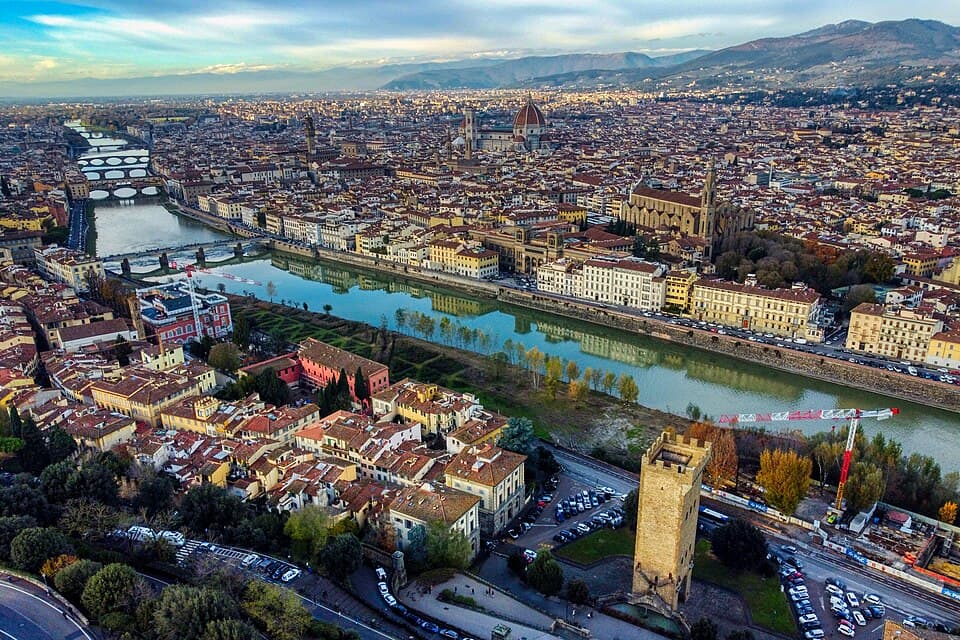
Florence: Duomo Complex and Renaissance Churches Highlights
Firenze, Italia
Audio Preview
Listen to a sample of this audio tour to get a feel for the experience.
What You'll Experience
On this Florence: Duomo Complex and Renaissance Churches Highlights audio tour in Firenze, you'll discover 11 carefully selected points of interest, each with its own story. The tour is designed to be completed at your own pace, with GPS navigation guiding you from one location to the next. As you approach each stop, the audio narration automatically begins, bringing history, culture, and local insights to life.
About This Tour
This tour focuses on Florence’s historic center, from the Piazza del Duomo and its cathedral complex to Orsanmichele, Badia Fiorentina, Santa Croce, and Santa Maria Novella. It examines medieval and Renaissance architecture, religious art, funerary monuments, and civic history, including key façades, sculptural programs, and interior highlights where accessible.
Points of Interest
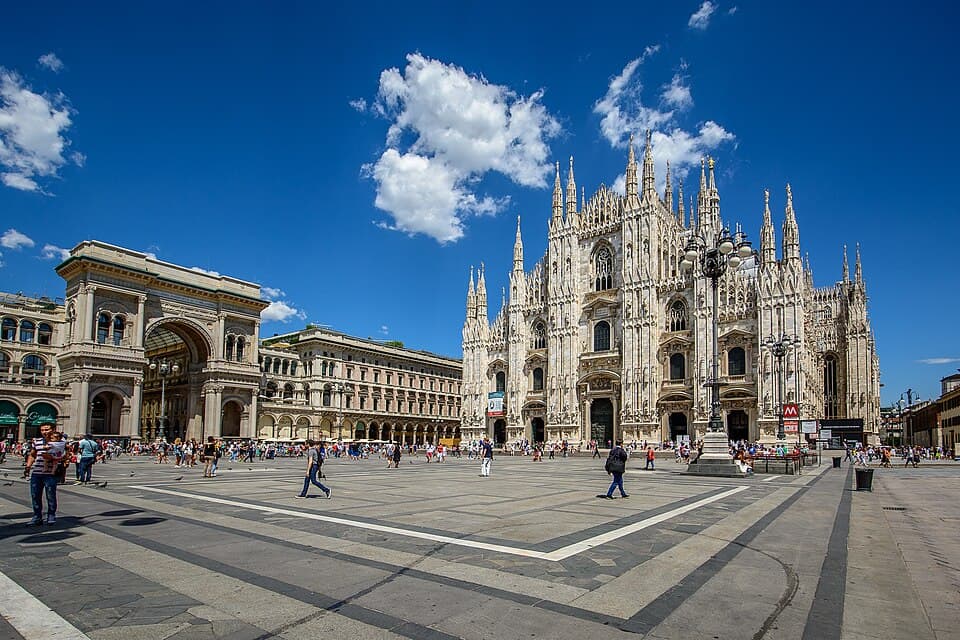
Piazza del Duomo
Florence’s sacred and civic heart revealed
This stop introduces Piazza del Duomo as the symbolic center of Florence’s religious and civic life, framed by the cathedral, bell tower, and baptistery. The script should sketch how this crowded square evolved from a medieval religious precinct into a stage for public rituals, processions, and civic celebrations. It can mention the rivalry with other Italian city‑states and how Florence used architecture and decoration here to project power. One anecdote might recall how major feasts filled the square with temporary wooden structures and fireworks, testing the city’s engineering skills long before Brunelleschi’s dome. Another anecdote can briefly describe accounts of pilgrims arriving here, awed by the colored marble and the forest of towers around them.
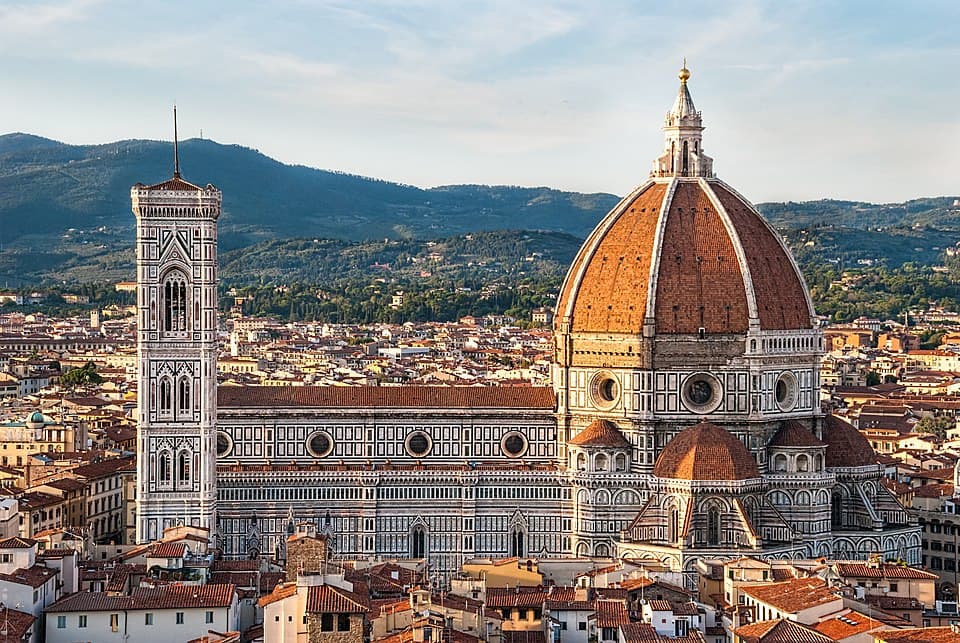
Cathedral of Santa Maria del Fiore
Gothic shell, Renaissance dome, civic ambition
This stop circles the exterior of Florence’s cathedral, exploring its striped marble walls, sculpted portals, and the famous dome crowning the skyline. The narration should trace the cathedral’s long construction phases, from medieval foundations to the later decision to crown it with an unprecedented masonry dome. It should highlight how the building embodied Florence’s republican pride and competition with rival cities. One anecdote may describe how a public competition for the dome’s design drew bold proposals and sparked fierce debate. Another can evoke how citizens watched the dome rising year by year, some reportedly gathering in the piazza to argue whether such a massive structure could ever stand without collapsing.
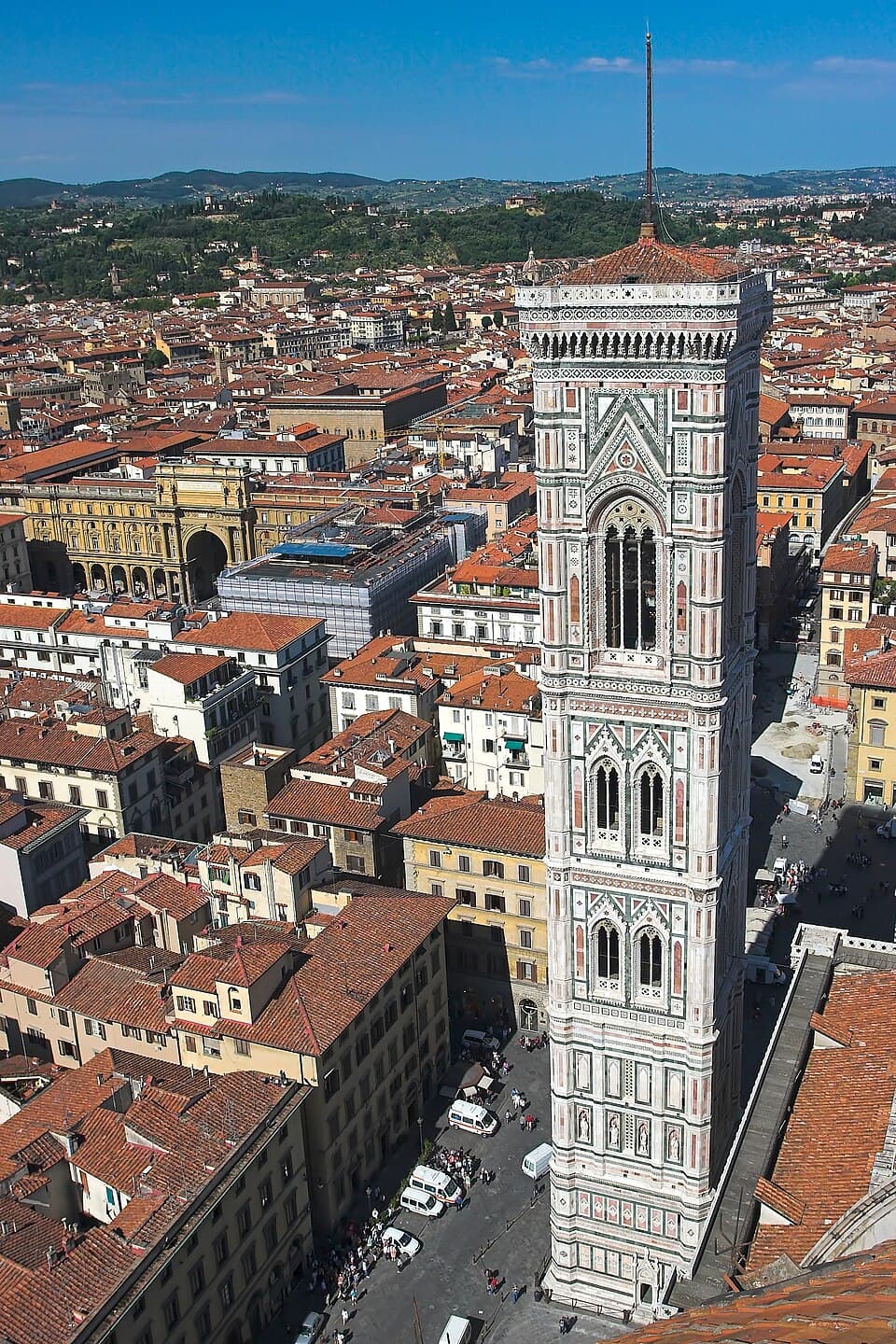
Giotto’s Campanile
A marble tower of prophets and crafts
This stop focuses on Giotto’s Campanile as both a bell tower and a monumental sculpture gallery. The narration should invite listeners to examine the relief panels and statues at various levels, which depict human activities, virtues, prophets, and patriarchs in a structured visual program. It should explain Giotto’s involvement and how later artists completed the tower, adjusting its design. One anecdote might recount how early observers noted the tower’s refined colored marble patterning, likening it to a precious garment for the cathedral. Another anecdote can discuss interpretations of the reliefs showing crafts and sciences, suggesting that Florentines placed artistic skill and manual labor within a sacred narrative of human ingenuity.
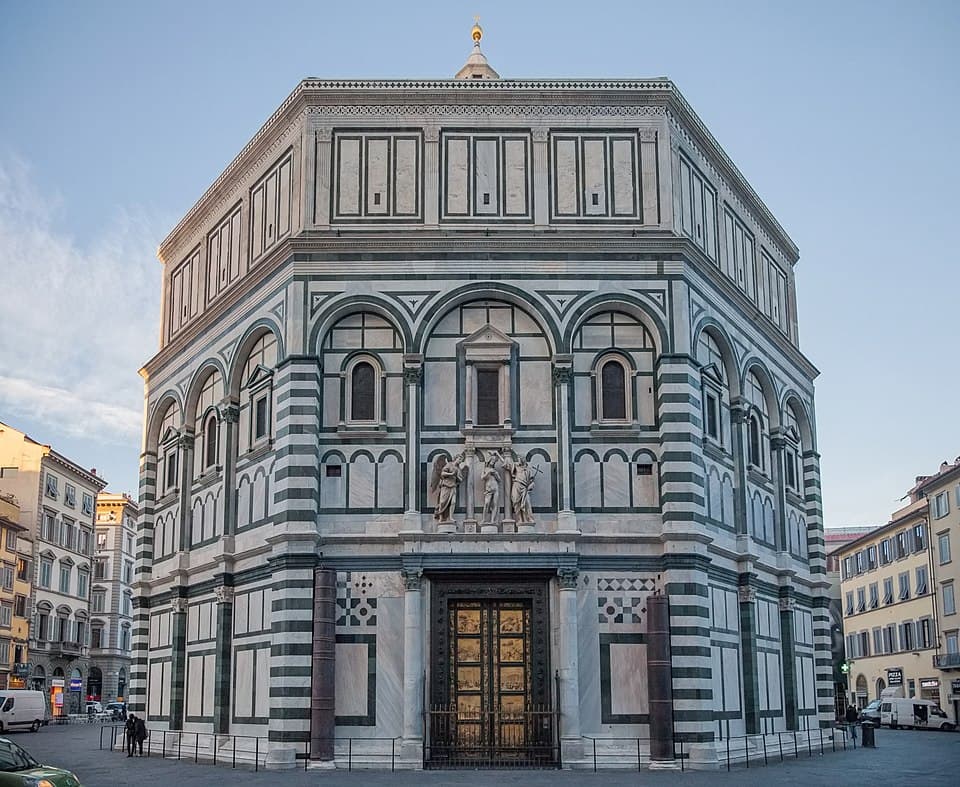
Baptistery of San Giovanni
Ancient octagon and gates of heaven
This stop examines the Baptistery of San Giovanni’s exterior, its gilded bronze doors, and the glimpse they offer into Florence’s religious and artistic values. The narration should outline the building’s venerable status as one of the city’s oldest sacred structures and the traditional place of baptism for Florentines, including famous figures. It should focus on the so‑called “Gates of Paradise” and earlier bronze doors, describing their relief scenes and the intense competition that produced them. One anecdote could recall how a renowned sculptor reportedly called the new doors so beautiful that they were worthy of paradise itself. Another can describe how the baptistery’s shimmering mosaics inside once caught candlelight during night vigils, creating an otherworldly golden dome for new Christians, even if listeners only view it from outside.
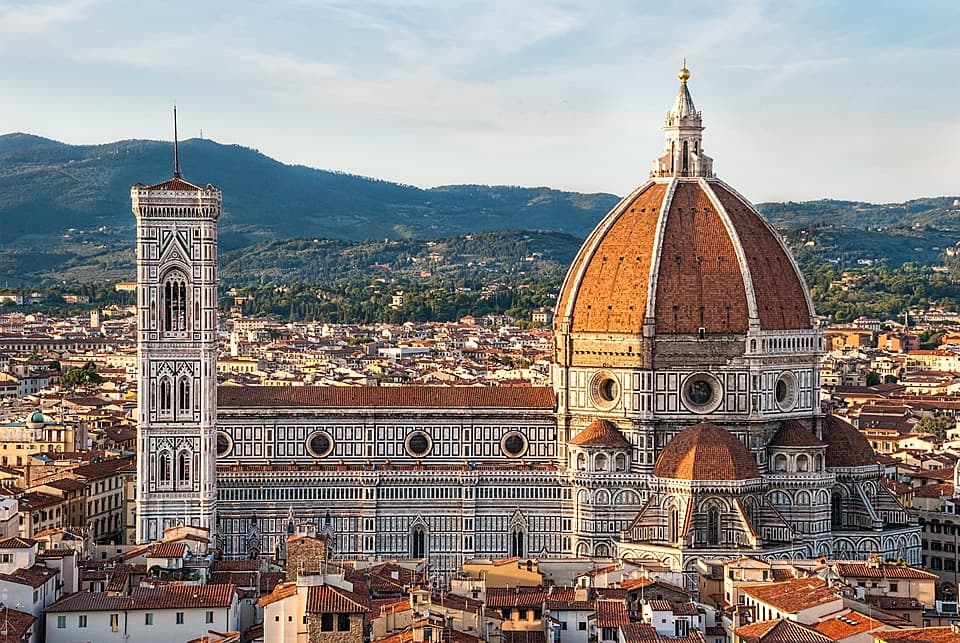
Opera del Duomo Museum
Guardians of Florence’s cathedral treasures
This stop introduces the Opera del Duomo Museum as the custodial institution that commissioned, preserved, and now displays works from the cathedral complex. The narration should briefly explain what an “Opera” was in Italian civic‑religious life: an administrative body overseeing construction, finance, and maintenance. It can point out that many original sculptures from the cathedral, bell tower, and baptistery now reside inside the museum for protection. One anecdote may mention how certain weather‑worn statues shocked viewers when cleaned, revealing crisp details long hidden by grime. Another anecdote might recall how fragments from the original medieval façade were rediscovered and reassembled, giving historians new insight into how the cathedral once looked to early Florentines.
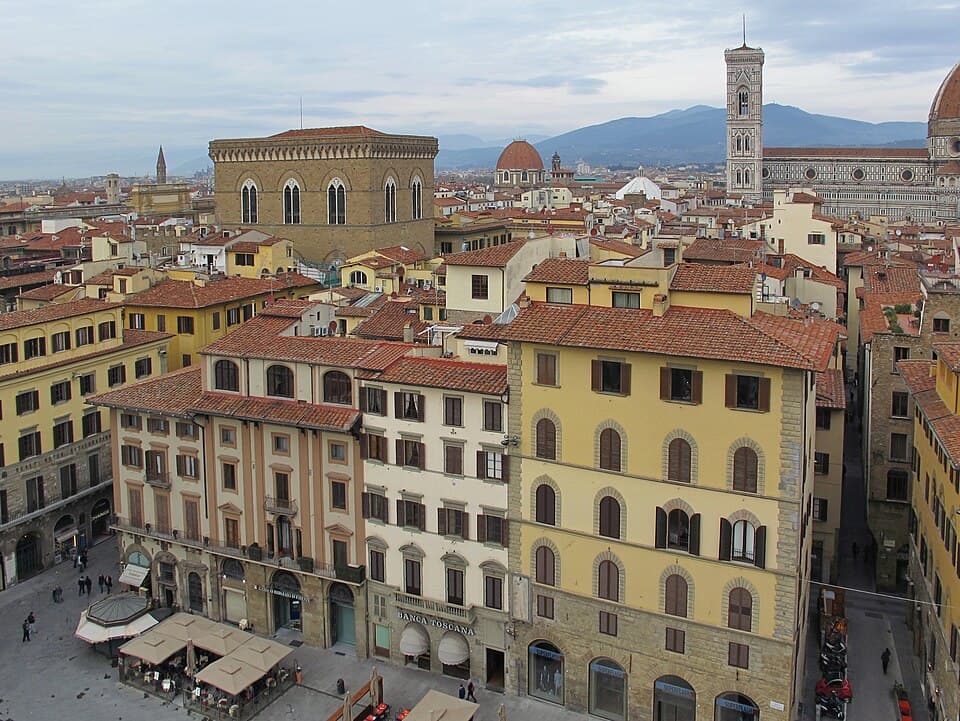
Orsanmichele
Guild church of saints in stone niches
This stop explores Orsanmichele as a unique hybrid of grain market, guild headquarters, and church adorned with monumental niche statues. The narration should explain how Florence’s powerful trade guilds each sponsored a statue of their patron saint on the exterior, turning the building into a stone catalog of civic pride and devotion. It can highlight how different artists contributed, creating a kind of open‑air sculpture competition. One anecdote might describe the drama around a particularly prestigious niche, where rival guilds competed for prominence and commissioned especially ambitious works. Another anecdote can mention how the interior’s revered Madonna image once drew processions and offerings, with miracles attributed to it, leading to lavish votive decorations that transformed the former market space into a richly adorned chapel.
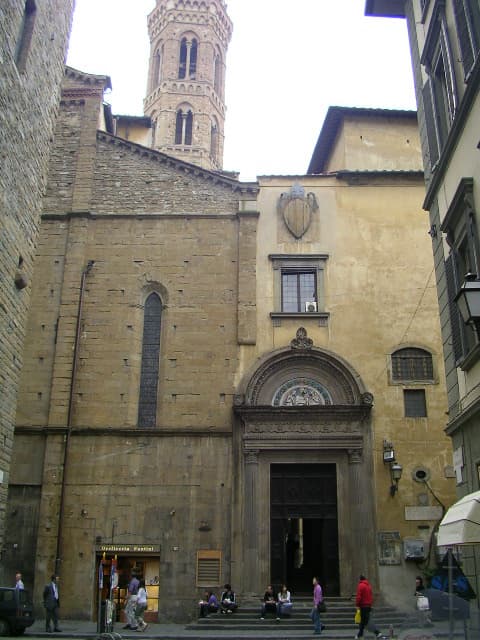
Badia Fiorentina
Monastic tower beside the corridors of power
This stop presents Badia Fiorentina as an important monastic church and abbey situated close to Florence’s political center. The narration should describe its tall bell tower, altered church façade, and the sense of an enclosed monastic world just off the busy streets. It should touch on the abbey’s historical connections with ruling families and intellectual life, including the presence of manuscript production and learned clergy. One anecdote could evoke stories that a famous poet or thinker once participated in gatherings or services here, linking literary culture to the abbey. Another anecdote might recall how the sound of the abbey bells was part of Florence’s daily rhythm, marking hours of prayer that structured life for monks and laypeople alike.
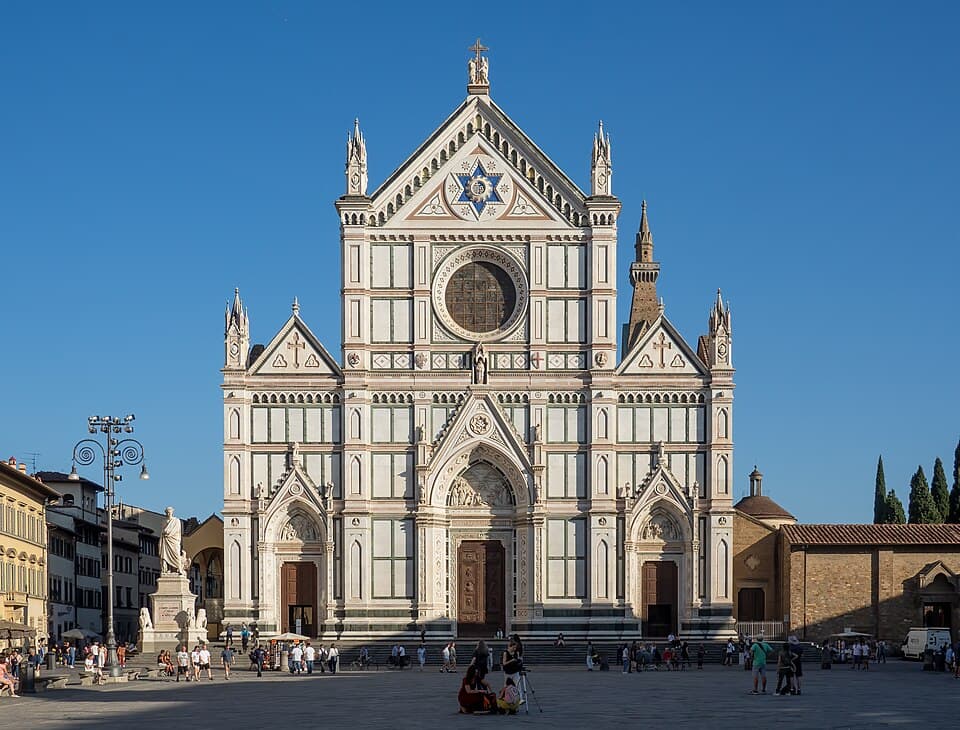
Basilica di Santa Croce
Franciscan church and pantheon of memory
This stop covers the exterior and piazza of Santa Croce before moving into key interior highlights. The narration should explain Santa Croce’s role as the principal Franciscan church in Florence, its broad Gothic façade, and the open piazza used for religious gatherings and civic events. Inside, it should focus on major chapels, fresco cycles, and the transformation of the church into a burial place for notable figures in art, science, and politics. One anecdote might recount how the open square hosted public spectacles, including historic ball games that are sometimes reenacted today. Another anecdote can describe early visitors’ reactions to seeing the tombs of famous Italians brought together under one roof, shaping Santa Croce’s reputation as a national hall of fame.
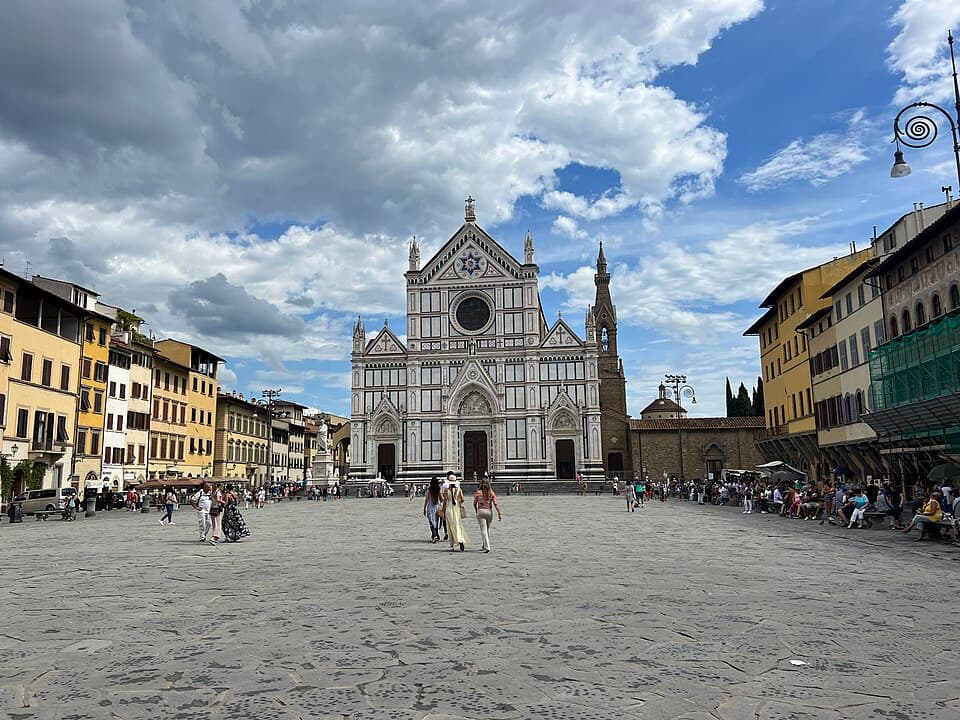
Piazza Santa Croce
Open stage for rituals, games, and grief
This orientation stop focuses on Piazza Santa Croce as the forecourt and civic extension of the basilica. The narration should help listeners see how the square’s shape and surrounding palaces frame processions, festivities, and gatherings tied to the church. It should outline how the piazza became associated with commemorations and major funerals, with mourners and onlookers filling the space before entering the basilica. One anecdote might explain how temporary wooden stands and decorations once transformed the piazza during elaborate religious plays or tournaments. Another anecdote can highlight a specific historic funeral or public ceremony held here, where the crowd’s reactions underscored Santa Croce’s role as a shared emotional stage for the city.
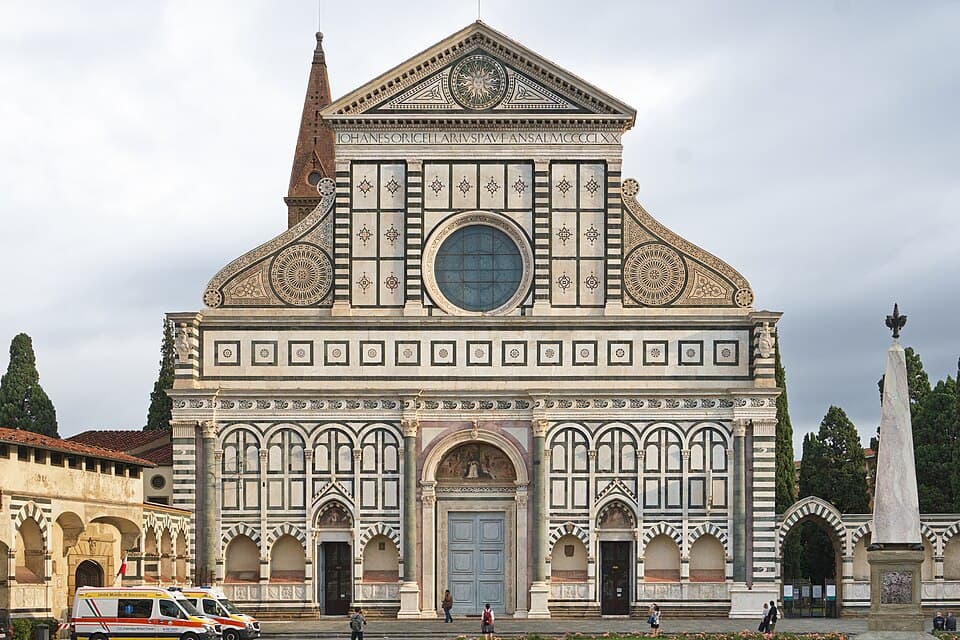
Basilica di Santa Maria Novella
Dominican façade of geometry, color, and sermons
This stop examines Santa Maria Novella’s famed marble façade and selected interior highlights, emphasizing Dominican preaching, learning, and artistic patronage. The narration should unpack the façade’s careful geometric design, contrasting it with earlier, more vertical Gothic fronts seen elsewhere in the city. Inside, it should point out key chapels, major fresco programs, and how scientific interests, including perspective and optics, intersected with sacred images. One anecdote might describe how the open space in front of the church was used to test early timekeeping or astronomical observations linked to the Dominicans’ scholarly pursuits. Another anecdote can recount a story of how a particular fresco or altarpiece here was praised or criticized for its innovative realism when first unveiled.
Cloisters of Santa Maria Novella
Frescoed courtyards of silence and study
This stop considers the cloisters of Santa Maria Novella as quieter counterparts to the busy nave, combining green space, arcades, and painted walls. The narration should describe the layout of at least one main cloister, with its sequence of arches and fresco cycles that wrap around the courtyard. It should emphasize the cloister’s function as a space for Dominican meditation, teaching, and movement between different parts of the complex. One anecdote might recall how a particular cloister fresco was damaged and later restored, revealing bright original colors. Another anecdote can evoke accounts of students and friars walking in pairs under the arcades, debating theology or the latest philosophical ideas while surrounded by painted biblical scenes and city views.
Start This Tour
Download Roamway to experience this audio tour
Tour Details
Access
Free
Stops
11 points of interest
Languages
GermanEnglishSpanishFrench
More tours in Firenze
View all tours in FirenzeOther tours you might enjoy:
Florence: Medici Power, Palaces and Churches
This tour explores central Florence through key Medici sites, from San Lorenzo and its basilica, chapels, and palace to San Marco, Piazza Santissima Annunziata, and the political center around Palazzo Vecchio and Piazza della Signoria. It examines Medici patronage, art, architecture, religion, and government, including the Uffizi courtyard, Vasari Corridor exterior, and Pitti Palace.
Florence: Markets, Street Food and Wine Culture
This tour explores Florence’s food culture through historic markets, street food areas, and traditional wine bars on both sides of the Arno. It includes Mercato Centrale, Sant’Ambrogio, Via dei Neri, and the Santa Croce and Oltrarno districts. Themes include everyday Florentine life, local products, wine traditions, and artisan gelato.
Florence: Duomo to Oltrarno Art and History
This tour traces central Florence from Piazza del Duomo through Piazza della Signoria and the Uffizi area to the Arno River, Ponte Vecchio, and the Oltrarno. It examines major churches, palaces, outdoor sculpture, and museum masterpieces while highlighting Renaissance art, religious traditions, Medici power, and daily life in artisan neighborhoods.
Frequently Asked Questions
How do I start this audio tour?
Download the Roamway app, search for this tour, and tap 'Start Tour'. The app will guide you to the starting point using GPS. Once you're there, the audio narration begins automatically.
Do I need an internet connection?
No! Once you've downloaded the tour in the Roamway app, it works completely offline. The GPS navigation and audio narration function without an internet connection.
Can I pause and resume the tour?
Yes! You can pause the tour at any time and resume later. Your progress is automatically saved, so you can complete the tour over multiple sessions if needed.