
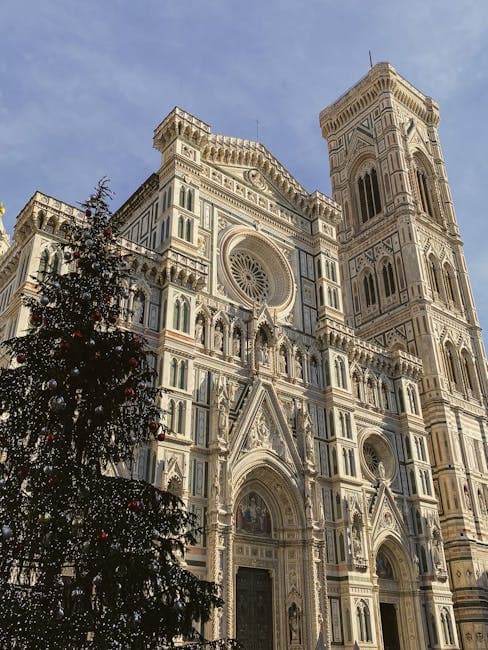
Florence: Medici Power, Palaces and Churches
Firenze, Italia
Audio Preview
Listen to a sample of this audio tour to get a feel for the experience.
What You'll Experience
On this Florence: Medici Power, Palaces and Churches audio tour in Firenze, you'll discover 12 carefully selected points of interest, each with its own story. The tour is designed to be completed at your own pace, with GPS navigation guiding you from one location to the next. As you approach each stop, the audio narration automatically begins, bringing history, culture, and local insights to life.
About This Tour
This tour explores central Florence through key Medici sites, from San Lorenzo and its basilica, chapels, and palace to San Marco, Piazza Santissima Annunziata, and the political center around Palazzo Vecchio and Piazza della Signoria. It examines Medici patronage, art, architecture, religion, and government, including the Uffizi courtyard, Vasari Corridor exterior, and Pitti Palace.
Points of Interest
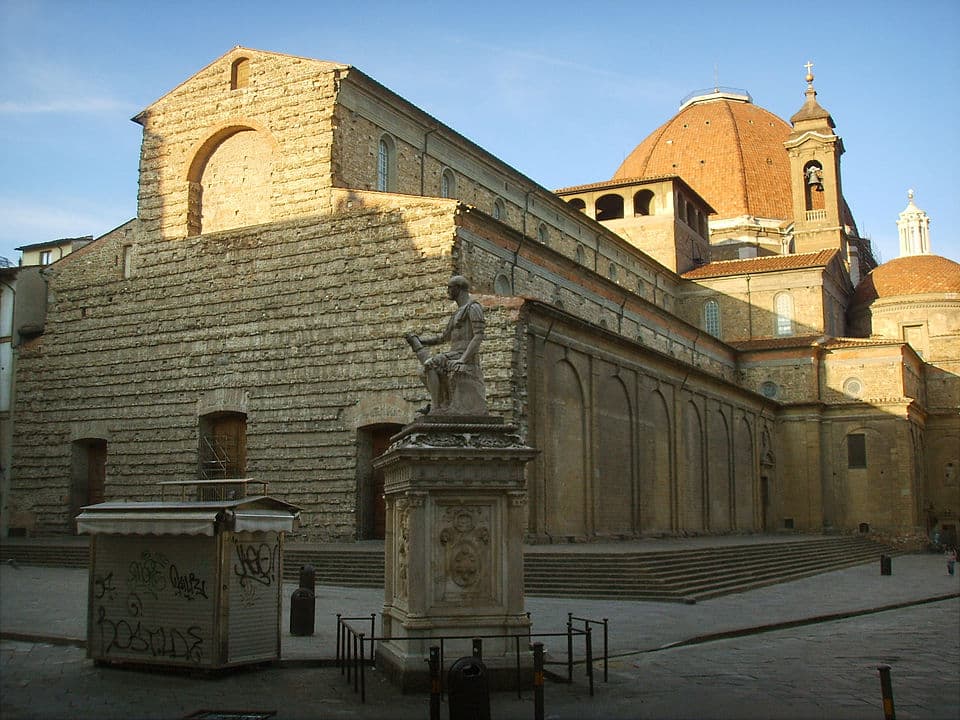
Piazza San Lorenzo
Medici neighborhood gateway beside crowded market
This stop introduces the Medici “home turf” around San Lorenzo, just behind Florence’s cathedral. The script should set the scene of a busy quarter of traders, leather stalls, and parish life, contrasted with the imposing mass of the unfinished basilica façade. It should explain how the Medici, as bankers, invested heavily in this parish church and nearby buildings, making the square a power base in the 15th century. Mention early figures like Giovanni di Bicci and Cosimo the Elder choosing San Lorenzo as a spiritual and social center. Include a unique anecdote about local Florentines joking that the rough, bare church façade looked more like a warehouse than the parish of the city’s richest family, highlighting tensions between Medici wealth and public expectations. Also preview nearby sites—Basilica di San Lorenzo, Old Sacristy, Medici Chapels, and Palazzo Medici Riccardi—to orient the listener for the cluster of upcoming stops.
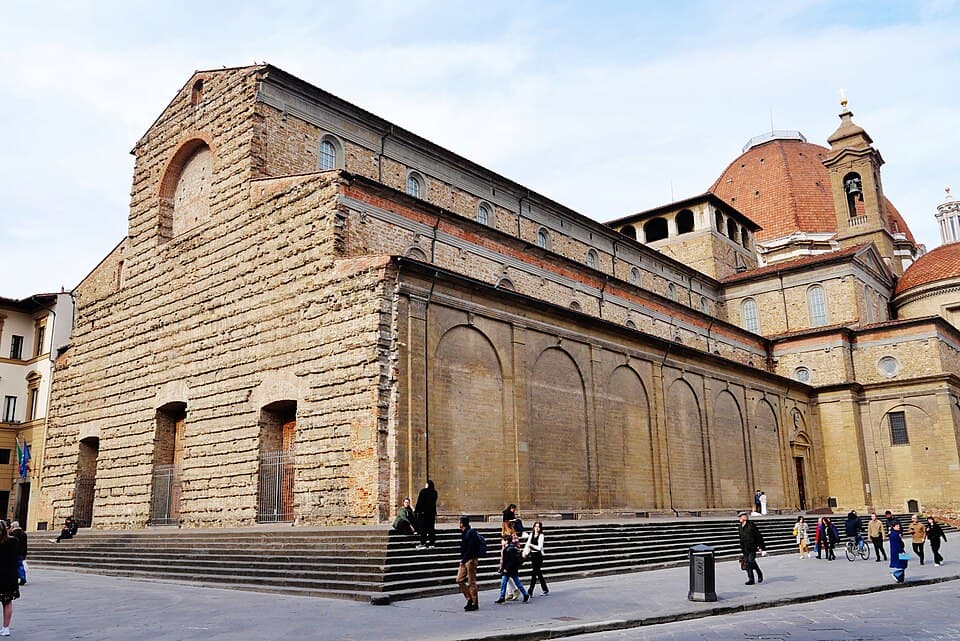
Basilica di San Lorenzo
Brunelleschi’s Medici parish and Renaissance interior
This stop focuses on the interior and architectural character of the Basilica di San Lorenzo as the Medici parish church. The script should describe Brunelleschi’s clear geometry, grey pietra serena columns, and the luminous nave that marks a shift from Gothic to Renaissance space. It should explain how the Medici funded rebuilding here, turning an old, modest church into a showcase of their piety and taste. Mention Cosimo the Elder’s role as a key patron and how later additions layered over the original design. Include a unique anecdote about the dispute over Brunelleschi’s payment, where records suggest he quarrelled with church officials about fees and control, illustrating how even great patrons and architects clashed over money and authority inside sacred projects.
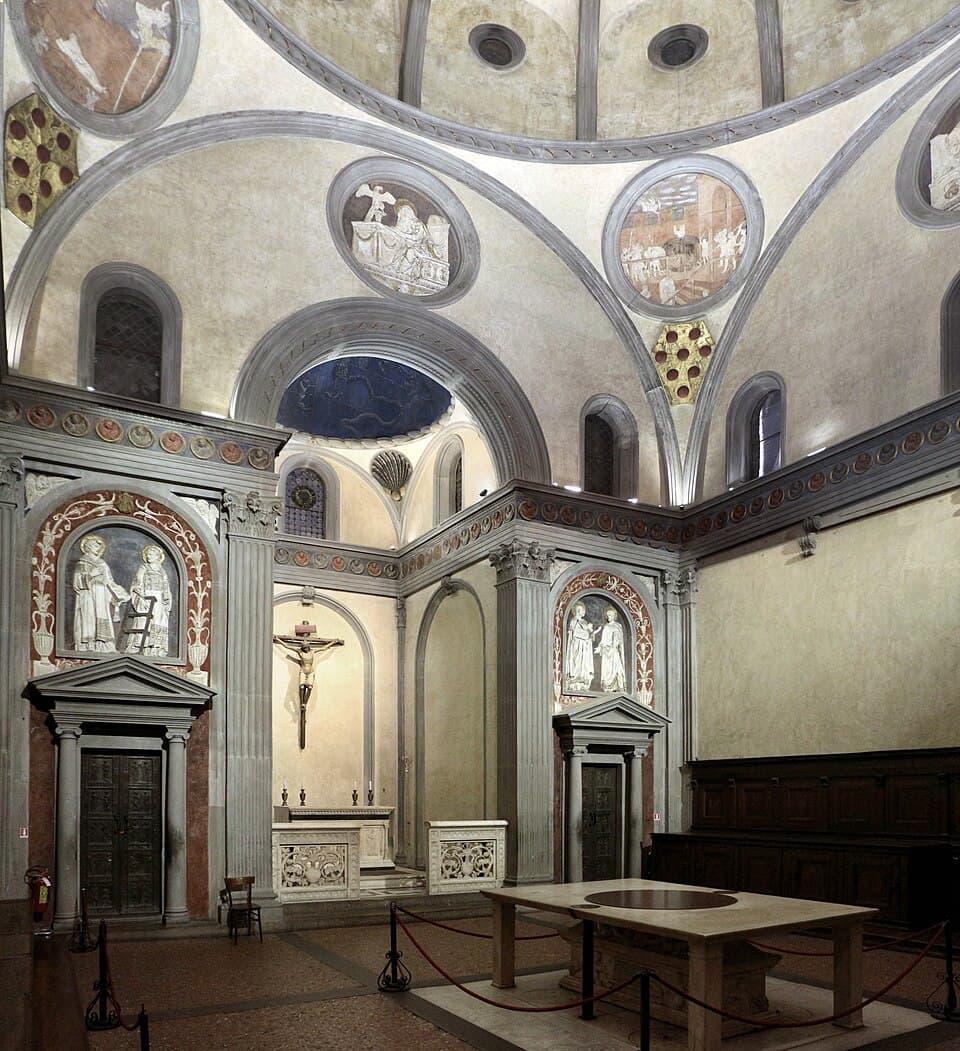
Old Sacristy
Early Medici tombs in Brunelleschi’s sacred cube
This stop explores the Old Sacristy as a compact masterpiece of early Renaissance architecture and an intimate Medici burial space. The script should describe its cube-like proportions, dome, and the sculptural decoration traditionally associated with Donatello, emphasizing how geometry and ornament create a solemn yet human-scaled room. It should explain that this sacristy served as the first dynastic resting place for Medici family members like Giovanni di Bicci and his wife. Highlight how this room marks the transition from private family chapel to public statement of lineage. Include a unique anecdote about how, during a period of political tension, Medici supporters were said to gather here to swear loyalty beside their founders’ tombs, revealing how funerary space doubled as a quiet political stage.
Medici Chapels
Dynastic mausoleum of Medici princes and dukes
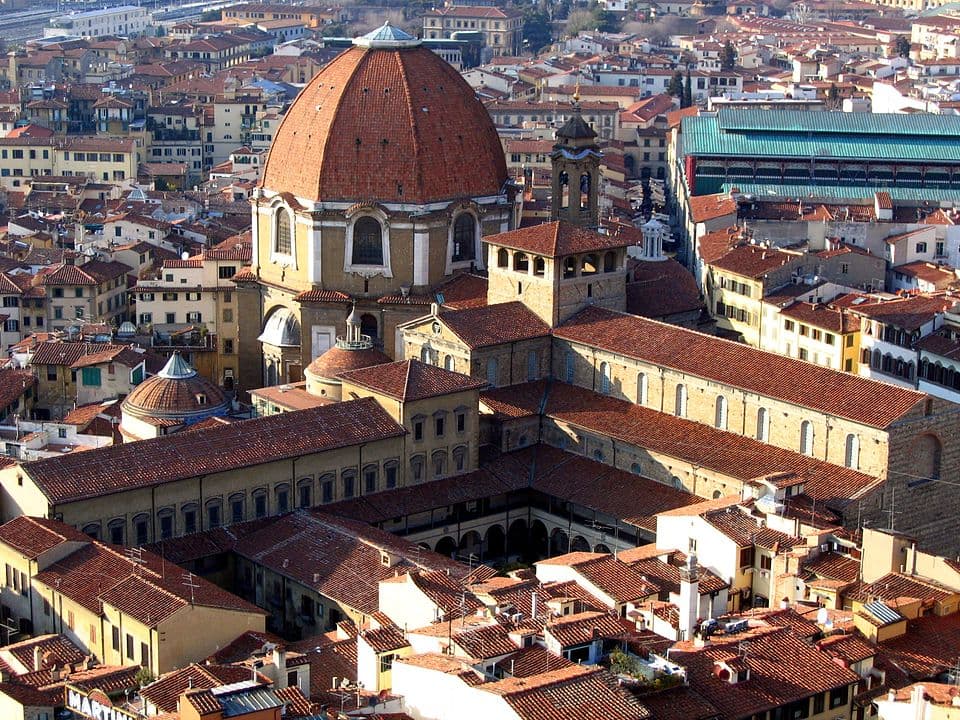
This stop examines the Medici Chapels complex—especially the New Sacristy and Cappella dei Principi—as the grand, later mausoleum of the ruling dynasty. The script should describe the vertical, colored-marble opulence of the Cappella dei Principi and the contrasting, more restrained but powerful architecture and sculpture of the New Sacristy associated with Michelangelo. It should explain how these chapels transformed San Lorenzo from parish church into a dynastic sanctuary for dukes and grand dukes. Discuss how the chapels reflect changing Medici ambitions, from merchant family to princely house. Include a unique anecdote about the 19th‑century rediscovery of hidden stairways and small storerooms behind Michelangelo’s walls, where drawings believed to be his were found, sparking romantic stories of the artist sketching in secrecy while avoiding political turmoil.
Palazzo Medici Riccardi
First Medici palace on former Via Larga
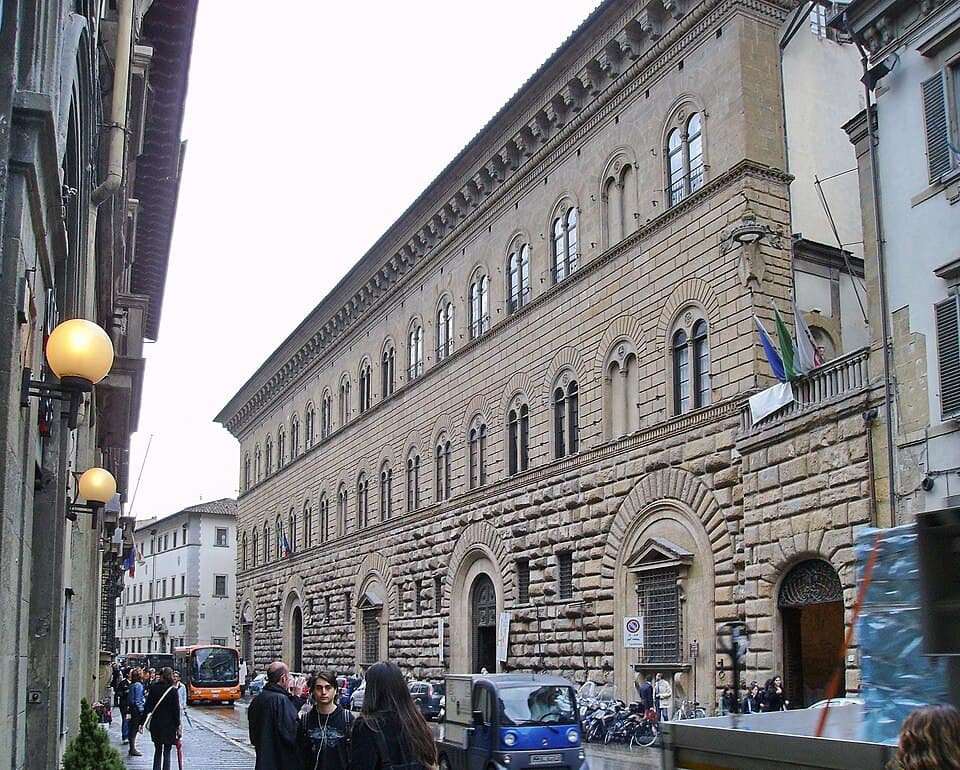
This stop focuses on Palazzo Medici Riccardi as the family’s first great urban residence and a model of Renaissance palace design. The script should describe its rusticated stone tiers, orderly windows, and powerful yet sober street presence, as well as the central courtyard and gardens inside. It should outline how Cosimo the Elder commissioned Michelozzo to build a palace that projected wealth without appearing tyrannical, contrasting with more fortress-like designs he rejected. Mention later Riccardi ownership but keep focus on the Medici period. Include a unique anecdote about the day when a young Lorenzo de’ Medici paraded exotic animals in the courtyard during a celebration, astonishing citizens who glimpsed giraffes and lions as symbols of far‑reaching Medici connections and cultural display.
San Marco Museum and Convent
Fra Angelico frescoes and Savonarola’s Dominican world
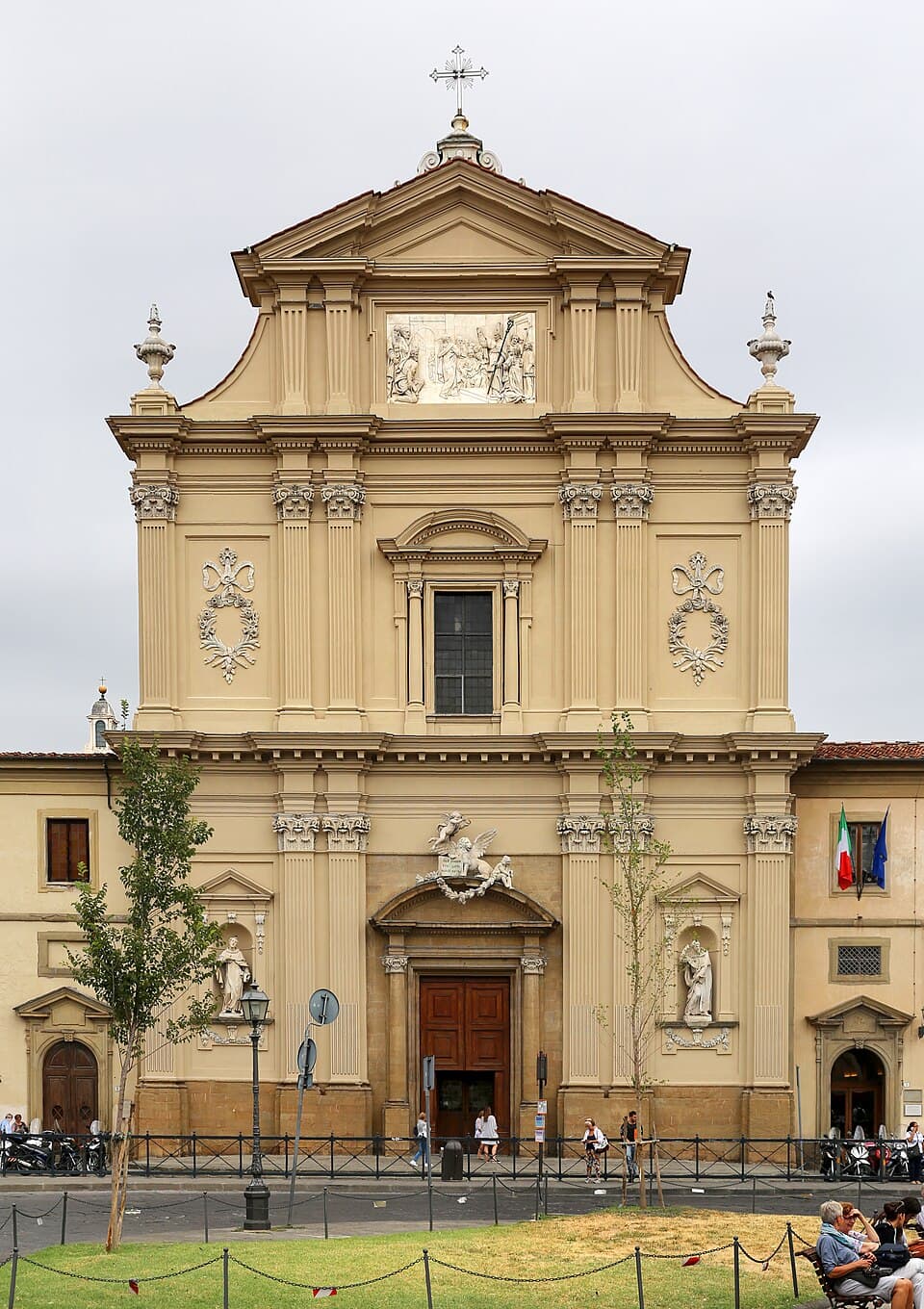
This stop examines the former Dominican convent of San Marco as a center of spirituality, art, and political drama. The script should describe the quiet cloister, the simple cells, and the luminous frescoes by Fra Angelico, including the Annunciation at the top of the stairs, emphasizing their role as meditative tools rather than gallery pieces. It should explain Medici patronage of the convent, especially under Cosimo the Elder, who funded renovations and used a private cell for retreats. Introduce Girolamo Savonarola’s later presence here, turning the convent into a nerve center of religious reform and anti‑Medici agitation. Include a unique anecdote about Cosimo reportedly asking to have his bed moved into a San Marco cell during illness so he could die surrounded by the prayers of the friars, blending personal devotion with political symbolism.
Piazza Santissima Annunziata
Renaissance square of devotion, orphanage, and processions
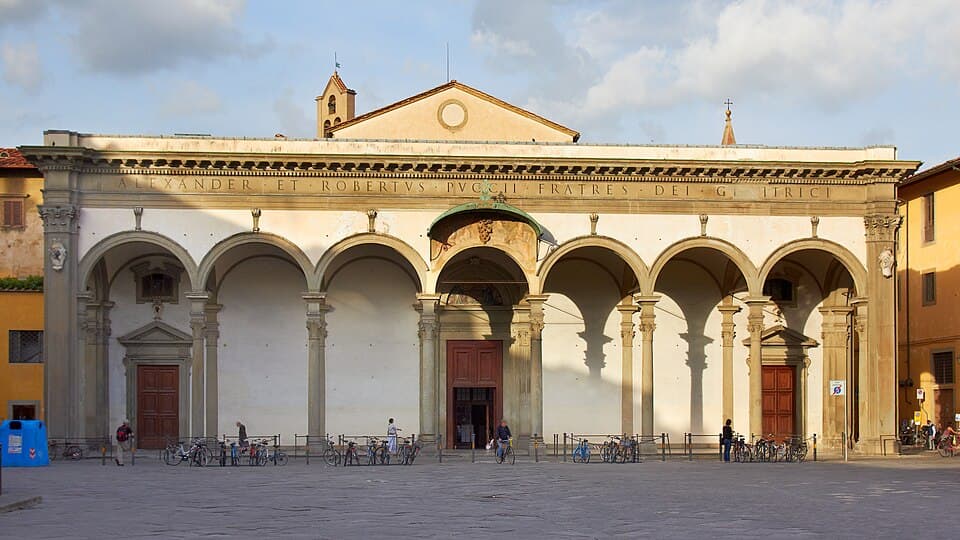
This stop presents Piazza Santissima Annunziata as a carefully shaped Renaissance urban space tied to Marian devotion and Medici influence. The script should describe the harmonious arcades of the piazza, the façade of the Basilica della Santissima Annunziata, and the Ospedale degli Innocenti with its glazed terracotta medallions of infants. It should explain how processions linked this piazza to the Duomo and San Marco, and how Medici rulers used such religious events to reinforce their image as protectors of Florence. Mention the role of the orphanage as an early charitable institution tied to civic pride. Include a unique anecdote about citizens bringing abandoned infants to the Innocenti’s special revolving wheel at night, so they could leave a child anonymously while ringing a bell that summoned the hospital’s wet nurses, underscoring the mix of sorrow and care in this space.
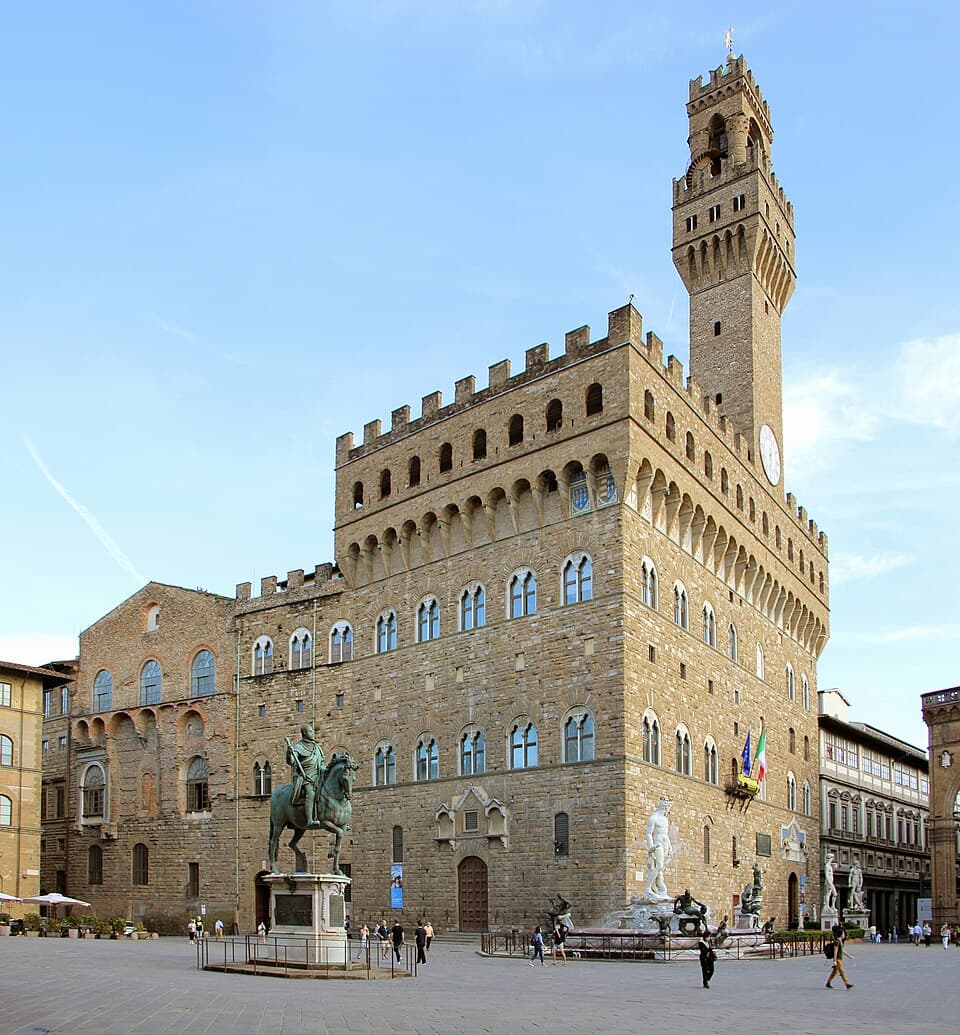
Palazzo Vecchio
From republican fortress to Medici ducal palace
This stop explores Palazzo Vecchio as the shifting seat of Florentine government, from medieval republic to Medici duchy. The script should describe its crenellated tower, heavy stone walls, and the interior transformation under Duke Cosimo I, who turned council chambers into richly decorated state rooms with Vasari’s frescoes. It should explain how the Medici gradually took over this former communal palace, then eventually moved residence to Pitti while keeping Palazzo Vecchio as a symbol of authority. Discuss key political episodes associated with the building, including civic councils and Medici-controlled institutions. Include a unique anecdote about the secret passage hidden inside the palace walls that allowed Cosimo I to move between rooms unseen during tense council meetings, feeding his reputation for careful, watchful rule.
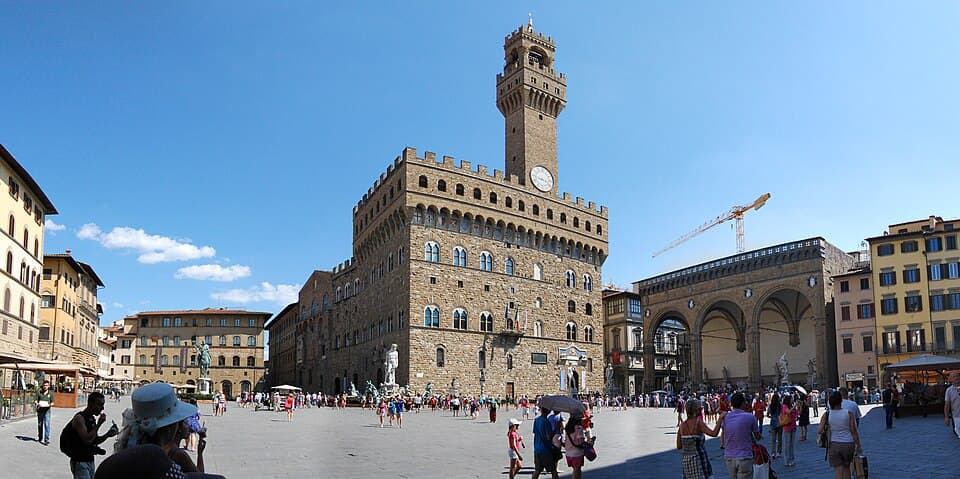
Piazza della Signoria
Civic stage of power, justice, and sculpture
This stop looks at Piazza della Signoria as Florence’s open-air political theater and a key arena for Medici image-making. The script should describe the layout of the square, Palazzo Vecchio, the Loggia dei Lanzi with its sculptures, and the copy of Michelangelo’s David, explaining how public art conveyed messages about liberty, strength, and later ducal authority. It should recount how the Medici and their opponents used this piazza for proclamations, executions, and celebrations. Mention the shift from republican symbols to Medici-friendly monuments over time. Include a unique anecdote about the dramatic bonfire of the vanities staged by Savonarola’s followers here, when piles of books, paintings, and luxury goods were burned, some of them reluctantly contributed by families who feared being labeled enemies of moral reform.
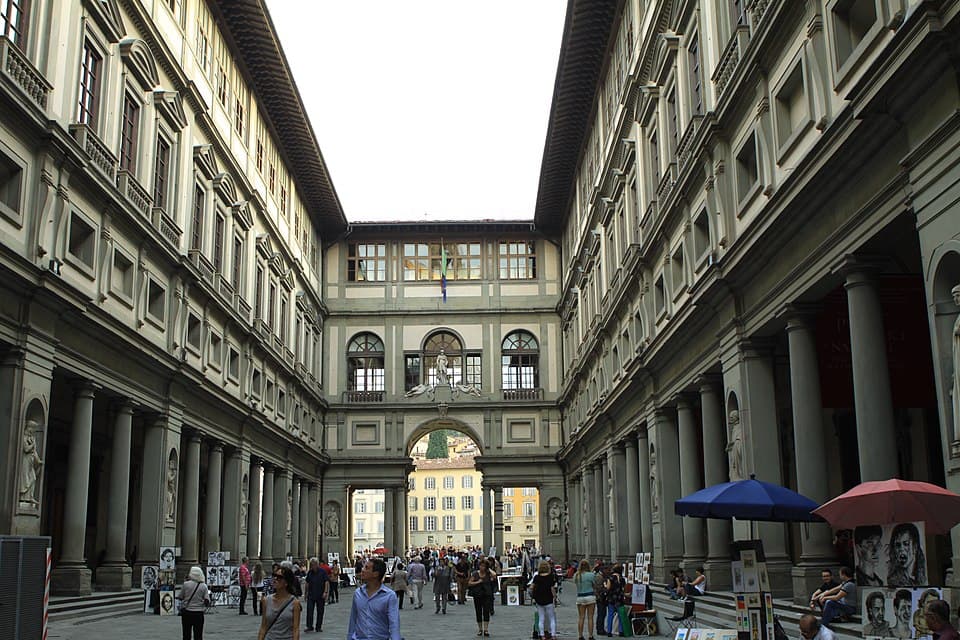
Uffizi Courtyard
Medici administrative offices turned gallery approach
This stop focuses on the Uffizi courtyard as an elongated, street-like space created for Medici government offices that later framed access to their art collections. The script should describe Giorgio Vasari’s design: the long parallel wings, rhythmic columns, and the open view toward the Arno at one end and Piazza della Signoria at the other. It should explain that “Uffizi” means offices, emphasizing the building’s original administrative function under Cosimo I before becoming a display space for family collections. Discuss how this space connected bureaucratic power with cultural prestige. Include a unique anecdote about how, in the early days of the gallery, favored visitors might be led up side staircases from this courtyard to see rare curiosities—like ancient gems or scientific instruments—kept locked in cabinets that only a trusted custodian could open.
Vasari Corridor Exterior
Enclosed passage linking palace, offices, and residence
This stop examines the Vasari Corridor as a raised, enclosed walkway visible from outside, connecting Palazzo Vecchio and the Uffizi to the Pitti Palace across the Arno. The script should guide the listener to trace its path with their eyes: leaving the Uffizi, crossing above the river on the Ponte Vecchio, and threading through houses and church structures. It should explain Cosimo I’s reasons for commissioning this corridor from Vasari—security, convenience, and a visible symbol of ducal control over the cityscape. Mention how the corridor once allowed rulers to move between workplace and residence without mingling with crowds below. Include a unique anecdote about the section where the corridor passes through the Oltrarno church of Santa Felicita, where small screened windows let the ruling family attend Mass unseen, prompting locals to joke that even their prayers traveled in a private tunnel.
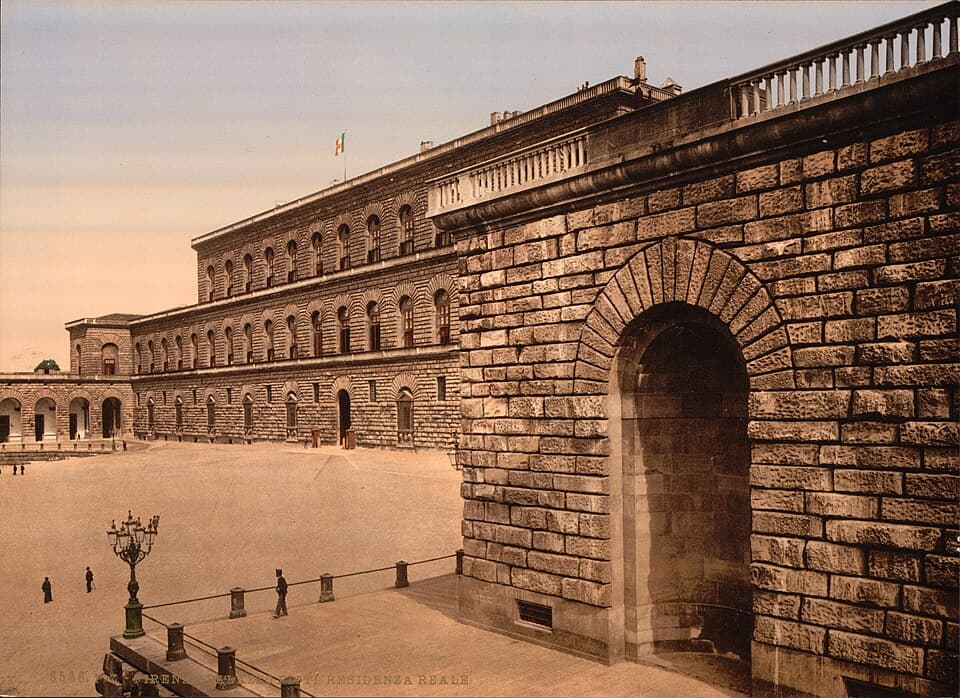
Pitti Palace
Later Medici residence facing vast Boboli Gardens
This final stop presents Pitti Palace as the grand ducal residence that marks the culmination of Medici power, set across the Arno in the Oltrarno district. The script should describe its monumental rusticated façade, imposing courtyard, and the hillside Boboli Gardens behind, emphasizing how the ensemble contrasts with the more compact, urban Palazzo Medici Riccardi. It should explain the palace’s origins with the Pitti family and its later acquisition and enlargement by the Medici, symbolizing their shift from neighborhood bankers to territorial princes. Discuss how this residence allowed for court rituals, garden theater, and display of expanding art collections. Include a unique anecdote about elaborate court festivals staged on temporary stages in the courtyard and gardens, where fireworks and water effects astonished foreign guests and reinforced Florence’s reputation as a center of artistic spectacle under Medici rule. Conclude the broader tour narrative here, reflecting on how far the family’s story has traveled from the parish square of San Lorenzo to this princely seat.
Start This Tour
Download Roamway to experience this audio tour
Tour Details
Access
Free
Stops
12 points of interest
Languages
GermanEnglishSpanishFrench
More tours in Firenze
View all tours in FirenzeOther tours you might enjoy:
Florence: Markets, Street Food and Wine Culture
This tour explores Florence’s food culture through historic markets, street food areas, and traditional wine bars on both sides of the Arno. It includes Mercato Centrale, Sant’Ambrogio, Via dei Neri, and the Santa Croce and Oltrarno districts. Themes include everyday Florentine life, local products, wine traditions, and artisan gelato.
Florence: Duomo Complex and Renaissance Churches Highlights
This tour focuses on Florence’s historic center, from the Piazza del Duomo and its cathedral complex to Orsanmichele, Badia Fiorentina, Santa Croce, and Santa Maria Novella. It examines medieval and Renaissance architecture, religious art, funerary monuments, and civic history, including key façades, sculptural programs, and interior highlights where accessible.
Florence: Duomo to Oltrarno Art and History
This tour traces central Florence from Piazza del Duomo through Piazza della Signoria and the Uffizi area to the Arno River, Ponte Vecchio, and the Oltrarno. It examines major churches, palaces, outdoor sculpture, and museum masterpieces while highlighting Renaissance art, religious traditions, Medici power, and daily life in artisan neighborhoods.
Frequently Asked Questions
How do I start this audio tour?
Download the Roamway app, search for this tour, and tap 'Start Tour'. The app will guide you to the starting point using GPS. Once you're there, the audio narration begins automatically.
Do I need an internet connection?
No! Once you've downloaded the tour in the Roamway app, it works completely offline. The GPS navigation and audio narration function without an internet connection.
Can I pause and resume the tour?
Yes! You can pause the tour at any time and resume later. Your progress is automatically saved, so you can complete the tour over multiple sessions if needed.